← JOURNAL29 Sep 2026
Ramen Explained for Indian Anime Fans: Broth, Noodles and Your First Bowl
 By SoJapan
The bowl arrives in an anime with steam, a swirl of pink and white, neatly arranged toppings and noodles lifted impossibly high. It looks comforting before anyone takes a bite. Then you open a real menu and find shoyu, shio, miso, tonkotsu, chashu and ajitama, with no clear explanation of what you are actually choosing.
For an Indian viewer, another set of questions follows. Is it vegetarian? Is it spicy? Does a chicken topping mean chicken broth? Is miso a soup base or a seasoning? Can you order the bowl without egg? Why does one restaurant’s ramen look clear while another’s looks creamy?
The most useful way to understand ramen is to separate its parts. The noodles, stock, concentrated seasoning, aromatic oil and toppings each have a job. A menu name usually describes only some of them. Once you know which part a word refers to, the bowl becomes much easier to choose.
This guide explains the food behind the anime image, without assuming that everyone in India follows the same diet or wants the same level of chilli. It is a dish guide rather than a directory of restaurants: recipes, prices and menus differ, so the final ingredient check belongs to the place preparing your bowl.
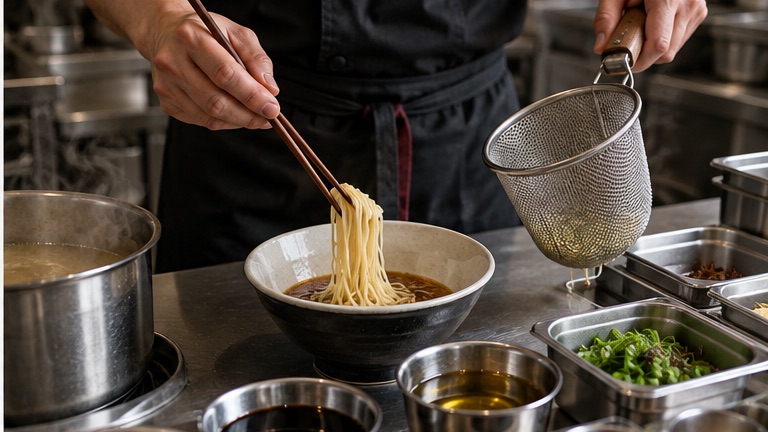
Ramen works well on screen because it is easy to recognise and can place characters close together. A counter concentrates the action: people sit side by side, a cook passes over bowls, and the meal creates a reason to pause between larger events.
In Naruto, Ichiraku is a familiar meeting place associated with the protagonist’s everyday life. The official Naruto birthday column lists Ichiraku ramen among his favourite foods, while Iruka’s official profile column also identifies the shop’s ramen as a favourite. For a viewer, that shared food can become a way to read connection and routine.
That is an interpretation of the storytelling, not evidence that every animated bowl represents one exact real-world recipe. Animation simplifies colour, steam, texture and serving arrangements. A restaurant may create a themed bowl inspired by a series, but the name alone cannot establish its ingredients.
Enjoy the reference, then read the menu. The same image that makes a meal inviting cannot tell you whether its stock contains pork, fish or vegetables.
Think of the bowl as five interacting choices. This model is more useful than memorising a long list of regional names immediately.
| Component | What it contributes | What to ask or notice |
|---|---|---|
| Noodles | Bite, spring and the way soup travels into each mouthful | Thickness, shape and ingredients |
| Stock | The main liquid and much of the savoury foundation | Pork, chicken, seafood, vegetables or a combination |
| Tare | Concentrated seasoning added to build the soup’s flavour | Soy sauce, salt, miso and other ingredients |
| Aromatic oil or fat | Aroma, surface texture and another layer of flavour | Plant oil, animal fat and added aromatics |
| Toppings | Contrasting textures, protein, colour and variety | Meat, egg, fish cake, vegetables and preparation sauces |
The Japan National Tourism Organization’s ramen interview explains soup through stock, sauce and oil, with further variation from noodles and toppings. The practical consequence is simple: removing one topping does not rebuild the other components.
Consider a bowl with mushroom slices on top. It could be entirely plant-based, or it could use pork stock, chicken fat or a seafood seasoning. The mushroom tells you about the mushroom. You need another piece of information to identify the soup.
This is the menu distinction worth learning first. Shoyu means soy sauce; shio means salt; miso is a fermented seasoning paste. In ramen names, these commonly identify the seasoning approach. Tonkotsu refers to pork bones and identifies the stock.
They can therefore overlap. A pork-bone soup can have soy-sauce seasoning. A miso bowl can contain chicken, pork, seafood or a vegetable-based stock. A menu that says only “miso ramen” has not answered the dietary question.
JNTO’s guide to ramen types makes this distinction explicitly. Use it as a way to ask better questions, not as a rule that every restaurant will describe its menu with perfect precision.
Soy-sauce seasoning can give a bowl a distinct savoury fragrance and an amber or darker appearance. But the colour is not an ingredient list, and shoyu does not guarantee a light soup. The underlying stock and oil still matter.
If you want to begin with a bowl where you can compare broth aroma and noodle texture, ask the restaurant about its shoyu option. Request an explanation of whether it is relatively clear or rich and what supplies the stock. That gives you a useful description instead of relying on the name alone.
A soy-sauce-based seasoning is also not automatically vegetarian. It may be combined with other ingredients during preparation. The finished tare is the relevant thing to check.
Shio names the seasoning category, not the absence of complexity. A bowl may combine a carefully developed stock, aromatic oil and toppings while keeping the seasoning less visually dark than a soy-sauce version.
For a first taste, look for aroma and aftertaste rather than expecting an aggressively simple salt flavour. A clear appearance can make the noodles and toppings easy to see, but it does not prove that the soup is vegetarian or particularly mild.
If you dislike a heavy-feeling meal, ask how the shop’s shio compares with its other bowls. “I would like the less rich option” is more informative than assuming every shio recipe is light.
Miso can add a rounded, fermented savouriness, with character that varies by the paste and other ingredients used. On an Indian menu, “miso” may appear near spicy options, but the term itself does not mean chilli-hot.
A miso ramen can be satisfying for someone who likes a pronounced seasoning character. Ask whether chilli is built into the bowl, provided separately or absent. If the restaurant offers a vegetarian version, confirm that the stock, oil and tare are part of that version, not just the toppings.
Butter, corn and other additions sometimes accompany miso ramen, especially in presentations associated with Hokkaido. They are choices within a broad family of bowls, not ingredients every miso ramen must contain.
Tonkotsu means a pork-bone stock. Its familiar cloudy appearance comes from the preparation of that stock; a creamy-looking bowl does not necessarily contain dairy.
If you avoid pork, removing the sliced meat from traditional tonkotsu does not make the soup suitable. The stock itself is the issue. A restaurant may offer a plant-based product described as “tonkotsu-style,” but that is an interpretation aiming for a similar experience. Read the full description.
Do not confuse tonkotsu with tonkatsu, the breaded pork cutlet. One extra letter changes the dish. It is a small distinction that prevents an unhelpful menu conversation.
People often ask for “strong ramen” when they mean different things. They might want a thicker mouthfeel, more pronounced seasoning, more savouriness or more chilli. Those requests can lead to very different bowls.
Try describing your preference in two parts: the body of the soup and the level of heat. For example, “rich but mild,” “clear with a little chilli on the side,” or “vegetable-based with a strong miso flavour.” None requires you to know the chef’s recipe.
For a first bowl, tasting before adding condiments gives you a reference point. If you immediately add several sauces, it becomes difficult to know whether you liked the ramen itself or the resulting mixture. This is a tasting suggestion, not an etiquette test. You are allowed to adjust the food you ordered.
There is no single Indian spice preference. Someone who enjoys chilli in one cuisine may still want a gentle noodle soup, and someone trying ramen for the first time may prefer a hotter interpretation. Choose for the meal you want that day.
Ramen noodles are commonly wheat noodles made with alkaline salts, often discussed under the term kansui. Their texture can be springy and resilient, but thickness, hydration, shape and cooking all affect the result.
The yellowish appearance of some noodles does not by itself prove the presence of egg. Conversely, egg-free should not be assumed: some products do contain it. The manufacturer’s Hakubaku kaedama noodle page, for example, explicitly lists egg white and kansui for that particular product. That is evidence about those noodles, not every ramen noodle.
Thin noodles give a different mouthful from thicker ones. Wavy noodles change the way strands gather together and hold liquid. A shop may select a particular noodle to suit the soup rather than treating noodles as an interchangeable base.
When comparing two bowls, notice the bite as well as the soup. Does the noodle remain distinct? Is it soft, firm, smooth or springy? Do you enjoy the thickness with that broth? These observations are more useful than declaring one shape universally authentic.
Fresh-style noodles, dried noodles and instant noodles can all be enjoyable, but they solve different preparation problems. A packaged product designed to rehydrate quickly should not be expected to behave exactly like a restaurant noodle cooked to order.
If you are cooking at home, use the packet’s instructions as your starting point. Do not apply one cooking time to every brand because a video used that time. The noodles will also sit in hot soup after cooking, so organise the bowl before the final assembly.
The toppings are often the most visually memorable part of the bowl. Learn their usual identity, then remember that preparation can introduce ingredients you cannot see.
| Topping | Common identity | What a dietary label still needs to establish |
|---|---|---|
| Chashu | Often seasoned pork; chicken versions also exist | The actual meat and preparation |
| Ajitama | Seasoned egg | Egg acceptance and marinade ingredients |
| Narutomaki | Swirled fish cake | Fish and other product ingredients |
| Menma | Prepared bamboo shoots | Seasoning liquid and cooking ingredients |
| Nori | Dried seaweed | Any additional seasoning |
| Negi | A type of green onion or leek, depending on usage | Whether alliums fit your requirements |
| Corn | Sweetcorn | Added butter, stock or seasoning |
| Mushrooms | A vegetable-style topping with varying preparation | Cooking fat and sauces |
Narutomaki is typically a fish cake, commonly seen as a slice with a swirl. Its cheerful appearance can make it easy to mistake for a purely decorative vegetable product. Hakubaku’s noodle guide identifies it as steamed fish cake.
A vegetarian bowl can create visual contrast with other ingredients, but it should not include conventional narutomaki simply because the rest looks meat-free. If a restaurant uses a plant-based imitation, the product’s ingredients are what establish that difference.
A seasoned egg adds another texture and a contrasting mouthful. It can be an optional topping rather than an unavoidable part of ramen. If you avoid eggs, check both the topping and the noodles.
There is also no need to measure your enjoyment against a perfectly photographed yolk. A restaurant bowl is food to eat, and preferences for doneness differ. State yours if the shop offers a choice.
More is not always more satisfying. Too many additions can cool the soup, obscure the noodles or make the bowl awkward to eat. For a first order, a standard bowl is often easier to understand than one with every extra.
On the next visit, change one topping or one soup style. That creates an actual comparison. Changing everything at once makes it difficult to discover what you liked.
A well-designed vegetarian ramen builds flavour throughout the bowl. It does not have to be a meat-based recipe with the meat lifted off at the end. Mushrooms, seaweed, vegetables, fermented seasonings and plant oils offer different ways to create a satisfying combination.
The Shin-Yokohama Ramen Museum’s vegetable ramen page provides concrete examples, including a miso bowl using shiitake, kombu and sesame oil. The significance is the design of the whole recipe. These examples demonstrate a possible approach; they do not certify an unrelated restaurant in India.
When ordering, ask one clear question first: “Is the complete bowl vegetarian, including the stock, seasoning sauce and oil?” Then explain whether you eat eggs or dairy. That is usually more productive than asking about visible toppings individually while leaving the soup unaddressed.
A vegetarian option may contain egg or dairy depending on how the restaurant uses the word. A vegan description should address animal-derived ingredients, but it does not automatically answer questions about onion, garlic, other roots or your own preparation requirements.
For Jain requirements, specify the ingredients and preparation you avoid. Removing chopped onion at the end will not remove onion from a stock made earlier. A kitchen may be able to offer a separately designed bowl, or may be unable to adapt that day’s preparation. An honest answer is more useful than a reassuring label without detail.
For halal requirements, “no pork” is not a complete assurance about meat sourcing, ingredients and preparation. Ask about the restaurant’s actual provision and any certification you rely on. Similarly, a vegetarian menu statement is not an allergy statement. If an allergy is relevant, discuss it directly with the restaurant.
For a broader dish-by-dish introduction, use our Japanese vegetarian food guide for Indian readers. The ramen-specific lesson is to check the prepared components that cannot be seen in a photograph.
First establish which ingredients fit your diet. Next decide whether you want a clearer or richer-feeling soup. Finally choose the seasoning character and chilli level. This order keeps a tempting menu photo from overriding the practical questions.
| What you want | A useful direction to discuss with the restaurant | What still needs checking |
|---|---|---|
| A relatively clear soup | Ask about the shop’s shoyu or shio bowl | Stock source and actual richness |
| A pronounced fermented flavour | Ask about miso ramen | Stock, tare ingredients and chilli |
| A rich pork-based bowl | Ask about the tonkotsu preparation | Other ingredients and preferred portion |
| A fully vegetarian meal | Choose a bowl designed as vegetarian | Stock, tare, oil, noodles and egg |
| More chilli without losing the starting flavour | Request a suitable condiment separately | Whether heat is already built in |
| More noodles rather than more toppings | Ask about portion size or kaedama where offered | Extra charge and whether soup is included |
The word “ask” matters here. These are starting points for a menu conversation, not guarantees attached to a Japanese name. Two restaurants can make markedly different bowls under the same label.
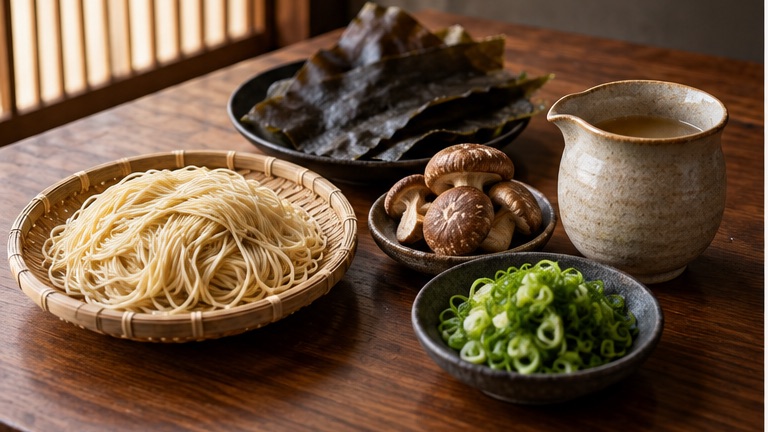
Kaedama is an extra serving of noodles added to the soup you already have. It is associated particularly with thin-noodle styles such as Hakata ramen, though availability depends on the shop.
JNTO’s Hakata ramen explanation distinguishes that noodle refill from a soup refill. If you intend to order it, leave enough soup to enjoy the additional noodles. Ask whether the restaurant offers it before assuming that any ramen shop will.
This also helps when judging portions. “Extra noodles” and “large ramen” may refer to different offerings. A larger bowl might include more soup or other changes; kaedama may add only noodles. Read the menu rather than comparing the two as identical meals.
In a familiar soup ramen, the noodles arrive in the liquid. In tsukemen, noodles and dipping broth are served separately, and you dip the noodles as you eat. JNTO’s guide to Japanese noodles describes that distinction.
The separate presentation changes the eating experience. You control how much of each mouthful goes into the dipping broth, and the noodles’ own texture becomes more noticeable. Do not immediately pour everything together because you expected a conventional soup bowl; first check how the restaurant intends it to be eaten.
Udon and soba belong to other noodle traditions. Udon is commonly associated with thick wheat noodles, while soba refers to buckwheat noodles that may also include wheat. Their names do not establish a vegetarian broth either. For a first ramen experience, make sure the menu actually identifies the noodle dish you want rather than assuming every Japanese noodle soup is interchangeable.
Take a small taste of the soup, try the noodles and then alternate with toppings. This lets you understand each part while still eating a coherent meal. It is an invitation to notice, not a compulsory sequence.
Chopsticks and a spoon are common, but ask for a fork if it helps you enjoy the food. Slurping is accepted in Japanese ramen settings; you do not need to imitate an exaggerated television version or force yourself to make noise. Eat comfortably and pay attention to the temperature.
You also do not have to finish all the soup. JNTO’s ramen dining guide explicitly notes that leaving some broth after finishing noodles and toppings is acceptable. Treat the bowl as a meal rather than a challenge.
At a small shop with a queue, finish your conversation elsewhere once you have finished eating. At a café or a larger restaurant, the pace may be different. The setting matters more than an imagined universal list of Japanese rules.
Instant noodles give you convenience and a repeatable packet-based experience. A restaurant bowl can involve separate preparations that come together at service. Neither distinction means you must dislike one to appreciate the other.
Compare within the experience you are seeking. If you want a quick snack, the packet may do the job. If you want to understand fresh noodle texture and how a shop combines tare, oil and stock, a prepared bowl gives you different things to observe.
Adding an egg, vegetables or tofu to instant noodles can make the meal more varied, but it does not change the original seasoning packet’s ingredients. If the packet contains something you avoid, a vegetable topping will not remove it.
At home, check the noodle block and every sachet. In a kit with several components, one suitable ingredient does not establish the suitability of the full product. Follow the information for the exact product in your hand, because recipes and versions differ.
You can explore ramen’s structure at home without trying to reproduce a long-simmered shop broth. Choose noodles, a stock that suits your diet, a compatible seasoning and a few toppings. The aim is to understand their relationship.
For a vegetarian starting point, you might use a clearly labelled vegetable stock, mushrooms, tofu and green vegetables, with a suitable soy-sauce or miso seasoning. This is a flexible home approach rather than a tested recipe with fixed quantities. Salt concentration varies greatly between stock products and pastes, so a universal tablespoon count would be misleading.
Prepare toppings first. Have the soup ready, then cook the noodles according to their instructions. Assemble promptly. If the noodles wait while you chop garnishes and search for a bowl, texture can suffer before you start eating.
Make one adjustment at a time. If the bowl tastes flat to you, decide whether you miss aroma, seasoning strength, body or chilli. Adding more of everything is less informative than identifying the missing element. Save a brief note so the next bowl becomes a comparison instead of a completely new experiment.
After a meal, write five short observations: soup body, seasoning character, noodle texture, topping balance and chilli level. Use ordinary words. “Clear, soy-forward, springy, too many toppings for me, mild” tells you much more about a future order than “8 out of 10.”
If you score anything, keep it personal. A thicker soup is not inherently a higher-quality soup. A mild bowl is not a failed spicy one unless the menu promised heat. Your notes should help you order what you enjoy, rather than pretend to judge an entire regional tradition after one meal.
A three-bowl exploration can be enough to reveal preferences. Try one suitable baseline, then change the seasoning at the same restaurant, then compare a different noodle or stock approach. Keeping some variables stable makes the differences easier to understand.
“Miso means vegetarian.” It identifies an important seasoning, not the complete stock or tare recipe.
“Creamy ramen must contain milk.” A cloudy animal stock can look creamy without dairy, while some other recipes do add dairy or plant milk. Appearance is not sufficient evidence either way.
“Chicken on top means chicken-only broth.” A topping and the soup can use different ingredients or mixed stocks.
“All ramen is supposed to be extremely spicy.” Chilli level is a choice that varies by dish and restaurant.
“A Naruto-themed bowl is the definitive ramen.” The theme tells you about presentation or inspiration. It does not define a universal recipe or guarantee dietary suitability.
“Using a fork means doing it wrong.” A utensil should help you eat. Curiosity about the food matters more than performing expertise.
Only if the remaining components also meet your requirements. With a meat- or fish-based stock, removal of a topping cannot make the bowl vegetarian. Choose a complete vegetarian preparation and confirm egg or dairy separately.
Yes, but the exact noodle product and toppings need checking. Some noodles contain egg, others do not. Colour alone cannot answer the question.
No. Shoyu describes seasoning and tonkotsu describes stock, so a bowl can involve both. Compare the restaurant’s actual preparations rather than treating the terms as opposite ends of one scale.
They overlap as noodle foods but encompass different products and preparations. Do not use one packet or bowl as the standard for both. Compare the specific noodle, soup and seasoning instead of assuming identical flavour because the names sound similar.
Ask for a preparation that excludes pork throughout its stock, tare, oil and toppings. Chicken, seafood or plant-based possibilities may exist, but the name of one ingredient does not establish the absence of another.
No. Onion, garlic and other ingredients you avoid may already be part of its stock or seasoning. Explain your requirements before ordering and ask whether a suitable preparation is available.
Yes, where offered, but transport changes the conditions. Ask whether noodles and soup travel separately and follow the restaurant’s assembly instructions. A noodle sitting in liquid during a long trip will not necessarily have the same texture as one served immediately.
Start with the ingredients you can eat, then choose one thing you want to discover: a seasoning, a noodle texture or a clearer versus richer soup. That gives the meal a direction without turning dinner into homework.
Anime can make you curious about the bowl; understanding its parts helps you enjoy the real one. You do not need the most elaborate toppings or the spiciest option. A well-chosen first bowl, eaten while the noodles are at their best, is enough.
For more foods to recognise on screen, continue with 12 Japanese Foods from Anime to Try in India. For the stalls and celebrations around many anime meals, read Japanese Festivals in Anime Explained.
AUTHOR OF THIS ARTICLE
SoJapan
SoJapan India Pvt. Ltd. is a Japanese-founded company based in Gurugram. We bring Japanese food, anime goods and apparel materials to Indian businesses, with a sister company in Kyoto that works directly with makers in Japan.