An anime character sees the same classmate every day, yet needs a summer festival to notice them differently. School corridors become cafés for one weekend. A first shrine visit turns a private wish into a public ritual. Cherry blossoms make an ordinary walk feel like a beginning or an ending.
Japanese anime uses the calendar as a storytelling structure. Festivals and seasonal customs place familiar characters in changed clothes, changed light and changed social rules. Some events are religious, some civic, some commercial and some created by schools. English subtitles may simply call all of them “the festival,” removing the reason a scene feels special.
This guide explains 15 recurring events: when they happen, what people do, what anime uses them to accomplish and which details are fiction. Dates and customs vary by region, school, family and year, so the objective is recognition rather than a rigid national timetable.
| Approximate time | Event | What anime often uses it for |
|---|---|---|
| 1–3 January | New Year and hatsumōde | Wishes, family, relationship reset |
| Around 3 February | Setsubun | Comedy, expelling bad luck |
| 14 February / 14 March | Valentine’s Day / White Day | Confession, obligation and unequal expectations |
| 3 March | Hinamatsuri | Family tradition and daughters’ growth |
| March–April | Hanami | Beginnings, graduation, brief beauty |
| 5 May | Children’s Day | Family hopes and carp streamers |
| 7 July or regional August date | Tanabata | Written wishes and separated lovers |
| July–August | Summer matsuri | Yukata, food stalls, romance and crowds |
| Summer, date varies | Fireworks festivals | Visual climax and words lost in noise |
| July or August | Obon | Homecoming, ancestors and memory |
| September–October, date varies | Tsukimi | Autumn quiet and contemplation |
| Often spring or autumn | School sports day | Class unity, family attendance and rivalry |
| Often autumn | School cultural festival | Student-created temporary world |
| 31 October | Halloween | Costumes and commercial play |
| 24–25 December | Christmas | Couples, cake and winter atmosphere |
Matsuri is a broad word for festival. A neighbourhood shrine festival, a city parade and a school event can all receive the English word festival, but their organisers and purposes differ. A shrine matsuri may honour a local deity and carry a portable shrine. A bunkasai is a school cultural festival. A fireworks display may be called a festival because stalls and crowds gather around it.
When an anime says “the matsuri,” use visual clues. Shrine grounds, mikoshi bearers and ritual clothing suggest a religious-community event. Classroom cafés and student performances suggest a school festival. A riverside crowd facing the sky suggests fireworks.
New Year is among Japan’s most important annual periods. Families clean before the year changes, display decorations, eat special foods, send greetings and spend time together. Customs differ, and contemporary households choose how much to observe.
Anime often shows hatsumōde, the first shrine or temple visit of the year. Characters queue, offer a small coin, bow and make a wish. They may draw an omikuji fortune, buy an amulet or react dramatically to a result labelled excellent or bad luck.
The story value is obvious: everybody is asked what they want. A character can hide a romantic wish, fear an exam, or realise that their goal now includes friends. Winter clothing and family obligations also move relationships outside the normal school group.
Shrine and Buddhist temple practices are not identical, and a short anime sequence often compresses etiquette. Treat it as character storytelling, not a complete ritual tutorial.
Setsubun marks the day before the traditional beginning of spring, usually around 3 February but capable of shifting with the calendar. The best-known custom is mamemaki: throwing roasted soybeans while saying, “Oni wa soto, fuku wa uchi”—demons out, good fortune in.
In homes and schools, one person may wear an oni mask while others throw beans. Some people eat a number of beans related to their age. Another regional custom that has become nationally commercialised is eating an uncut ehōmaki sushi roll while facing the year’s lucky direction.
Anime uses Setsubun for physical comedy because a respected adult can be assigned the demon role and attacked with beans. Supernatural series can make the word oni literal, creating jokes or discomfort for a character who actually is one.
The event is not “Japanese Halloween.” Its seasonal logic, words and protective purpose are different.
In the familiar Japanese Valentine’s pattern, girls and women give chocolate on 14 February. Fiction distinguishes honmei choco for a person of romantic interest, giri choco associated with social obligation, and tomo choco between friends. Real practice changes across age groups, workplaces and generations, and some organisations discourage obligation chocolate.
On 14 March, White Day traditionally gives recipients a chance to return a gift. Anime turns the pair of dates into a two-stage relationship test: who receives something, whether it was handmade, how it is described and whether an answer comes a month later.
A box of chocolate therefore does not automatically equal a confession. The giver may deliberately call it obligation chocolate to hide a feeling, or the recipient may overinterpret a gift shared with the entire class.
The gender pattern is a convention rather than a rule followed by every person. Modern stories increasingly play with who gives, who refuses and whether the commercial script is fair.
Hinamatsuri on 3 March is often called the Doll Festival or Girls’ Day. Families may display tiered sets of ornamental dolls representing an imperial court, along with peach blossoms and special foods.
Anime episodes can use the display to reveal household history. An inherited doll set shows continuity between generations; the work of arranging and storing it shows family care. A child who has outgrown the excitement may suddenly understand what the ritual meant to a parent.
Superstitions about putting dolls away promptly sometimes become comedy or marriage anxiety in fiction. Details of display size and participation vary greatly, and many families do not own a large formal set.
Do not confuse Hinamatsuri with a general cosplay festival. The dolls are ceremonial decorative objects, not toys used to reenact scenes.
Hanami means flower viewing and in modern popular use strongly evokes gatherings under cherry blossoms. Bloom timing moves from warmer southern areas northward and varies with weather, usually placing widely watched urban seasons around March and April.
People walk through parks, photograph blossoms or share food and drink beneath trees where permitted. Popular locations can be crowded and require planning. Anime sometimes presents a quiet private canopy that would be difficult to find in a famous city park at peak time.
Cherry blossoms carry unusual narrative weight because they are beautiful and short-lived. They coincide with the end and beginning of the Japanese school and business year. A scene can therefore hold graduation sadness and entrance-day hope at once.
Not every falling petal is a formal hanami. Directors use blossom imagery as a visual metaphor even when characters are only walking to school.
Children’s Day is a national holiday on 5 May and part of the Golden Week holiday period. Families may fly koinobori, windsock-like carp streamers, and display warrior-related decorations. The carp evokes strength and determination.
Historically the date was associated with Boys’ Day, while the modern holiday officially celebrates children and expresses gratitude toward mothers. Family practices retain different emphases.
Anime uses koinobori as an efficient calendar image: one shot of coloured carp moving in spring wind establishes early May. Family stories may connect the decorations with a parent’s hopes or the growing distance between siblings.
The streamers are not fish-shaped kites being actively flown. They are mounted so wind fills them, often above homes, rivers or public displays.
Tanabata draws on the legend of Orihime and Hikoboshi, represented by the stars Vega and Altair, lovers separated by the Milky Way and allowed to meet once a year. The commonly recognised date is 7 July, though some regions hold celebrations in August or according to local calendars.
People write wishes on colourful strips of paper called tanzaku and hang them on bamboo. Public decorations can include streamers and elaborate paper ornaments.
For anime writers, the wish is a compact character interview. A child asks for something direct; a shy teenager writes a feeling nobody else sees; a comic character wastes the chance on food. The lovers’ legend gives romantic stories an image of distance, weather and one possible meeting.
Large Tanabata festivals, household bamboo decorations and classroom activities are different scales of the same seasonal reference. An anime may combine them for visual effect.
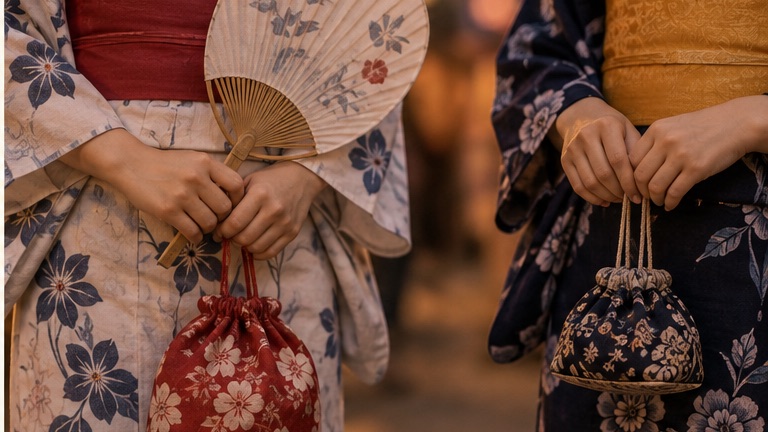
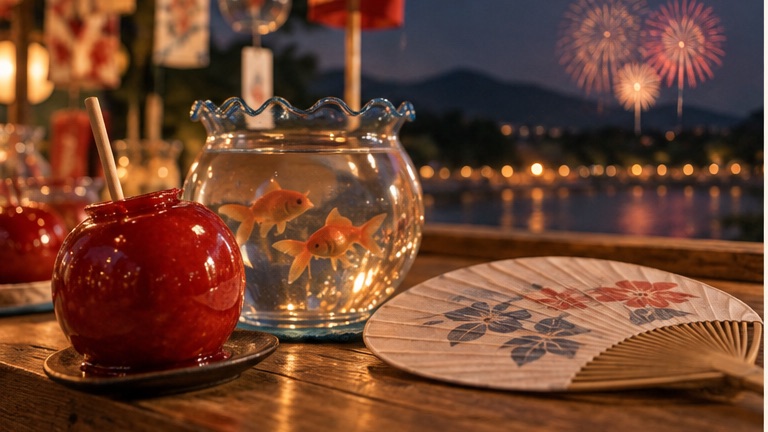
Summer festivals vary by locality, shrine and city, but anime has created a highly recognisable combination: evening lanterns, food stalls, games, goldfish scooping, masks and characters wearing yukata, a light cotton robe.
The changed clothing matters. Classmates who normally meet in uniforms see one another in a more personal but still traditional style. Crowds separate groups, a lost child creates responsibility, and a shrine path offers a quieter edge to the noisy event.
Common stall foods include yakisoba, takoyaki, shaved ice and grilled items, but menus differ and vegetarian diners must still check broth, sauce and shared equipment. Festival food is not automatically meat-free because it is sold in small portions.
Anime often makes every desired activity conveniently close. Real festivals can involve long queues, packed transport, heat and rules about where visitors stand or eat.
Japan holds many summer fireworks events, or hanabi taikai, at rivers, bays and other open sites. Some are connected to larger festivals; others are events in their own right. Dates depend on location and can change because of weather or safety conditions.
Anime repeatedly stages confessions during fireworks. The device works because sound creates uncertainty: did the other person hear? The sky forces characters to look in the same direction while preventing ordinary conversation. A huge public spectacle protects a private hesitation.
Yukata and food stalls may make a fireworks episode look identical to a shrine matsuri, but the crowd’s central purpose is the display. Characters often choose a viewing location or become separated during movement to it.
Real events require crowd management, and leaving can be as difficult as arriving. Fiction tends to cut from the final burst to a peaceful walk home.
Obon is a Buddhist-influenced period for honouring ancestral spirits. Timing varies; mid-August is common in many areas, while some observe it in July or on other regional schedules. Families may return to hometowns, visit graves and participate in local customs.
Bon odori dances take place around a raised platform at community gatherings. Lanterns and welcoming or sending fires appear in different traditions. Anime may use these images to bring family history physically close.
Supernatural stories naturally connect Obon with ghosts, but reducing the period to “when spirits appear” misses its family and memorial dimensions. A quiet episode may focus on travel, cleaning a grave or meeting relatives rather than horror.
The holiday-travel setting also explains why a city character suddenly returns to a rural town, where childhood relationships and unresolved memories wait.
Tsukimi is moon viewing, especially connected to the harvest moon around the fifteenth night of the traditional lunar calendar. Its date shifts in the modern calendar, usually falling in September or October.
Decorations may include pampas grass, and round tsukimi dango dumplings evoke the moon. Foods topped with an egg are sometimes named tsukimi because the yolk resembles a full moon, though they are not all ceremonial dishes.
Anime uses tsukimi more quietly than summer festivals. The moon creates shared silence, distance and reflection. A character who cannot say something directly can discuss the sky instead.
Do not assume every prominent full moon marks a formal event. Moon imagery is common throughout Japanese art and fiction; an actual tsukimi scene usually includes deliberate viewing, seasonal food or explicit dialogue.
Japanese schools commonly hold a sports day called undōkai or taiikusai, often in spring or autumn depending on the institution. Students compete in races, relays, tug-of-war and group events, sometimes divided into coloured teams. Families may attend younger children’s events.
Anime uses sports day to reorganise the social map. Academic ability becomes temporarily irrelevant, an athletic background character becomes important, and a relay transfers responsibility visibly from one person to another. Preparing banners or group routines tests class cooperation.
Specific events seen in comedy—extreme obstacle courses, elaborate cavalry battles or romantic scavenger-hunt prompts—may be heightened. School safety policies and programmes vary.
Unlike a club tournament, sports day involves much of the school. It can reveal who participates enthusiastically, who avoids attention and who supports a classmate without competing.
A bunkasai is a school cultural festival in which classes and clubs create attractions such as cafés, haunted houses, exhibitions, stage plays and concerts. Many schools hold one in autumn, but schedules vary.
The event is perfect for anime because students temporarily redesign institutional space. Desks become café counters. A quiet classmate must perform. Club work is finally shown to outsiders. Graduating students feel the possibility that this is their last shared project.
Maid cafés appear frequently because costumes, service roles and embarrassment create easy comedy, not because every real class chooses one. Schools regulate food preparation, budgets, public access and acceptable attractions.
Preparation episodes matter as much as the day itself. Painting signs after class creates conversations that the normal timetable would never allow.
For a wider explanation of clubs, uniforms and school routines, read Japanese School Life in Anime: 22 Things Indian Viewers Should Know.
Halloween on 31 October is not a traditional Japanese religious festival, but costumes, themed sweets, retail displays and urban gatherings have made it highly visible. Participation differs greatly: a shopping district promotion, theme-park event and private party are not the same phenomenon.
Anime uses Halloween for costume episodes, supernatural jokes and alternate character designs. A reserved person can perform a role behind a mask; a fantasy cast can encounter cute commercial versions of monsters that resemble their real enemies.
Trick-or-treating door to door is less universal than many North American stories imply. Children’s events may organise it in controlled settings. Large street gatherings also face changing local rules and crowd concerns.
The key distinction is origin: Halloween is a modern imported event adapted through Japanese commerce and fan culture, unlike shrine matsuri or Obon.
Christmas in Japan is widely visible through illuminations, gifts, seasonal meals and cake, but it is not a national holiday and does not carry the same majority religious or family structure as in many Christian societies. Christmas Eve is often framed commercially and in popular culture as a date night for couples.
Anime romance uses the evening for confession, missed meetings and city lights. Family or children’s stories may focus on Santa and gifts. Fried chicken and strawberry shortcake are familiar popular images, though not every household follows them.
School may already be on winter break depending on the calendar, but adults can be working. Fiction tends to create snow because it is visually perfect, even in cities where a white Christmas is far from guaranteed.
For Indian viewers, it is useful to separate recognisable global symbols from local social meaning. The tree may look familiar while the expected company and meal differ.
Four structural changes make romance easier:
The festival does not magically create emotion. It makes existing emotion harder to avoid.
Anime subtitles may call every traditional-looking robe a kimono, but summer festival clothing is often yukata, an unlined cotton garment historically associated with bathing and now common for warm-weather events. Formal kimono use different fabrics, layers, accessories and rules.
Men and women can wear yukata. Designs, obi belts and footwear vary. Characters in historical, ceremonial or coming-of-age scenes may be wearing other kinds of wafuku, traditional Japanese clothing.
A festival episode often exaggerates the surprise of seeing a classmate in yukata, but the clothing genuinely changes posture, stride and the visual relationship with the setting.
Stall scenes are visually tempting, but vegetarian status is not obvious. Takoyaki contains octopus. Yakisoba sauce and stock can contain animal ingredients. Okonomiyaki commonly uses egg, dashi, meat or bonito flakes. Grilled corn, fruit sweets or shaved ice may be simpler but still need ingredient and equipment checks.
Our Japanese Vegetarian Food Guide for Indians explains dashi, sauces and shared cooking oil in detail. The essential lesson is to verify preparation, not judge by whether the visible topping is a vegetable.
You do not need to know the festival’s name immediately. Read five visual signals:
This approach is more reliable than memorising one generic “Japanese festival.” It also preserves the scene’s dramatic purpose: the custom is not trivia placed behind the characters; it changes who can meet, what they can ask for and how long the opportunity lasts.
Characters arrive just before fireworks, blossoms fall at the confession and rain begins after the wish. Real seasonal events depend on weather, transport and crowd rules.
Famous festival sites and blossom parks can be extremely crowded. Animation removes visual noise to focus on characters.
Not every family observes every custom. Religion, region, age, budget and preference shape participation.
Dates, dances, foods and decorations vary locally. Obon and Tanabata are especially important examples.
School festivals operate under staff supervision, budgets, food-safety rules and institution-specific restrictions, even when anime makes students appear fully autonomous.
It broadly means festival. The word can refer to many different religious or community events, not one national summer festival.
Yukata are light traditional garments suited to warm-weather leisure and festival settings. They also let stories show characters outside everyday school clothing.
Yes. Many Japanese schools hold cultural festivals, although attractions, public access, timing and student freedom vary. Anime versions often heighten scale and drama.
No. It is a widely visible seasonal and commercial event, but 25 December is not a Japanese national holiday.
7 July is the best-known date, but some regions celebrate in August or use locally established schedules.
Not necessarily. They can overlap in season and atmosphere, but a fireworks event may be organised primarily around the display rather than shrine ritual.
Anime festivals are not decorative breaks from the plot. They change the rules around the characters. New Year asks for a wish. Valentine’s Day turns affection into an object. Hanami places beginnings beneath flowers that will disappear. Summer matsuri offers one crowded evening to say what ordinary school days have postponed.
Look for the event’s organiser, date, clothing, food and central ritual. Those clues distinguish a shrine matsuri from a school festival, Tanabata from Obon and a fireworks display from a generic romantic backdrop. Once you recognise the calendar, many anime scenes become more precise—and more moving.
For a broader first-watch list, continue with 21 Best Anime for Beginners in India. For terms such as slice of life, shōjo and iyashikei, read Anime Genres Explained: 18 Types Every Indian Viewer Should Know.

AUTHOR OF THIS ARTICLE
SoJapan
SoJapan India Pvt. Ltd. is a Japanese-founded company based in Gurugram. We bring Japanese food, anime goods and apparel materials to Indian businesses, with a sister company in Kyoto that works directly with makers in Japan.