← JOURNAL29 Sep 2026
Japanese Vegetarian Food Guide for Indians: 25 Dishes and Hidden Ingredients
 By SoJapan
A bowl of Japanese vegetable soup can contain fish stock. Vegetable tempura may share oil with prawns. A rice ball wrapped in seaweed may hide tuna, salmon or fish-flavoured seasoning. Appearance alone is a poor test of whether Japanese food is vegetarian.
The good news is that Japan has rice, tofu, vegetables, seaweed, noodles, beans and a sophisticated Buddhist plant-based tradition. The difficult part is not finding plants; it is recognising the small animal-derived ingredients used for depth of flavour. Dashi stock, bonito flakes, fish sauce, meat extract and shared cooking equipment can turn an apparently simple dish into something unsuitable.
This guide gives Indian diners a practical decision system and 25 foods to look for. “Vegetarian” here means no meat, poultry, fish or seafood. Vegan notes also exclude egg, dairy and other animal products. Jain requirements vary by individual and tradition, so the guide flags common root vegetables, onion and garlic but does not claim that a restaurant can meet every rule without discussion.
Purpose-built vegan food and shōjin ryōri are the easiest choices because the kitchen has already designed dishes around plant ingredients. Plain rice, salted edamame, chilled tofu without fish toppings, vegetable pickles and clearly labelled vegan onigiri can also be straightforward.
The most common traps are soup, noodle broth, dipping sauce and garnishes. Ask whether the dish contains dashi made from bonito or other fish, meat extract, egg or dairy. For strict vegetarian, vegan or Jain eating, also ask about shared oil and cooking surfaces.
| Dish or ingredient | First impression | What to verify |
|---|---|---|
| Miso soup | Tofu and seaweed | Dashi is often fish-based |
| Vegetable ramen | Vegetables on noodles | Broth, flavoured oil and seasoning may contain meat or fish |
| Vegetable tempura | Fried vegetables | Batter may contain egg; oil may be shared with seafood |
| Onigiri | Rice and seaweed | Filling and seasoning |
| Soba or udon | Plain noodles | Dipping sauce or broth usually needs checking |
| Okonomiyaki | Cabbage pancake | Dashi, egg, pork, sauce and bonito flakes |
| Japanese curry | Vegetable curry | Roux or stock can contain meat, dairy or honey |
| Tofu dish | Soybean curd | Broth, sauce and bonito garnish |
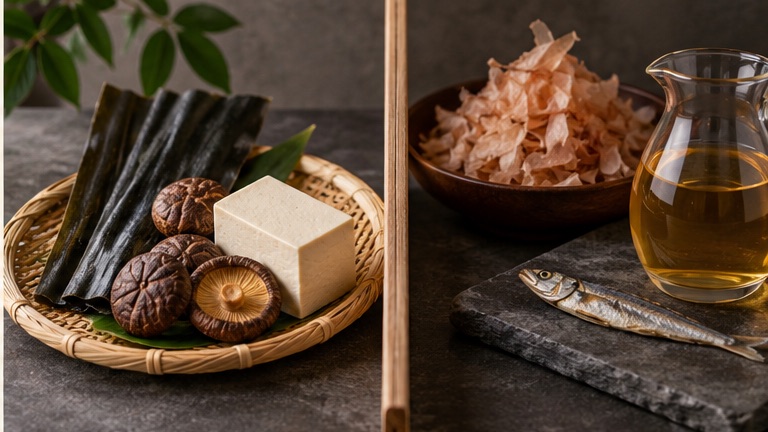
Dashi is Japanese stock. The most familiar traditional version combines kombu kelp with katsuobushi, dried and smoked bonito fish. Other stocks may use dried sardines, flying fish or shellfish. Because dashi can be clear and used in small quantities, the finished food may still look entirely vegetable-based.
It appears in miso soup, noodle broth, dipping sauce, simmered vegetables, tamagoyaki, savoury custards, okonomiyaki batter and seasoning bases. Asking “Is there visible fish?” is therefore not enough.
Plant-based dashi exists. Kombu and dried shiitake mushrooms create strong umami and are widely used in Buddhist cuisine and vegan restaurants. Look for words such as kombu dashi, shiitake dashi, vegan or plant-based, but confirm that no fish stock is blended with them.
Useful question: “Katsuo dashi ya sakana no dashi wa haitte imasu ka?”—Does it contain bonito stock or fish stock?
Indian restaurant language often distinguishes “pure veg,” eggless food and Jain food. Japanese menus may not make those divisions unless the restaurant deliberately serves international or plant-based guests.
Do not translate Jain food simply as vegan. A vegan curry can contain onion and garlic. A dish free of onion and garlic can still contain fish dashi. Explain the actual excluded ingredients rather than relying on one label.
Indian shoppers are used to the Food Safety and Standards Authority of India’s front-of-pack vegetarian mark: a green symbol that can answer the first question quickly. A product sold in Japan may not give you that same visual shortcut. Japanese packaging is built around Japanese ingredient and allergen information, while vegan or vegetarian identification is often voluntary and varies by brand.
That changes the buying habit. Do not treat a green package, a vegetable illustration or the absence of a meat photograph as proof. Look for an explicit vegan or vegetarian claim, then read the current ingredient list for fish stock, meat extract, egg, milk, gelatin and compound seasonings. If an imported product carries an Indian vegetarian mark, it is useful—but do not assume every locally made product follows the Indian system.
For a strict diet, the safest order of trust is: a credible vegan certification or specialist producer, a complete ingredient list you can understand, direct confirmation from staff, and finally a simple fallback food when the answer remains uncertain.
Shōjin ryōri is Buddhist temple cuisine built around plant ingredients. Meals often combine rice, soup, tofu, sesame, seasonal vegetables, pickles and carefully balanced cooking methods. The philosophy values restraint and the character of ingredients rather than imitation meat.
For vegan travellers it is one of the most promising Japanese traditions. However, modern restaurants may use the phrase loosely or adapt dishes, so confirm the menu if strict avoidance matters. Alcohol-based seasonings such as mirin or sake may be used even when no animal product appears.
Jain diners must ask separately about root vegetables and alliums. Temple cuisine is plant-based, not automatically Jain.
Best choice when: you want a complete Japanese meal designed around vegetables rather than a modified side dish.
Plain Japanese rice is a reliable foundation. It normally contains rice and water and arrives without the spices or fat expected in many Indian rice dishes. Its subtle sweetness and sticky texture are intentional.
The risk begins when rice becomes mixed, seasoned or topped. Takikomi gohan may contain chicken, fish stock or seafood. Sushi rice contains vinegar seasoning and may be handled beside fish. Ask for plain gohan when you need the simplest option.
Jain note: plain rice is generally compatible, but accompanying pickles, soup and sauces need separate checks.
Shio musubi or shio onigiri is a rice ball seasoned with salt, sometimes wrapped in nori seaweed. With no filling, it can be one of the most convenient plant-based choices.
Confirm that it is truly plain. Convenience-store onigiri uses labels and allergen panels, but seasoning powders or flavoured seaweed can complicate products. In a restaurant, ask whether any dashi or filling is used.
Best choice when: you need portable, mild food and can verify the label.
Umeboshi is a salty-sour pickled Japanese apricot often called plum in English. An umeboshi onigiri is commonly rice, the pickle and seaweed, making it a useful vegetarian filling.
Packaged versions can include sweeteners, flavour enhancers or seasoning extracts. The sharp taste is much stronger than a sweet fruit filling. Check the ingredient label rather than treating every red centre as umeboshi.
Jain note: often suitable by ingredients, but cross-contact and added seasoning still require verification.
Kombu kelp simmered in a sweet-savoury seasoning makes a popular rice-ball filling. Kelp itself is plant-based, but the simmering liquid may contain fish dashi or animal-derived seasoning.
This is a good example of why the ingredient name alone does not settle the dish. Choose a product explicitly marked vegan or read the complete label.
Edamame are green soybeans boiled or steamed in their pods and usually salted. Diners squeeze the beans into the mouth and leave the fibrous pod uneaten.
Plain salted edamame are normally vegan and widely available at izakaya-style restaurants. Flavoured versions may add butter, meat seasoning or shared grill contact, so request plain if necessary.
They provide a useful protein-containing side, but an edamame plate is not a complete meal by itself.
Hiyayakko is cold silken or soft tofu served as a refreshing side. Tofu itself is made from soybeans, water and a coagulant. Traditional toppings may include spring onion, grated ginger, soy sauce and bonito flakes.
Ask for no katsuobushi and check the sauce. Some bottled noodle-style sauces include fish stock. Plain soy sauce is more likely to be plant-based, though individuals avoiding alcohol should review its fermentation and ingredients.
Jain note: request no spring onion or ginger if those conflict with your practice, and ask for plain salt or verified sauce.
Yudōfu gently warms tofu in water, often with kombu, and serves it with dipping condiments. The preparation looks ideal for vegetarians, yet the dipping sauce may contain bonito dashi.
Restaurants connected to temple cuisine may offer a plant-based version. Confirm both the pot and the sauce. If seafood is cooked in the same shared hot pot, strict diners will also need to ask about the vessel.
Agedashi tofu is lightly coated tofu, fried and served in a savoury broth. The tofu is vegetarian, but the broth is commonly made with fish dashi. Bonito may also appear as a topping.
It should not sit on a “safe by default” list. Order it only when the restaurant confirms plant-based stock and suitable frying oil. A vegan restaurant can recreate the dish with kombu-shiitake broth.
Goma-dōfu is not soybean tofu. It sets sesame paste with starch, producing a smooth, rich texture associated with shōjin cuisine. It is often served with wasabi and a light sauce.
Traditional temple versions are promising for vegan diners, but commercial sauces can contain dashi. Sesame allergies are also relevant. The dish shows that Japanese plant-based food is not limited to plain bean curd.
Natto has a powerful smell, sticky threads and a flavour that divides even Japanese diners. The beans themselves are vegan and provide protein, but the small sauce packet included with packaged natto frequently contains fish-derived dashi.
Use plain soy sauce, mustard or a verified vegan seasoning instead. Natto is commonly eaten over rice. Texture, more than heat or spice, is the main challenge for first-time Indian diners.
Tsukemono includes vegetables preserved with salt, rice bran, vinegar, miso or other methods. Daikon radish, cucumber, cabbage, aubergine and umeboshi are common.
Many are plant-based, but not every pickle is simple. Some contain bonito, seafood extract, sweeteners or colouring; kimchi sold in Japan may include fish sauce. A pickle assortment can also contain root vegetables relevant to Jain diners.
Choose clearly labelled products or ask for the ingredients of each item rather than approving an entire colourful plate at once.
Sunomono is a light vinegar-dressed dish, often made with cucumber and seaweed. Versions with octopus, crab or small fish are also common, and the dressing can contain dashi.
Ask for cucumber-and-wakame sunomono made without fish stock. The bright acidity can be welcome beside rice and tofu, but the category name never guarantees a vegetable-only version.
Vegetable tempura may include pumpkin, aubergine, sweet potato, lotus root, mushroom, green pepper and shiso leaf. Check four separate things:
A vegan restaurant can solve all four. At a conventional tempura counter, shared oil is common and the dipping sauce normally needs attention. Eating pieces with verified salt rather than tentsuyu can remove one problem but not the others.
Jain note: select permitted vegetables individually; lotus root, sweet potato and other underground vegetables may not fit.
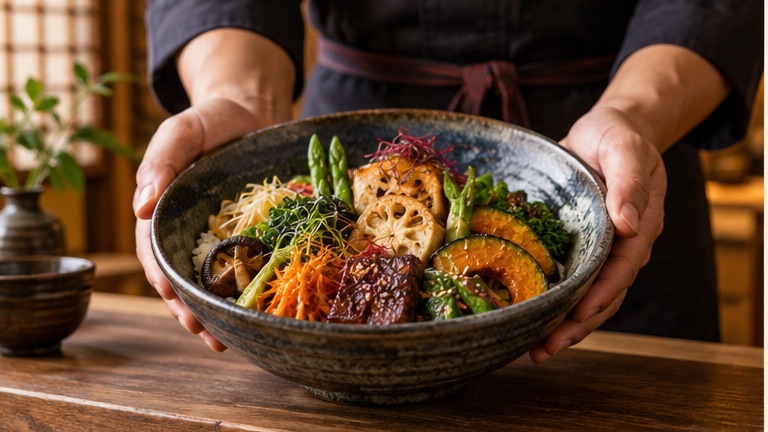
Mushroom, green pepper, aubergine, tofu and other vegetables can be grilled on skewers. Salt-seasoned skewers are easier to assess than glazed ones because tare sauce may contain stock or animal ingredients.
The grill may be shared with chicken and other meats. At a yakitori restaurant, even a vegetable skewer belongs to a meat-focused kitchen. Strict vegetarians should prefer a plant-based restaurant or obtain a clear answer about equipment.
Zaru soba serves cold noodles on a bamboo tray with a concentrated dipping sauce. The noodles may contain buckwheat and wheat; 100-percent buckwheat versions exist but are not universal. The standard dipping sauce, tsuyu, commonly contains bonito dashi.
Ask for vegan tsuyu or use verified soy sauce with wasabi and condiments. The cooking water may be shared, and wheat makes most soba unsuitable for people who assume buckwheat means gluten-free.
The dish itself can be elegant and refreshing, but plain-looking noodles do not remove the sauce problem.
Udon noodles are thick and chewy, usually made from wheat flour, water and salt. Kake udon places them in hot broth, which is generally the main obstacle for vegetarians because it often relies on fish dashi.
Look for a restaurant advertising vegan udon with kombu and shiitake stock. Also inspect toppings: fish cake, tempura crumbs fried with seafood, meat and bonito can appear.
Jain note: a vegan broth can still contain onion, spring onion or garlic, so state those exclusions separately.
Ramen consists of multiple components: noodle, soup base, aroma oil, seasoning tare and toppings. Removing pork slices does not turn tonkotsu broth into vegetarian ramen. Even a clear vegetable-looking soup may contain chicken stock, fish powder, lard or egg noodles.
A purpose-built vegan ramen is the reliable option. Modern shops create richness with sesame, soy milk, miso, mushroom, kombu and vegetable oils. Ask whether the noodles contain egg and whether the bowl is prepared with separate utensils if strict separation matters.
“Vegetable ramen” can mean ramen topped with vegetables, not ramen made without animal stock.
Miso paste is fermented soybean seasoning, often combined with rice or barley. The paste itself is frequently plant-based. Miso soup, however, combines miso with dashi, and the dashi is commonly bonito-based.
Ask specifically for kombu or shiitake dashi. Tofu and wakame seaweed are suitable toppings; clams and other seafood obviously are not. Some instant packets include fish extract even when the front image emphasises tofu.
This distinction—plant-based miso versus fish-based miso soup—is one of the most useful facts for an Indian vegetarian in Japan.
Beyond umeboshi and kombu, onigiri can contain pickled mustard greens, seasoned mushrooms, sesame, beans or mixed vegetables. It can also contain tuna mayonnaise, salmon, cod roe, chicken or hidden fish seasoning.
Convenience stores rotate products and recipes. Use the current ingredient panel and allergen information; do not rely on a photograph from an old travel blog. “Seaweed” on the outside does not describe the filling.
Inari sushi places vinegared rice inside sweet-savoury fried tofu pockets. It contains no visible fish and is often one of the easiest sushi shapes for vegetarians to identify.
Nevertheless, the tofu pockets may be simmered with fish dashi, and mixed rice can contain non-vegetarian seasoning. Vegan-labelled inari is preferable. Sushi counters also handle fish on shared surfaces.
The sweet pocket and tangy rice make it approachable for diners who do not want raw seafood, but “no raw fish” and “vegetarian” remain different claims.
Cucumber rolls (kappa maki), pickled daikon rolls and natto rolls can be plant-based. Avocado rolls are more common in international-style sushi than in older Japanese tradition but can also work.
Check for mayonnaise, bonito seasoning and shared knives or boards. Pickled daikon may contain sweeteners or colouring important to some diners. Wasabi paste can include additives, while ordinary soy sauce contains wheat unless a gluten-free alternative is provided.
At a mixed sushi restaurant, strict vegans may prefer individually packaged or specifically vegan preparation.
Okonomiyaki is a savoury cabbage pancake associated especially with Osaka and Hiroshima styles. Standard batter may contain dashi and egg. Pork belly, seafood, bonito flakes and mayonnaise are frequent additions. The commercial sauce may also need verification.
A vegetarian version requires more than removing the pork topping. Ask for plant-based batter, no meat or seafood, no bonito flakes and vegan sauces. Hiroshima-style versions may add noodles, introducing another ingredient list.
Cook-at-the-table restaurants can still use shared griddles. Purpose-built vegan okonomiyaki offers the clearest experience.
Japanese curry is usually thicker, sweeter and less chilli-hot than many Indian curries. Curry roux blocks or restaurant bases can contain beef or pork extract, chicken stock, dairy, honey or other animal ingredients. A plate labelled vegetable curry may simply replace meat pieces while using the same roux.
Look for an explicit vegetarian or vegan curry. Plant-based versions often use roasted vegetables, mushrooms, fruit and spice for depth. If ordering for a Jain diet, ask about onion, garlic, potato and carrot; they form the foundation of many recipes.
Do not judge Japanese curry by Indian curry expectations. It is its own comfort-food tradition, commonly eaten with short-grain rice and pickles.
Traditional Japanese sweets can be easier than savoury food because many rely on rice flour, beans, sugar and agar. Mochi, daifuku, yōkan and anmitsu often have plant-based versions. Agar, called kanten, comes from seaweed, unlike animal-derived gelatin.
Still check fillings and modern variations. Cream daifuku contains dairy; custard contains egg; some jellies use gelatin; honey may concern vegans. Red-bean paste is commonly plant-based but commercial recipes should be verified.
For Jain diners, ingredients may be acceptable more often than savoury dishes, but equipment and individual fasting rules remain personal considerations.
Before ordering, scan or ask about these categories:
An allergen chart is helpful but cannot prove vegetarian status. Fish stock or meat extract may not appear among the specific allergens highlighted by a restaurant.
Long translated cards are safer than relying on pronunciation, but these short phrases help begin a conversation.
| Purpose | Japanese (romanised) | Meaning |
|---|---|---|
| State vegetarian diet | Watashi wa bejitarian desu | I am vegetarian |
| Exclude fish and seafood | Sakana to gyokairui wa taberaremasen | I cannot eat fish or seafood |
| Ask about fish stock | Sakana no dashi wa haitte imasu ka? | Does it contain fish stock? |
| Ask about meat | Niku wa haitte imasu ka? | Does it contain meat? |
| State vegan diet | Dōbutsusei no shokuhin wa taberaremasen | I do not eat animal-derived foods |
| Exclude egg | Tamago nuki de onegai shimasu | Please make it without egg |
| Exclude onion and garlic | Tamanegi to ninniku nuki de onegai shimasu | Please make it without onion and garlic |
Saying taberaremasen communicates “cannot eat,” which can be clearer than debating the local definition of vegetarian. Show a written list that includes meat, fish, seafood, stock, egg, dairy, onion, garlic and root vegetables as relevant to you.
A restaurant may understand vegan but not Jain dietary rules. Begin with a vegan base, then remove onion, garlic and other underground vegetables according to your practice. Confirm broth and sauces again; a kitchen may remove visible onion while using a premade base.
Plain rice, permitted steamed vegetables, plain tofu, fruit, nuts and simple bean dishes are potential building blocks. Temple cuisine is useful but often includes roots or alliums. Carrying a Japanese-language dietary card reduces the pressure on both diner and staff.
Cross-contact standards differ. If shared equipment is unacceptable, say so explicitly and accept that some kitchens cannot safely accommodate the request. A clear refusal is more useful than a polite but uncertain promise.
Do not begin with the product photograph. Follow this order:
Recipes can change, and automated translation can misread ingredient terms. Plain salted rice, whole fruit, salted edamame and clearly certified vegan items reduce ambiguity.
It can be, especially at vegan and shōjin restaurants. Conventional cooking uses fish dashi widely, so apparently vegetable-based dishes often need verification.
Not automatically. Miso paste is often plant-based, but the soup commonly uses bonito fish stock. Ask for kombu or shiitake dashi.
Some cucumber, pickled vegetable, natto and verified inari sushi can be vegetarian. Check seasoning, mayonnaise, dashi and shared preparation surfaces.
Not necessarily. Batter can contain egg, oil may be shared with seafood, and dipping sauce commonly contains fish dashi.
No. Japanese curry is generally a thick, mildly spiced comfort dish. Its roux or stock may contain meat or dairy even when vegetables are the visible topping.
Yes, particularly with advance planning and restaurants willing to customise, but the term may not be understood. Provide an exact written exclusion list and discuss shared equipment.
The safest Japanese vegetarian food is food designed to be plant-based from the beginning. Shōjin ryōri, vegan ramen, vegan curry and specialist restaurants remove much of the uncertainty. Plain rice, salted edamame, verified onigiri, tofu and selected sweets can fill gaps.
The central rule is simple: check the liquid and seasoning, not only the visible solid ingredients. Dashi, sauce, flavoured oil and shared equipment are where most surprises occur. State your exclusions precisely, use a written card, and treat “vegetable” as a description—not proof of vegetarian preparation.
If anime made you curious about particular meals, continue with 12 Japanese Foods from Anime to Try in India. For more cultural context beyond food, see Japanese School Life in Anime: 22 Things Indian Viewers Should Know.
AUTHOR OF THIS ARTICLE
SoJapan
SoJapan India Pvt. Ltd. is a Japanese-founded company based in Gurugram. We bring Japanese food, anime goods and apparel materials to Indian businesses, with a sister company in Kyoto that works directly with makers in Japan.