A dab beside a dumpling and a spoonful mixed through a sauce can put the same condiment in very different places. Before adding yuzu kosho, decide which of those jobs you want it to do. Do you want to choose the amount with each bite, or distribute the seasoning throughout the food?
The distinction matters because this is not simply citrus juice in paste form. S&B’s introduction to yuzu kosho describes a combination of yuzu, green chilli and salt, drawing particular attention to the fruit’s fragrant peel. Adding more of that combination to seek a stronger citrus impression also adds the other ingredients. It does not let you adjust citrus, chilli and salt independently.
The maker examples below show three routes: a separate accent, a mixed dressing and seasoning added during cooking. Choose the route before borrowing a quantity from a recipe.
S&B’s dim sum serving suggestion offers its spicy citrus paste alongside prepared dim sum and soy sauce, with amounts left to the diner rather than a fixed paste-to-soy ratio.
As an editorial suggestion for a first trial, keep a small portion of the condiment separate and try it with one bite of food you already know. You can then decide whether you want more of that combined seasoning before putting it across the whole plate. This is a way to make your own preference easier to judge, not a tested serving quantity.
The product’s full formulation still matters. S&B’s 43g Prepared Spicy Citrus Paste, code 074880020083, lists yuzu peel, green chilli and salt along with other ingredients, including sake. A short three-ingredient description of the condiment’s basic idea is therefore not a complete declaration for that tube. Check the version in front of you when an ingredient matters to your requirements.
There are two different reasons to leave it beside the food. You may be learning what this particular paste contributes, or you may be serving people who want different amounts. Neither requires every dumpling to arrive with the same seasoning already spread over it.
Keep the comparison fair enough to be useful. Try a bite without the paste, then a similar bite with a little. If you also change the dipping sauce, add another chilli condiment and switch fillings at the same time, you will have more difficulty deciding what you want to repeat. This is a suggested tasting method, not a claim that we tested a particular brand or combination.
Separate does not have to mean eating the paste by itself. The point is to assess it with the food. A dab tasted alone cannot tell you exactly how much you will enjoy with a mouthful of rice, vegetables or a dumpling. Nor does enjoying one strongly seasoned bite mean you want the whole meal seasoned to that level.
If you prefer dipping, put a small amount of your chosen sauce in your own dish and mix the paste into that portion. The decision then moves from each bite to each small batch of dipping sauce. You can change the next batch without changing anyone else’s. Be aware that adding a salty condiment to an already seasoned sauce is an addition, not a replacement for something the sauce already contains.
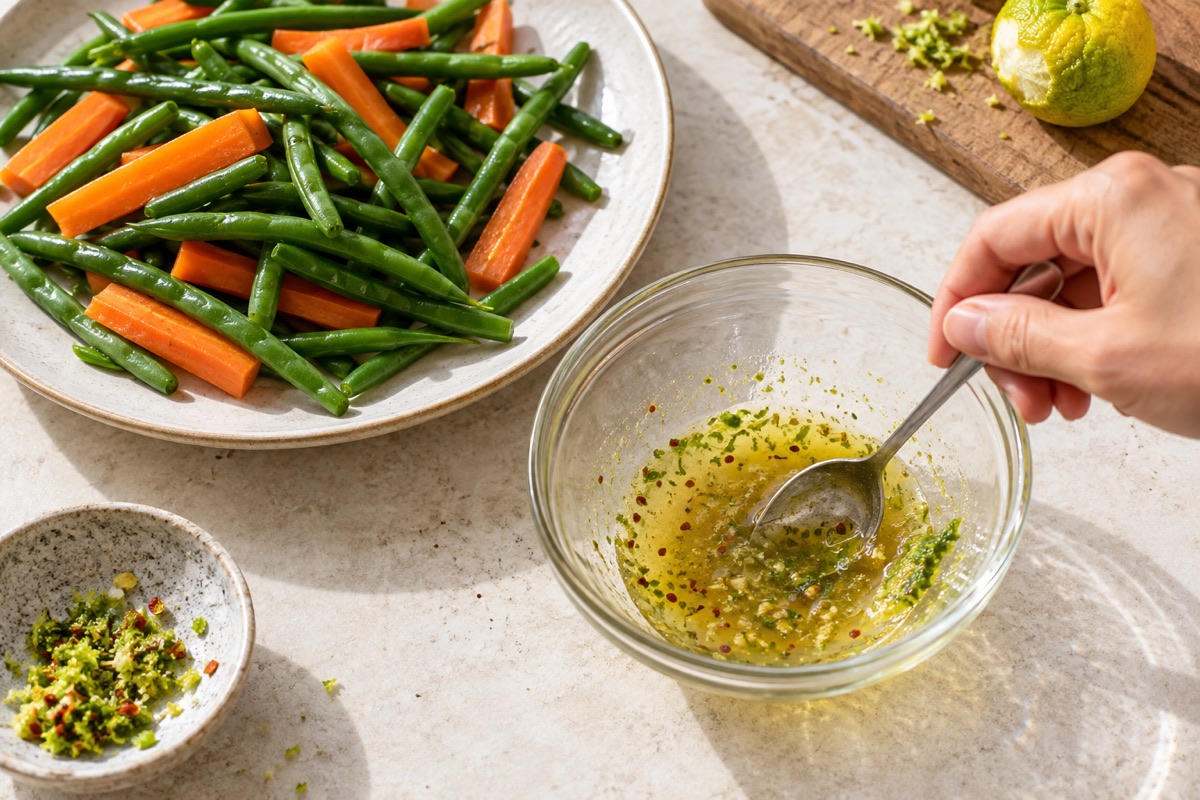
House Foods provides a useful contrast to the separate serving approach. Its yuzu kosho dressing combines vinegar, oil, a little sugar, soy sauce and its coarse yuzu kosho. The maker suggests uses including salads and boiled vegetables. Here, the paste becomes one ingredient in a mixture rather than a condiment the diner picks up separately.
Notice where the decision happens: in the dressing bowl, before the mixture is put on the food. That is an opportunity to check the combined result on a small portion of the vegetables first. It is more informative than judging only a spoonful of dressing, because the amount of dressing carried by the food also matters. The small-portion check is our editorial suggestion; the linked page supplies the manufacturer’s actual recipe.
House specifies one teaspoon of its paste for that two-serving dressing. That figure is tied to the other ingredients and amounts on the page. It is not a general instruction to use one teaspoon for any two-person meal, and it does not establish a maximum or minimum for another maker’s paste.
A serving count alone leaves too much unstated. A little dipping sauce shared by two diners and a large bowl of vegetables for two diners can involve different amounts of food and different amounts of sauce actually eaten. When following a recipe, keep its ingredient relationships intact for the first preparation instead of extracting only the most memorable number.
For an adaptation, write down what you changed. For example, changing both the paste and the amount of soy sauce makes this a different seasoning mixture. It may suit your preferences, but you should not expect the original recipe’s balance just because the serving count stayed the same. No laboratory measurement is needed to keep a useful kitchen note: the product name, ingredients used and approximate amount of food are enough to make the next attempt less arbitrary.
House describes the 40g coarse yuzu kosho used in the dressing as containing coarsely chopped yuzu peel. Do not confuse a deliberately textured condiment with a liquid that should become visually featureless. The practical aim when mixing a dressing is to distribute the paste, not to make the peel disappear.
Use the spoon to break up any concentrated lump of paste against the side of the bowl and mix it through the other ingredients. Look at what remains on the spoon and in the bowl before pouring. If the first portion contains almost no paste and a later portion receives a large unmixed lump, the diners have not received the same mixture, even if you measured the starting ingredients carefully.
This is a handling suggestion, not a promise that the dressing will stay uniformly mixed indefinitely. Follow the recipe and judge the mixture at the point of serving. If it needs mixing again, do that before dividing it between portions.
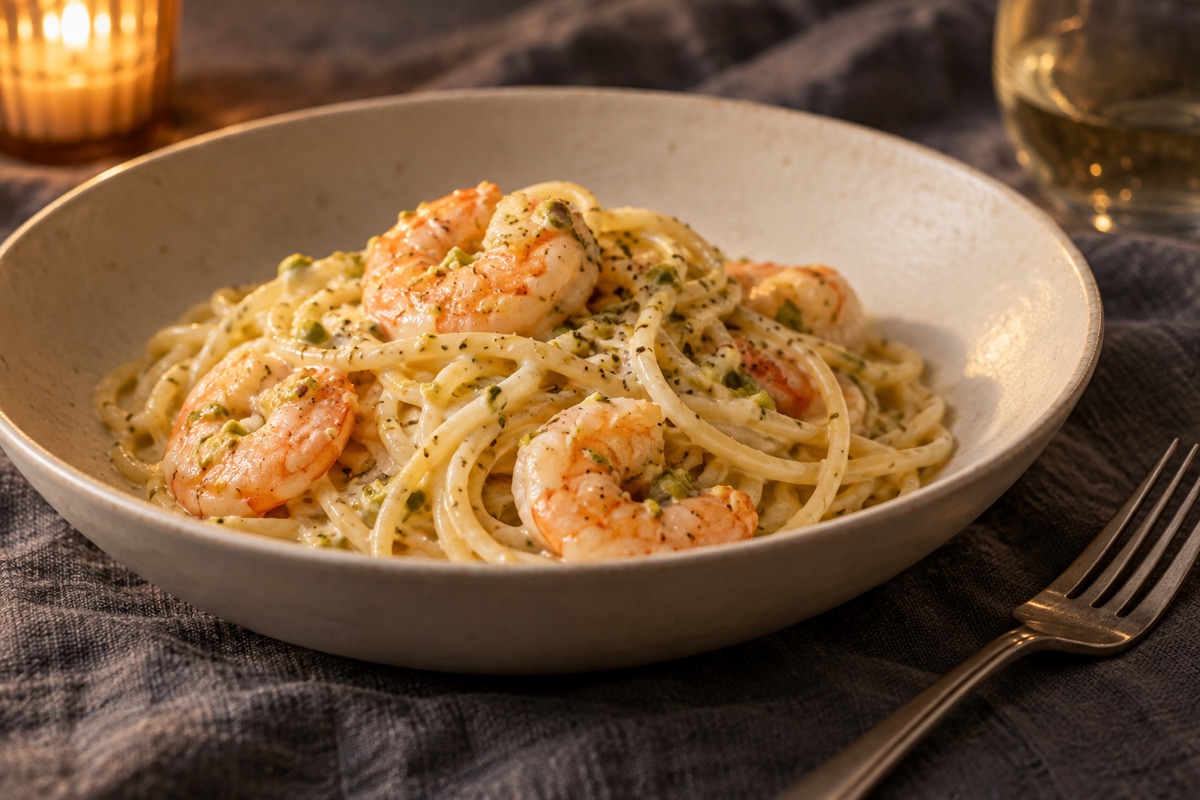
Leaving yuzu kosho beside finished food is an easy starting point, but it is not its only legitimate use. Two S&B recipes put it into cooking at markedly different moments. They are more useful than a blanket rule that this condiment must always go in last—or that it should always be heated from the beginning.
In Prawn Yuzu-kosho Cream Pasta, the maker cooks the onion and prawns, adds cream and brings it to a boil, then mixes the paste into the sauce. The spaghetti follows; the heat is turned off and the pasta is mixed. The listed two-serving recipe uses 10g of the named paste. That is a quantity for this cream sauce and pasta preparation, not a conversion rule for every sauce.
The sequence matters if you follow that recipe. The paste is added to the sauce before the final mixing of the pasta; it is not presented as a blob to be left on top for individual bites. Equally, the instructions do not say to boil the paste for an arbitrary long period. Refer to the full recipe for its ingredients and order rather than stretching this short summary into a different method.
S&B’s Yuzu-kosho Karaage takes another route. The paste is rubbed into the chicken with mayonnaise and sake—or water—before resting, coating and frying. Here the seasoning is part of the preparation before cooking, not a finishing sauce. The recipe demonstrates that earlier addition is possible in a specified dish; it does not establish the same method for all meats, vegetables or products.
These examples answer the narrow question “Can it be used during cooking?” with yes, while keeping the next question open: “At what stage, and with what other ingredients?” That answer comes from the recipe you choose. There is no need to invent one universal heat rule to cover both a cream sauce and a fried chicken preparation.
You may want a vegetable dish rather than prawns or chicken. The dressing example is a more direct starting point than replacing the main ingredient in the pasta or karaage and assuming the entire method still applies. A recipe for one ingredient does not verify another ingredient’s preparation, cooking time or dietary suitability.
For a simpler experiment, keep the yuzu kosho mixture separate from vegetables that you have already prepared by a suitable method. That lets you explore the seasoning without also trying to redesign a frying recipe. This suggestion is about keeping the experiment manageable; it is not a tested SOJPN recipe or a claim about traditional service.
If you adapt a full recipe, separate the instructions that cook the main ingredient from those that distribute the seasoning. Keeping the paste does not mean you can keep the original food’s cooking method unchanged.
Amount and distribution are connected, but they are not the same decision. A condiment can be concentrated in a few bites, spread through a small dipping sauce or dispersed through the sauce for an entire dish. The following comparison is an editorial decision aid, not a set of manufacturer dosage instructions.
| Where you put it | What you can still choose | What to check before committing |
|---|---|---|
| Beside an individual portion | Whether, and how much, to use with each bite | The combined taste with the food, not only the paste alone |
| In a small dipping dish | How much dip reaches a bite; how to mix the next small batch | The seasoning already present in the dip |
| In dressing before serving | How much dressing to put on a trial portion before dressing the rest | Whether the paste is distributed and the vegetables carry enough dressing |
| In the sauce for a whole dish | The mixture before it is combined with all the food | The recipe’s quantity, cooking stage and other seasonings |
The same distinction helps when sharing food. Mixing seasoning through a communal dish removes some of the choices diners would have had with separate condiments. That may be exactly what you want for a coherent sauce. If preferences are unknown, however, an unseasoned portion held back before adding the mixture gives you a practical alternative. Decide that before combining everything, not after discovering that someone would have preferred it without.
“Add more” is a useful instruction only after deciding what you want more of. With yuzu kosho, a larger dose of the same paste adds more of its formulation. If you already like the chilli and salt level but want a different citrus impression, increasing the paste may solve the wrong problem.
Separate three possibilities. Is the food insufficiently seasoned overall? Is the mixture uneven, leaving some bites without the paste? Or do you want a citrus characteristic that this particular condiment, in this particular dish, is not providing? The first may call for a quantity adjustment, the second for better mixing, and the third for reconsidering the ingredient choice. They should not all produce the same automatic extra spoonful.
A request for citrus can mean different things in a recipe. The yuzu peel highlighted in S&B’s description is not the same ingredient as a measure of juice. Replacing a liquid with a paste changes the form of what you add, as well as introducing the paste’s other ingredients. Do not assume that equal spoonfuls perform the same job.
Ponzu creates a further distinction. Our guide to ponzu bottles explains why the name can lead readers toward different citrus-seasoning formulations, including soy-seasoned products. Choosing a bottle because it also has a citrus association does not make it a drop-in substitute for yuzu kosho. It may be useful in your dish, but that is a new seasoning choice, not an equivalent dose.
For a first attempt at a published recipe, use the named type of ingredient if you can obtain a suitable version. If you cannot, choose a recipe built around what you have, or treat your substitution as an experiment in a small portion. Avoid committing an entire dish to an untested conversion just because both ingredients mention yuzu.
If a trial sauce is more strongly seasoned than you want, do not keep adding it to food in the hope that another condiment will automatically cancel it out. You can leave that trial aside and mix a fresh, smaller batch using less paste. That is one reason to test a small portion before making a full bowl.
Adding more of a suitable unseasoned base changes the mixture’s proportions; it also makes more sauce. It is not a magic removal of an ingredient. Whether that adjustment suits the dish depends on what the base is and how much sauce you actually need. A cream sauce, a vinegar-and-oil dressing and a soy-based dip cannot be corrected by one universal formula.
When a sauce has already been mixed through all the food, your options are narrower. Holding some food or sauce base back in advance is a more predictable planning choice than promising that a too-strong finished dish can always be rescued. There is no need to finish the tube—or even the trial portion—to make the first experiment worthwhile.
Before cooking, check the exact product and its label. The House coarse paste cited above lists alcohol among its ingredients, while the S&B tube cited earlier lists sake. Neither a vegetable serving suggestion nor replacing the separate sake in a recipe with water changes what was already in the paste. If avoiding an ingredient is important to you, resolve that question for the actual product before planning the meal. This article does not establish halal certification, alcohol-free status or suitability for any particular dietary requirement.
After that check, choose one manageable route. For a separate accent, prepare the food first and keep the condiment in your own small dish. For a dressing, follow a suitable maker recipe and test it with a small portion before dressing the rest. For a cooked sauce, keep the recipe’s order visible so that the paste enters at the intended stage. These routes answer different needs; there is no requirement to try all three at once.
Judge the first result by a specific question. Would you prefer the same seasoning in fewer bites? Keep it separate. Would you prefer more consistent coverage? Work on the mixture and how it reaches the food. Do you want less of the combined seasoning? Reduce the paste in the next small trial. Those observations are more useful than deciding that yuzu kosho is simply “good” or “too strong” without remembering how you used it.
For an imported product in India, use the instructions and ingredient declaration on the pack you are considering, checking the maker’s matching product page where needed. The examples here identify Japanese manufacturers’ products and recipes; they do not verify local stock, prices or that a similarly named imported tube has an identical formulation. Follow the pack’s opened-storage directions rather than applying an unopened shelf-life figure to a tube you have started using.
Yuzu kosho does not need to season everything on the plate to have a useful role. Start by choosing where you want it to reach. Once that decision is clear, the amount you use becomes a question you can answer with the actual food in front of you.

AUTHOR OF THIS ARTICLE
SoJapan
SoJapan India Pvt. Ltd. is a Japanese-founded company based in Gurugram. We bring Japanese food, anime goods and apparel materials to Indian businesses, with a sister company in Kyoto that works directly with makers in Japan.