← JOURNAL29 Sep 2026
Anime Cosplay in India: A Beginner’s Guide to Costumes, Events and Contests
 By SoJapan
Your first cosplay does not need to win a competition, resemble a studio photograph or survive a close inspection by strangers. It needs to let you enjoy being the character for a day without making it impossible to walk, breathe, see, travel or return home.
That sounds obvious until a design leaves the screen. Anime can ignore gravity, weather, human proportions and the width of a convention-hall door. A coat that looks dramatic in a winter scene can become exhausting in a crowded Indian venue. A two-metre weapon may fit a photograph but not a metro train. A wig styled for one angle may block your peripheral vision. Good cosplay is therefore not only visual accuracy. It is interpretation, construction, performance and practical problem-solving.
This guide explains how to begin anime cosplay in India, whether you want a low-cost closet cosplay, a commissioned costume, a hand-built competition entry or simply a comfortable convention look. Competition details were checked on 29 September 2026. Always read the rules for your exact event because eligibility, prop dimensions, craftsmanship requirements and stage formats differ.
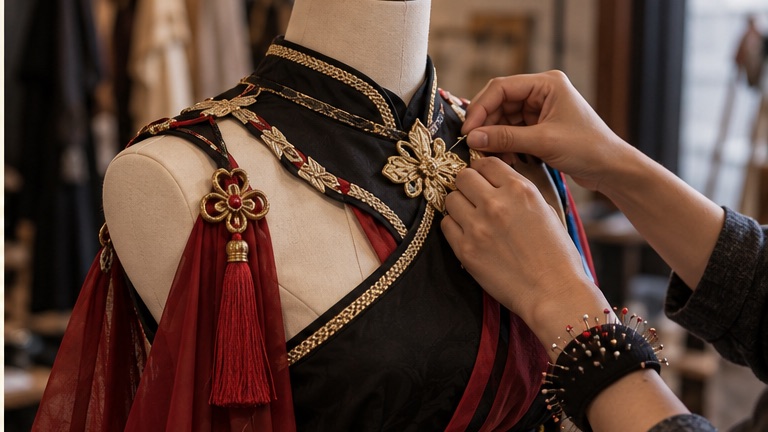
A successful first cosplay needs five things:
You do not need to match a character’s gender, skin tone, height, body shape or age. Cosplay is an interpretation of a design, not an audition to become the fictional person.
| Route | What it means | Best for | Main limitation |
|---|---|---|---|
| Closet cosplay | Combine clothes and accessories you already own or can use normally later | First events, casual meetups and low-pressure photos | Less exact design matching |
| Modified ready-made | Buy base garments and alter colour, trim, shape or details | Beginners who can sew or craft a little | May not qualify for craftsmanship contests |
| Commissioned costume | Pay a maker or tailor to create some or all components | Complex tailoring or people short on build time | Fit, revision time and contest eligibility must be confirmed |
| Handmade build | Pattern, sew, sculpt, paint and finish the costume yourself | Craft learning and competition goals | Requires time, workspace, testing and documentation |
None is morally superior. The important distinction is honesty. If an event asks what you made, bought or commissioned, describe each contribution accurately. A commissioned costume can be excellent for floor cosplay while being ineligible for an award that requires participant-made construction.
Beginners often choose only from affection: “I love this character, so I must make the most elaborate version.” Begin with the actual day instead.
Ask seven questions:
A school uniform, sports jersey, simple coat or modern outfit is often a stronger first choice than full armour. It leaves attention for the wig, silhouette and character mannerisms. Complexity can come later, after you know which parts of an event you enjoy.
Viewers recognise a character through a hierarchy: silhouette, colour blocks, hair, signature accessory and pose. Identify the one feature that carries the design. It might be a patterned haori, a forehead protector, round glasses, a particular weapon shape or a highly specific hairstyle.
This is not an excuse for careless work. It is a way to spend effort where recognition happens. Ten tiny accessories cannot rescue the wrong silhouette.
Collect clear images of the front, back, sides, footwear, fasteners, prop and close details. Note when references disagree. Anime frames, manga art, game models and licensed illustrations may show different colours or proportions.
For a casual costume, choose the version you prefer and remain visually consistent. For judging, keep the references used for construction. Comic Con India’s craftsmanship rules explicitly ask contestants to present a colour character and prop reference, while a build book is encouraged as evidence of accuracy and process.
Break the design into layers instead of calling everything “the costume”:
This list exposes hidden dependencies. A belt may support pouches and also hold a prop. A shoulder piece may attach to an undershirt rather than the jacket. A wig may require a collar adjustment. Build decisions become safer when you know what carries the weight.
Measure with the underlayers and footwear you plan to wear. After fitting, raise both arms, sit, squat slightly, look over each shoulder and take a long step. Check whether a zip strains, armour collides, a skirt rides up or a belt changes position.
Add closures where the costume needs to open quickly. Hidden snaps, hooks, elastic sections and detachable armour can be more useful than trying to reproduce an impossible animated seam.
Weather varies by city and season, but crowd heat can make even an air-conditioned hall uncomfortable. A heavy coat over synthetic layers, foam armour and a wig creates heat faster than ordinary clothing.
Use breathable underlayers where they will not change the silhouette. Add concealed ventilation to helmets and masks. Make heavy outer pieces removable during travel and breaks. Dark sweat marks, transparent fabric under strong light and adhesive failure in heat should be tested before the event.
Hydration and rest are part of the costume plan. A design that prevents drinking for hours is not complete.
Do not order every component on the same day. Start with items that determine fit and colour: the base garment, shoes and wig. Compare them under the same light before matching fabric, paint or trim.
Provide measurements, reference images and a written list of included pieces. Clarify:
Do not describe a commissioned build as handmade by you in a contest. If you modified it, document exactly what changed.
The “correct” colour from a screenshot can change across displays and lighting. Match the overall palette rather than chasing a single digital value. Test whether pale fabric becomes transparent under flash. Check whether dark dye transfers to skin, wigs or light clothing.
Fabric behaviour matters as much as colour. A cape needs the right drape; a structured uniform needs body; stretch garments must recover after movement. Buy a small test amount when the material is expensive or unfamiliar.
Hot glue is useful for some craft tasks but is not a universal structural solution. Weight-bearing straps, shoe attachments and repeatedly flexed seams need mechanical support such as stitching, rivets, buckles, screws or properly designed joints. Use the method appropriate to the material and load.
Build a failure point you can repair. A replaceable strap is better than a decorative piece tearing the main garment.
A wig changes recognition quickly, but it must stay secure without becoming painful.
Before cutting, identify the intended hairline, part and finished length. Cut gradually; fibres do not grow back. Style large spikes around a stable internal shape instead of coating loose hair with product and hoping it remains upright.
Test the wig with glasses, mask, headpiece, collar and any hearing limitation. A clip that feels acceptable for ten minutes may cause a headache after two hours. Bring a comb or wide-tooth tool suited to the fibre and store long wigs so they do not become trapped under bags.
Do not use unverified heat settings. Synthetic fibres respond differently, and a tool suitable for one wig can permanently damage another. Follow the fibre or seller’s heat guidance and test a hidden section first.
Cosplay makeup should support the character under event lighting, not make your skin a testing surface for unknown products.
Patch-test cosmetics and adhesives in advance according to their instructions. Do not apply craft paint, household glue or industrial adhesive to skin. Keep products away from the eyes unless they are specifically sold and instructed for that use. Remove makeup with an appropriate remover instead of aggressive rubbing after a long day.
Coloured contact lenses require particular caution because a lens sits directly on the eye. Buy only through a legitimate eye-care route, follow professional fitting and hygiene advice, and never share lenses. A character is still recognisable without changing eye colour.
If body paint may touch a venue seat, another costume or a hired cab, seal and test it. Carry a cover-up layer for travel.
The question is not only “Does it look real?” It is “Can this object move through security, queues and a crowded aisle without hurting anyone?”
Rules vary. The Comic Con India craftsmanship page prohibits sharp edges, real weapons and hazardous materials, says oversized props must be detachable, and requires costumes above eight feet in height or three feet in width to pass through doors safely. Its staff inspect and tag acceptable props.
The WCS India regulations are different and more demanding: dangerous items and shop-bought imitation weapons are prohibited, and championship stage props have separate number and size conditions. Those rules are competition rules, not universal permission for the convention floor.
Before building, check:
A long prop should separate at designed joints, fit into a protective bag and reassemble without loose sharp hardware. Mark the order of parts. Carry only the tool needed for assembly, if that tool is permitted at the venue.
Test the completed object horizontally and vertically. A prop that is safe while held upright can strike people when turned for a photograph.
Arrive with time for inspection. Keep reference images and construction information available. Do not conceal a rejected item or argue that a material is harmless because it passed at a different event. Venue security has authority over entry even when a competition organiser previously approved a design.
Run a minimum thirty-minute full-dress test, including base layers, shoes, wig, makeup elements, armour, prop and bag. Record video from the front, back and side while you walk, turn, sit and pose.
Look for problems a mirror hides:
Then pack the costume once. If packing takes an hour or a component cannot survive the journey, the build is not finished.
Match the repair kit to the costume rather than carrying an entire workshop.
| Problem | Useful response |
|---|---|
| Loose fabric or trim | Safety pins, matching thread, needle and small clips |
| Detaching armour | Spare hook-and-loop, ties or the intended replacement fastener |
| Wig movement | Hairpins, wig pins and a small styling tool |
| Makeup wear | The exact products used, remover, tissues and blotting material |
| Shoe discomfort | Plasters, spare socks and ordinary backup footwear |
| Heat and fatigue | Water where allowed, prescribed medication and scheduled breaks |
| Dead electronics | Charged power bank or replacement batteries permitted by the rules |
Keep sharp tools out unless the venue expressly permits them. A repair kit that fails security cannot help you.
Comic Con India states the principle clearly: cosplay is not consent. A costume is not permission to touch a person, move their body, hold their prop, block their path or publish a close photograph.
Ask before taking the picture. If the cosplayer is eating, repairing something, speaking on the phone or moving quickly, wait or let the opportunity pass. Accept no without negotiation.
After permission:
Cosplayers also need boundaries. You can decline a pose, photographer or location without explaining. Use a friend or designated handler when the costume limits vision or movement.
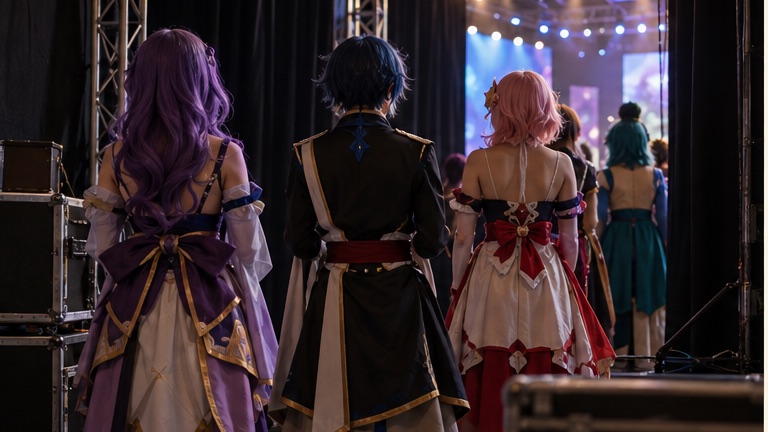
These are different activities.
The goal is to enjoy the event. Bought, assembled and commissioned pieces are normally acceptable unless the event’s general dress or prop policy says otherwise. Comfort and safe movement matter more than construction evidence.
A short stage appearance may judge visual impression, character portrayal, posing or audience response. Rules may allow purchased components but reward handmade work. Confirm the stage time and whether audio is provided.
Judges inspect how the costume was made. You may need reference art, progress images, material samples and explanations of techniques. Purchased work can reduce eligibility even when it looks excellent.
Costume construction and a rehearsed stage presentation are both important. Music, dialogue, video, prop effects and cleanup are regulated. A good costume without a readable performance is incomplete, while an exciting performance cannot replace required craftsmanship.
The numbers below show why contestants must read the exact rulebook.
| Rule area | WCS India regulations | Comic Con India craftsmanship example |
|---|---|---|
| Entry format | Team of two | Individual entry |
| Minimum age | Both participants 18 or older | Participant 18 or older |
| Character source | Same Japanese-origin work | Broader character eligibility under event rules |
| Handmade requirement | At least 75% made by representatives | At least 60% made by participant |
| Costume judging | Accuracy 40, quality 40, technique 20 | Craftsmanship-focused pre-judging |
| Stage format | Performance with regulated audio/video and effects | About one minute with two or three poses; no personal music or dialogue in the cited format |
| International path | Selected pair represents India in Nagoya | City/national competition structure defined by Comic Con India |
WCS India’s 2026 regulations also state that original anime or game audio is prohibited, music must be self-made or copyright-free, and championship characters must come from the same Japanese-origin work. The cited Comic Con India rules ask for at least 60% participant construction and encourage a build book.
Neither percentage should be copied into another event. A rule can change between seasons or even between contest categories at the same convention.
A build book is not a photo dump. It helps a judge understand decisions that may be invisible in the finished costume.
Use a short structure:
Show dates or a clear sequence. Include your hands or workspace where useful, but do not crowd every page with repeated progress shots. Label collaborators and commissioned elements honestly.
If a design required interpretation because the source hid a detail, explain the visual logic. WCS judging guidance allows faithful creative interpretation when original details are unclear.
A convention audience may not know the scene. Build a beginning, change and finish that can be understood without a plot summary.
Choose a few strong movements rather than rushing through many poses. Rehearse with costume restrictions. A cape changes turns; platform shoes change timing; a helmet changes hearing; a large prop changes every entrance.
Mark safe positions and practise recovery when a cue fails. Effects that leave powder, glitter, liquid or small debris may be prohibited; WCS India expressly restricts several such materials. The stage crew must be able to reset the floor safely for the next participant.
Full costume on public transport can damage the build and attract attention before you reach a controlled event space. Wear the base layer or simple clothing, protect fragile parts and change at the venue if facilities are confirmed.
Do not assume a changing room exists. Check the organiser’s map or ask in advance. A restroom is not automatically suitable for assembling armour, body paint or a group costume.
A handler is a friend who can guide someone with limited vision, carry packaging, watch a prop, manage the queue and notice damage. The role is practical, not an unpaid personal assistant. Agree on breaks and responsibilities before the day.
At closing time, makeup is worn, adhesives are weaker and transport is busy. Pack normal footwear, a cover-up layer and enough time to dismantle properly. Do not force foam or shaped pieces into a bag because the venue is closing.
Start with the official community route of an established event or city club. Delhi Anime Club, for example, separates artist and cosplay community links. Chennai Anime Club publishes participation rules and multiple community channels. Large events use official forms for contestants, volunteers and panels.
Observe before sharing personal details. A useful group should identify moderators, state behaviour rules, control commercial promotion and respond to harassment. Meet new contacts first at public events, not private residences.
The related guide Anime Events and Communities in India lists verified entry points across Delhi, Mumbai, Bengaluru, Chennai, Hyderabad, Kolkata, Pune, Odisha and other state networks.
This is a planning example, not a claim that every costume takes six weeks.
Choose the character and version, collect references, read the event rules and list every component. Decide what will be bought, modified, commissioned or made.
Obtain or mock up the base garments, shoes and wig. Confirm colour and fit before buying all decorative materials.
Finish the major clothing shape, armour form or signature accessory. Test weight and attachment while there is still time to redesign.
Add trim, fasteners, paint and surface finish. Keep the prop modular and prepare inspection information.
Complete the wearable appearance and perform the first full-dress movement test. Photograph every side and correct failures.
Prepare the build book or stage file if entering a contest. Run the final test, pack in travel order and stop adding risky last-minute features.
Yes for most general event attendance. Bought and commissioned costumes are common. The restriction appears when a specific competition rewards craftsmanship or requires a participant-made percentage. Disclose how the costume was made.
No. Focus on design language, styling and how you want to interpret the character. Harassment based on body shape, skin tone, gender, disability or age is not legitimate criticism.
Yes. It uses existing or reusable clothes to communicate a character. It is especially useful for beginners, casual meetups, modern characters and events where comfort matters more than competition construction.
Only if the event and venue rules allow its material, form and dimensions and it passes inspection. Make it non-functional, safe around crowds and modular for transport. Never assume approval from a different event carries over.
WCS is an international performance-and-craftsmanship pathway with a two-person team, Japanese-origin work requirements and extensive construction and stage rules. A local walk-on may accept individual entrants and place more emphasis on posing or visual impression.
Only if the preparation sounds enjoyable. Watching one contest first can teach you how check-in, prejudging, stage movement and announcements work. Attending without competing is not a missed opportunity.
Anime India, Comic Con India, Japan Habba, Mela! Mela! Anime Japan!!, Ōta TOKYO and regional festivals advertise cosplay programming. Dates and formats change. Use the India anime events guide and then confirm on the organiser’s current page.
Before leaving home, confirm:
The best first cosplay is not the most difficult one you can survive. It is the one that teaches you what you want to make, perform or improve next.
If you still need a character, 21 Best Anime for Beginners in India offers accessible series across different genres. For clothing and relationship details that often appear in costume design, read Japanese School Life in Anime and Japanese Honorifics in Anime.
Rules and event availability were checked on 29 September 2026. The construction and event-day guidance is editorial advice, not a substitute for an organiser’s rulebook, venue security decision or professional medical advice.
AUTHOR OF THIS ARTICLE
SoJapan
SoJapan India Pvt. Ltd. is a Japanese-founded company based in Gurugram. We bring Japanese food, anime goods and apparel materials to Indian businesses, with a sister company in Kyoto that works directly with makers in Japan.