Your Active Pokémon is Asleep. You have enough Energy attached to cover its Retreat Cost, and another Pokémon is ready on the Bench. Can you pay the cost and move?
Not by retreating. But a usable Switch can move that same Pokémon. The apparent contradiction disappears once you separate a game action called retreat from a card effect that changes the Active Pokémon. Having enough Energy answers a payment question; it does not remove a restriction on the action. The official advanced rules distinguish these routes explicitly. Advanced Player’s Rulebook, sections A-03 and C-03.
This guide is for the physical Pokémon Trading Card Game, not Pokémon TCG Pocket. It assumes you recognise the Active Spot and Bench. Our Pokémon TCG beginner’s guide for India covers the wider game; here, the focus is a turn in which the Pokémon at the front is not the one you want there.
The named cards are examples for reading rules, not a recommended deck or a claim that every printing is legal in today’s Standard format. Check your event’s format separately before buying or registering cards. All practice situations below are hypothetical, with no unmentioned Ability, Trainer restriction or other effect changing the stated actions.
Ordinary retreat is available once during your turn. You discard enough attached Energy to meet the Retreat Cost and exchange the Active Pokémon with one of your Benched Pokémon. You need a Pokémon on the Bench to bring forward; an empty Bench provides no retreat destination. Asleep and Paralyzed Pokémon cannot retreat. A zero Retreat Cost changes the payment, not those restrictions or the once-per-turn limit. Official retreat rules, A-03.
That gives you two separate reasons a retreat can fail. One is “I am allowed, but cannot pay.” The other is “This action is not currently allowed.” Adding Energy might address the first. It is not an answer to the second.
This distinction is especially helpful with a zero-cost Pokémon. The word free is convenient shorthand at a table, but it can conceal what is free. It means the Energy payment is absent. It does not mean unlimited actions, immunity to conditions or permission to ignore another card.
Poisoned, Burned and Confused Pokémon can retreat, assuming the other requirements are met. Those conditions should not be grouped with Asleep and Paralyzed merely because all five are Special Conditions. Pokémon’s official basic-rules Q&A makes this distinction. Official rules Q&A.
Switch is a different instruction. The Item exchanges your Active Pokémon with a Benched Pokémon; its text does not ask you to pay the printed Retreat Cost. Under the switching rules, that effect can move an Active Pokémon that cannot retreat. It still needs a legal opportunity to play the Item and a Benched Pokémon to exchange with. Switch card; switching rules, C-03.
Do not generalise that into “switching ignores everything.” An effect preventing retreat is not the same wording as an effect restricting Trainer use, and one switching card’s requirements are not another’s. Name the card you intend to use, then check that card against the board.

When both routes are available, the decision is no longer just a rules puzzle. It is a choice about what you want to keep.
Here is a deliberately simple planning exercise. Your Active Pokémon A has three basic Energy attached and a Retreat Cost of two. Benched Pokémon B can make the attack you want without receiving another Energy. You have a Switch in hand. Assume either movement route is legal.
Retreating A would leave it with one Energy; using Switch would preserve all three. Those are different preparations for a later turn, even though B finishes in the same place. The useful strategic question is not “Which move is stronger?” It is “Will A need that stored Energy again, and how difficult would it be to rebuild?” This is an illustrative resource comparison, not a deck recommendation or a prediction about who wins.
If A is part of your next attacking plan, preserving its preparation may matter more than saving a Trainer. If A has little future purpose in the situation you are analysing, keeping the Switch could matter more. To make that comparison honestly, you would also need information not provided by the exercise: the rest of your hand, the opponent’s threats and the actions your deck can take. A rule explanation should not pretend those unknowns have an obvious answer.
There is also a turn-wide resource to track. Retreat is limited per turn, rather than granted afresh to each Pokémon that becomes Active. A switching effect does not itself use that retreat action. Pokémon’s Switch Q&A distinguishes the once-per-turn action from Item-based movement. Official Switch Q&A.
For learning games, a small reminder beside the playmat can be more useful than trying to remember how often the Active Spot changed. Write “retreat used” when you actually retreat. Do not use a marker on the Active Pokémon that you then absent-mindedly carry to the Bench: the reminder describes your turn, not a condition affecting that Pokémon. This is an optional teaching aid, not an official required accessory.
Finally, movement can compete with development. The official Q&A explains that attaching Energy to enable retreat does not grant another ordinary Energy attachment after the exchange. If you spend that attachment preparing the outgoing Pokémon, you cannot simply announce a second normal attachment for the incoming one. Official attachment and retreat Q&A.
Before moving a card, decide what the incoming Pokémon is supposed to accomplish. “It will be Active” is only a location. “It will make this attack with these resources” is a plan you can check.
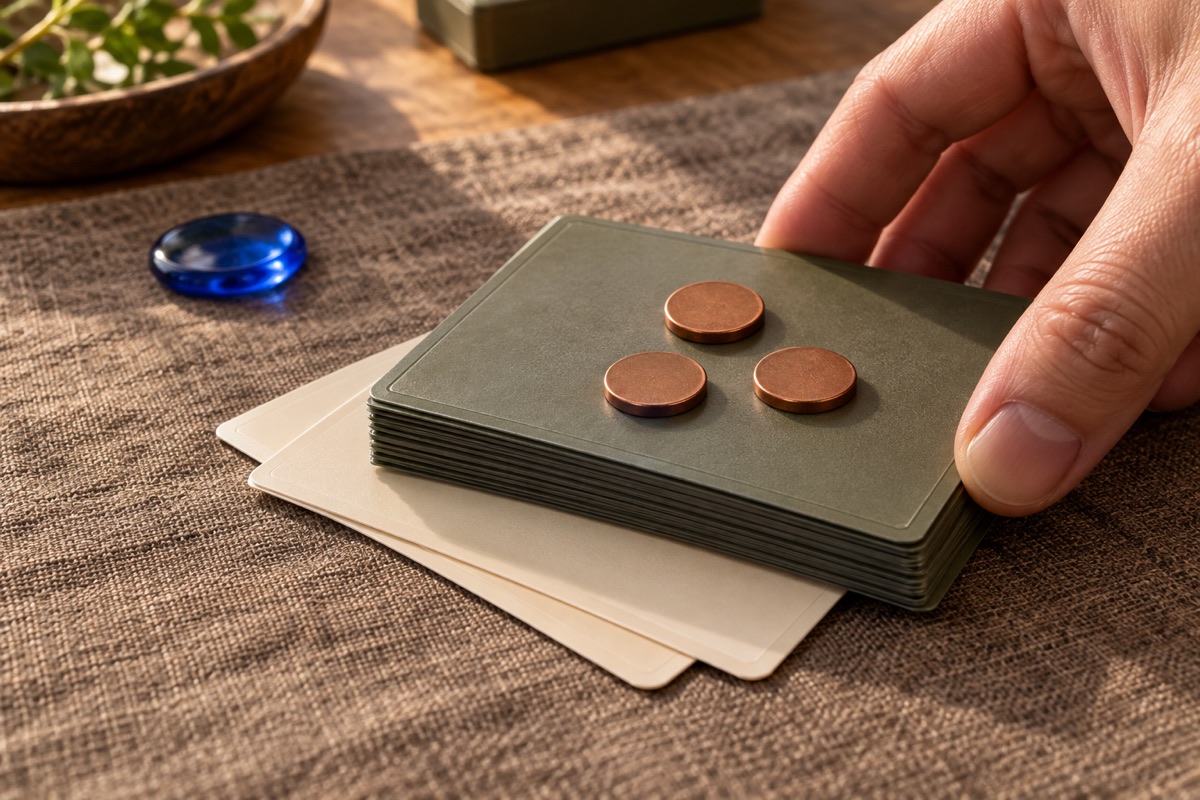
Moving from Active to Bench removes Special Conditions and effects on that Pokémon. Damage counters, its evolution stack and remaining attached cards stay with it; retreat only discards the Energy needed for its payment. Moving does not, by itself, erase the damage already recorded. Advanced rules, A-03/C-03; official evolution-and-retreat Q&A.
The physical handling matters while you are learning. Slide the Pokémon and its stack together, keeping the attached cards clearly associated with it. Deal with the relevant condition markers separately. That reduces the chance of accidentally returning an evolution card to your hand, leaving Energy in the Active Spot for its replacement or sweeping damage counters away with a Poison marker.
Think of the board as several records sharing one small space. The Pokémon’s position records where it is. Its counters record damage. A condition marker records something else. Because the pieces sit together, it is easy to assume that changing one record resets them all. It does not.
Also be careful with the phrase “effects are removed.” It concerns effects on the Pokémon in this movement rule. It is not permission to erase everything that happened during the turn. In particular, do not reset your normal attachment or retreat allowance, take back a played Trainer, or assume every board-wide restriction has vanished. When a disputed effect has unusual wording, identify what it affects before deciding that moving your Pokémon answers it.
Our damage and damage-counter guide addresses a separate question: how damage and direct counter placement interact with protection. You do not need to relearn that whole topic to switch. The relevant habit here is simply to leave the damage record visible unless an instruction actually changes it.
This also explains why “getting my attacker out of the way” and “saving my attacker” are not identical goals. Moving can change which Pokémon is exposed at the front, but it has not automatically repaired the one you moved. Whether that Pokémon is safe depends on the opponent’s available actions, which this movement rule alone cannot tell you.
Switch Cart is useful for learning why similar-looking Trainers are not interchangeable. It requires the outgoing Active Pokémon to be Basic. After the exchange, it heals 30 damage from the Pokémon moved to the Bench. The Basic requirement describes the outgoing Pokémon, not a requirement that both Pokémon be Basic. Official Switch Cart text.
The comparison is compact enough to keep beside the cards:
| Read this part | Switch | Switch Cart |
|---|---|---|
| Outgoing Pokémon | Your Active Pokémon | Your Active Basic Pokémon |
| Incoming Pokémon | One of your Benched Pokémon | One of your Benched Pokémon |
| Healing in this card’s text | None | 30 from the Pokémon moved to the Bench |
For a hypothetical Active Basic with 50 damage, a successful Switch Cart would leave 20 damage on that Pokémon after the stated healing, assuming no other effect changes the result. The benefit is not 30 extra HP added permanently, and the incoming Pokémon is not the recipient of that heal. Read the destination in the sentence, not just the largest number on the card.
Why spend time on such a small wording difference? Because a movement plan can fail before the part you are excited about. If you are evaluating the heal first, you may overlook whether the intended outgoing Pokémon satisfies the Basic requirement. A useful reading order is eligibility, exchange, then the additional effect—not bonus first, restrictions later.
Jet Energy approaches movement from the other end. Its switching effect happens when you attach it from your hand to a Benched Pokémon: that Pokémon switches with your Active. While attached, it provides Colorless Energy. Attaching it to the Active Pokémon is not the stated trigger. Official Jet Energy text.
This is more specific than “attach Energy and then choose anything to promote.” The attachment recipient is the Pokémon coming forward. When you use your ordinary attachment for this play, you are spending that attachment as well as using the card in hand; the movement does not replenish the allowance.
That makes Jet Energy an interesting planning example even without recommending it for a deck. Movement and development are bundled into one decision. A player may want the first part while discovering that the second does not supply the type of Energy needed by the intended attack. Colorless provision should not be silently treated as whichever coloured symbol happens to be missing.
For a practice exercise, write the incoming Pokémon’s attack requirement on a note and compare it with its attached resources after the proposed play. Keep two questions separate: did the Pokémon reach the Active Spot, and can it now do the thing you moved it there to do? If you cannot answer the second, stop the rehearsal before treating movement as a complete solution.
The contrast with an Item is not that one is universally efficient and the other wasteful. It is that they occupy different places in your turn’s decisions. Sometimes you want your attachment to develop a Pokémon that will remain on the Bench. Sometimes the incoming Pokémon is the one you want to build. Those preferences depend on the position; the text tells you what the option actually offers.
Suppose two boards look identical now: Rockruff is on the Bench in each. One got there by retreating during its player’s last turn. The other got there through Switch. Can an attack distinguish them?
Skuntank V’s Pursuit Blast can. Its text normally does 30 damage to a chosen opposing Benched Pokémon, but changes that to 120 if that Pokémon retreated from the Active Spot during the opponent’s last turn. The official Q&A specifically says that a Rockruff moved by Switch does not receive that increased damage. The relevant wording asks about retreat, not merely a previous Active position. Skuntank V card; official Switch ruling.
No current competitive claim is needed for this example to be useful. It demonstrates something a diagram of the final board cannot show: actions can leave a relevant history. If you only describe where the Pokémon ended up, you may omit the fact an instruction asks you to check.
At a learning table, say “I retreat” when taking the retreat action and name the card when using its effect. That is clearer than calling every Active-to-Bench move “retreating.” You are not trying to sound formal. You are giving both players the same record of what happened, which is much easier than reconstructing a turn after the distinction becomes important.
If you disagree about a real match, do not use this example as a substitute for the actual cards. Read the exact effect and its timing, then consult the official ruling or event judge. The purpose of Pursuit Blast here is to make one distinction memorable, not to settle every interaction involving a Pokémon that has moved.
You can practise the central decision with two Pokémon, some Energy and a handwritten reminder. You do not need to buy the example cards or build a tournament deck for the exercise. Keep it clearly labelled as a rules rehearsal, rather than a claim about an actual match.
Set up this imaginary position: A is Active and Asleep. B is on your Bench and already has what it needs for the attack you intend to use. You have not retreated or attached Energy this turn. You have a Switch in hand, and nothing prevents you from playing it.
Say your proposed action before touching the cards. “I will pay A’s Retreat Cost” fails at the permission check. “I will use Switch to bring B forward” addresses the movement through the card effect instead. Move the appropriate cards together and preserve the records that should remain. Then inspect B’s intended attack rather than assuming that arriving in front has answered every requirement.
Now remove Switch from the imaginary hand. The lesson is not to invent an extra action because the board feels inconvenient. Name what option is actually missing. Do you lack a legal movement effect, or are you evaluating an otherwise legal retreat that only lacks payment? Those are different problems to look for when you later examine a deck.
Do all of this before attacking. Under the ordinary turn sequence, you cannot finish an attack and then decide to play Switch as another normal action. Conversely, bringing a Pokémon forward does not itself prevent it from attacking if the attack’s requirements are met. Official Switch timing Q&A.
The practical payoff is modest but important: you can tell whether you are blocked by permission, payment or your follow-up plan. That makes an awkward Active Pokémon less mysterious—and helps you explain a move to another fan without turning every change of position into the same action.
Rules checked: 15 October 2026. This guide uses official card text and Q&A plus the Advanced Player’s Rulebook v3.4 linked from the current official detailed-rules page. It does not certify card legality or event availability in India. Check current rules and your organiser’s requirements for an event.

AUTHOR OF THIS ARTICLE
SoJapan
SoJapan India Pvt. Ltd. is a Japanese-founded company based in Gurugram. We bring Japanese food, anime goods and apparel materials to Indian businesses, with a sister company in Kyoto that works directly with makers in Japan.