← JOURNAL29 Sep 2026
Pokémon Cards in India: A Beginner’s Guide to Playing and Collecting
 By SoJapan
Your first Pokémon card does not have to be rare to mean something. It might show a partner you chose in a video game, a Pokémon you remember from television or an illustration that makes an ordinary creature look unexpectedly charming. That connection is a perfectly good reason to start collecting.
Playing adds another kind of attachment. You learn why an unassuming support card matters, why your favourite attacker needs help and why preparing the next Pokémon can be more important than making the biggest attack available now.
For readers in India, this guide separates those two pleasures without forcing you to choose only one. It explains the physical Pokémon Trading Card Game, identifies useful beginner products and shows how to avoid confusing popularity, rarity and playability. It also distinguishes the tabletop game from Pokémon TCG Pocket, whose familiar artwork can hide important rules differences.
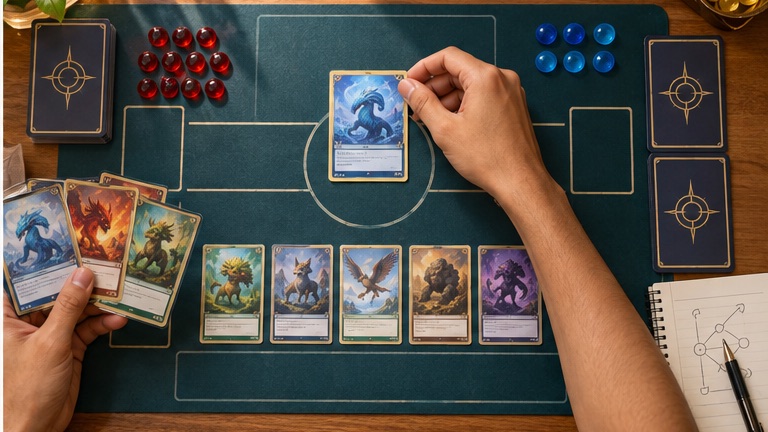
A binder rewards looking closely. You can compare the same species across different scenes, artists and eras. A play deck rewards looking at relationships: which cards find another card, provide resources, move a Pokémon or allow an attacker to do its job at the right moment.
These are different forms of attention. A beautiful card can be a satisfying collectible without being useful in your deck. A visually ordinary Trainer card can be essential to the way your deck functions. Once you recognise that distinction, the hobby becomes less dependent on chasing whatever appears in a dramatic pack-opening video.
The game also creates a different relationship with familiar Pokémon. The strongest creature in a story is not automatically the best card in a given format. Different versions of the same species can play different roles, and the surrounding deck determines whether a promising card becomes a reliable plan.
If you want to collect, decide what gives the collection coherence: a favourite evolution line, a region, a particular illustration style or a small group of characters. If you want to play, decide what a complete learning setup requires. If you want both, keep the two purposes visible when you buy.
For example, a card might belong in your binder because you love its artwork, while a less elaborate printing of a gameplay-equivalent card belongs in your deck. You do not need to justify the binder card by predicting future resale value. Enjoyment is a legitimate purpose on its own.
The physical TCG uses cards on a table, with players responsible for following the sequence and tracking the game state. Pokémon TCG Live is a digital version connected to the tabletop rules and supported card pool. Pokémon TCG Pocket is a separate digital experience with different rules.
| Experience | Useful for | Do not assume |
|---|---|---|
| Physical Pokémon TCG | In-person games, deck construction, trading and collecting physical cards | Every old card is legal in the format being played |
| Pokémon TCG Live | Practising supported TCG interactions and using digital learning tools where available | Every historical physical card or format is fully supported |
| Pokémon TCG Pocket | Its own digital collection and battle experience | Its deck size, scoring and turn rules transfer directly to tabletop play |
Pokémon’s Pocket gameplay FAQ explicitly distinguishes Pocket’s rules from the TCG. If you arrive from Pocket, say so to your teacher. You already know some vocabulary, but checking the differences is more useful than being surprised halfway through a game.
For Live, use the official installation guidance and check your device and regional availability. This article does not promise that every service or feature is available to every account in India.
In the normal game, each player has an Active Pokémon and can have up to five Benched Pokémon. The Active Pokémon is normally the one that attacks. The Bench holds Pokémon you are preparing or using for other roles. Your deck, hand, discard pile and Prize cards are separate areas with different purposes.
Before your first match, point to each area and name it. This small exercise makes later instructions much easier to follow. “Search your deck,” “take a Prize card” and “put a card in your hand” are not interchangeable actions, even when all involve moving a rectangular piece of cardboard.
The official Pokémon TCG rulebook illustrates the layout and normal setup. Use a current product’s instructions and applicable card text for changes or exceptions rather than treating this overview as a complete tournament manual.
A normal 60-card game begins with six Prize cards set aside face down. Taking all your Prize cards is one way to win. Other normal victory conditions include leaving the opponent with no Pokémon in play or the opponent being unable to draw at the start of their turn.
Knocking Out a Pokémon usually lets you take a Prize card, but some cards specify additional Prizes. Read those rules on the card. Do not assume that every Knock Out advances the race by exactly the same amount, or confuse Prize cards with tournament prizes awarded after an event.
Pokémon provide the creatures that battle and use abilities. Energy helps pay attack requirements. Trainer cards provide many of the effects that let the deck operate consistently. A beginner often notices the Pokémon first, then discovers that the other categories make those Pokémon usable.
An attractive collection of powerful attacks can still produce frustrating games if the deck cannot set them up. Instead of asking how many impressive Pokémon you own, ask whether your cards work toward the same sequence of actions.
Imagine a hypothetical attacker that is excellent once it is ready, but difficult to find and slow to develop. Adding another copy of an unrelated attacker does not necessarily solve either problem. A card that helps locate the required piece or supports its preparation may contribute more.
This is why copying an introductory deck’s structure before modifying it is useful. The less glamorous cards often explain why the deck functions. Try to identify their jobs before replacing them with favourites.
Trainer is not a single instruction meaning “play as many as you like.” Supporters, Items, Stadiums and Pokémon Tools have their own rules. Normally you may play only one Supporter during your turn, while Item use is not limited by that same one-per-turn rule; individual effects and restrictions still apply.
The official basic-rules Q&A explains these distinctions. When a learning turn goes wrong, check the subtype printed on the card before arguing about what another Trainer allowed earlier.
Evolution looks intuitive to anyone who knows Pokémon, but the card game uses exact names and timing. An Evolution card identifies the Pokémon it evolves from. You cannot put an Evolution on any creature merely because the artwork or type seems related.
Normally, a Pokémon cannot evolve on the turn it was put into play, and neither player normally evolves during their first turn. Effects can create exceptions, so read the exact instruction instead of turning a special case into the general rule. Pokémon’s evolution Q&A is a useful reference.
If your plan depends on an Evolution, putting the correct Basic into play is preparation for a later turn. Waiting until you already hold every piece can delay the plan. On the other hand, filling the Bench without purpose can create vulnerabilities or consume space you need.
The teaching question is therefore not “Should I always bench everything?” It is “Which Pokémon do I need in play for the next stage of my plan?” That question is concrete enough to discuss after a game without requiring a competitive deck ranking.
Do not treat evolving as a universal reset button. Follow the rules for damage, attached cards and Special Conditions rather than removing everything from the Pokémon. A good first lesson physically stacks the cards and explains what remains attached.
This is also a place where anime intuition can mislead. The card game represents a changing creature through a defined procedure; it does not automatically reproduce every dramatic recovery or transformation shown on screen.
Normally you may attach one Energy card from your hand during your turn. Effects can provide additional attachments or other ways to supply Energy, but the normal attachment is a valuable decision: which Pokémon should receive it now?
The symbols beside an attack describe its Energy requirements. Energy used to meet those requirements usually stays attached after attacking unless an effect instructs you to discard it. The official Energy and retreat Q&A clarifies this common beginner misunderstanding.
Suppose your Active Pokémon can already use the attack you intend to choose. Attaching another Energy to it may accomplish little unless the card has a reason to want more. Preparing a Benched Pokémon could make your next turn less fragile.
This is a hypothetical decision pattern, not a universal instruction. Some attacks benefit from extra Energy, and some decks move resources differently. The habit to develop is reading the actual attack and asking what the attachment changes.
Normal retreat swaps your Active Pokémon with one from your Bench and requires paying the printed Retreat Cost by discarding the appropriate attached Energy. Normal retreat is limited to once per turn. A switching effect is not automatically the same action as retreating.
Pokémon’s retreat explanation also confirms that the new Active Pokémon can attack if it meets the requirements. Movement is therefore part of your plan, not simply a way to escape an inconvenient position.
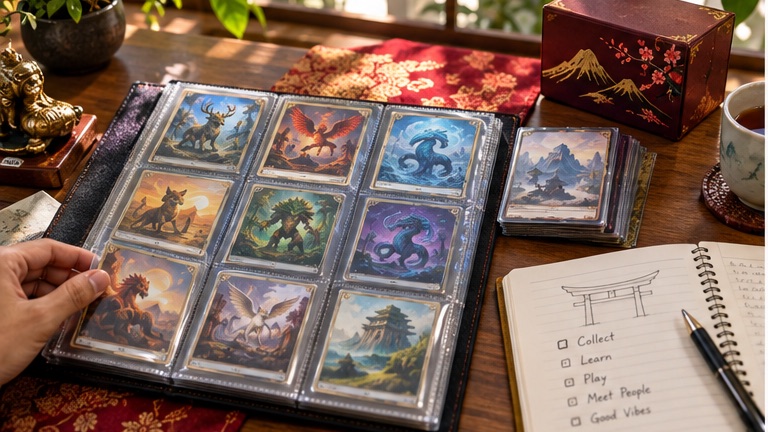
Begin by drawing as instructed, then look at what you can prepare before attacking. Your available actions may include placing Basic Pokémon, evolving when allowed, using suitable Trainer cards or abilities, attaching Energy and retreating. The appropriate order depends on the effects involved.
An attack normally ends your turn. You cannot attack, take a useful card and casually continue playing the rest of your hand. The official turn-ending Q&A makes this timing explicit. The player going first also has first-turn restrictions, including not attacking or playing a Supporter, unless a specific effect permits otherwise.
If one action draws cards while another forces you to choose a target, their order may change your options. Do not memorise “always draw first” as a universal law: costs, searches and particular card effects can change the answer. Instead, explain what information you gain and what you commit by acting now.
This is a satisfying way to improve because it makes ordinary turns interesting. You do not need a spectacular rare card to make a better sequencing decision.
HP tells you how much damage a Pokémon can sustain before being Knocked Out. Attack damage describes what an attack does, subject to text and applicable Weakness, Resistance and other effects. Prize progress measures how close a player is to one victory condition.
These numbers interact, but none alone proves a card is good. A high-HP Pokémon can still be awkward to prepare. A large attack can be inefficient if a smaller attack would already achieve the required Knock Out. A powerful Pokémon that gives up extra Prizes also changes the opponent’s route to winning.
Imagine a Pokémon with 180 HP and 70 damage already on it. In a simplified situation with no other effects, another 110 damage reaches 180 total and Knocks it Out. Another 100 leaves it at 170 damage, so it survives with 10 HP remaining.
Those numbers are invented to explain the arithmetic, not taken from a recommended current card. The broader lesson is to count the result you need instead of assuming that the highest printed attack is always the right choice.
After making an attack, consider the board you leave behind. If your Active Pokémon is Knocked Out, which Pokémon can replace it? Will it have the necessary resources? Are you exposing a support Pokémon that the opponent can target through an effect?
You will not answer every question correctly at first. Simply asking them turns the game from isolated attacks into connected turns, which is where much of its long-term appeal lies.
Product names can make a shelf look more complicated than the game. Compare the contents and intended learning experience before looking at the most prominent Pokémon on the packaging.
| Your situation | A useful product category to investigate | What to check |
|---|---|---|
| Two people learning together | Battle Academy | Edition, language, included decks and teaching materials |
| A very simplified introduction | My First Battle | Its mini-deck rules differ from the full game |
| You already have a teaching partner | An introductory preconstructed battle deck | Whether the complete list suits your learning level |
| You understand the basics and want richer interactions | League Battle Deck | Exact list, current legality and complexity |
| You mainly enjoy opening or collecting | Boosters or collection products | Guaranteed contents versus randomized contents |
The official parent guide distinguishes learning products, while Play! Pokémon’s getting-started page places League Battle Decks beyond the earliest learning stage. These are category recommendations, not guarantees that every old box is suitable for current competition.
Pokémon Support also explains that preconstructed decks have fixed contents, unlike randomized boosters. An Elite Trainer Box may contain useful accessories and packs, but its name alone does not mean it contains a complete ready-to-play deck.
A normal deck contains exactly 60 cards and at least one Basic Pokémon. The usual limit is four cards with the same name, with the Basic Energy exception and additional card-specific rules. The official deckbuilding introduction provides the foundation.
Do not start by dividing the deck into three equal piles of Pokémon, Trainers and Energy. There is no universal ratio that makes every strategy work. Begin with a coherent list, learn its plan and change it in response to an observed problem.
“This deck is bad” tells you little. “I repeatedly could not prepare a replacement attacker” suggests something to investigate. “I included an Evolution without enough ways to establish its Basic” identifies a relationship between cards. “I kept using the wrong Trainer first” may indicate a play decision rather than a deck issue.
Keep those categories separate. Buying a new card does not automatically repair a sequencing mistake, and playing more carefully does not repair an illegal deck list. Specific notes make improvement cheaper and more satisfying.
Under the official 2026 Standard rotation announcement, G-mark cards rotated out on 10 April 2026 for in-person Play! Pokémon Standard events and on 26 March 2026 in Live. H, I and J marks, plus subsequently permitted marks, form the announced newer pool, subject to release eligibility and other rules.
Older printings can sometimes remain usable when an eligible reprint exists. Basic Energy and specific rules also need proper treatment. Therefore, “every card without a new letter is unusable” is not a reliable shortcut. Check the current rules and exact card identity; this article’s format information was reviewed on 29 September 2026.
For casual play, friends can agree to use older decks together. Be clear about that agreement and do not present it as official Standard legality. A card rotating out also does not erase its illustration, history or personal value as a collectible.
Choose a theme small enough to enjoy gradually. One evolution family can offer variety without demanding every expansion. A binder page organised by habitat or illustration mood can be more personal than a list copied from resale headlines.
Identify cards precisely when buying: name, set or collector number, language, printing and condition. Two cards featuring the same Pokémon may be different game pieces; two illustrations of the same game piece may have different collecting appeal. Neither relationship can be judged from the species name alone.
For authenticity questions, compare with official card information and seek clear images of the actual item. Price, shine or a single photograph cannot establish authenticity by themselves. Avoid destructive “tests” that damage a card without reliably answering the question.
Eligible product codes can unlock content in TCG Live, but a digital booster does not necessarily reproduce the cards in the physical booster. Pokémon’s code redemption FAQ explains the relationship. Do not buy a code expecting a guaranteed copy of a physical pull unless the relevant product explicitly provides it.
Ask local groups whether they currently play the physical TCG, which format and language they use, and whether a newcomer can borrow a deck. Recent game photos and clear meeting details tell you more than an old group description. Confirm official status separately if tournament eligibility matters.
Our anime-community guide for India helps with finding fan spaces, while the general TCG guide compares Pokémon with other card games. A friendly teaching session is a useful next step even if you never plan to compete.
The aim is simple: recognise what your cards do, enjoy why you chose them and finish a game with one decision you want to try differently. If your favourite Pokémon gets you to that first table, it has already done something worthwhile.
For Indian card shops or event organisers discussing Japanese card and anime-product sourcing, contact So Japan with the product, edition, language and city. Confirm availability and intended use individually; do not assume a collectible import is suitable for every event.
AUTHOR OF THIS ARTICLE
SoJapan
SoJapan India Pvt. Ltd. is a Japanese-founded company based in Gurugram. We bring Japanese food, anime goods and apparel materials to Indian businesses, with a sister company in Kyoto that works directly with makers in Japan.