A Benched Tera Pokémon has a rule protecting it from attack damage. Dragapult ex uses Phantom Dive, and counters still end up on that Pokémon. Has the protection failed?
No. Doing damage and directly placing damage counters are different instructions. Protection against the first does not automatically cover the second. The Pokémon Company’s own explanation uses Benched Pikachu ex and Phantom Dive to make precisely this distinction. Its Tera protection does not stop that counter-placement effect. Official Tera example.
The important word is not just “prevent”. It is what follows it. That becomes easier to see when you put one attack beside a few protective effects, instead of trying to memorise a list of Pokémon that seem invulnerable.
This guide concerns the physical Pokémon Trading Card Game, not Pokémon TCG Pocket. It is for fans who already recognise an Active Pokémon and a Bench but want to understand what happens when card wording meets the counters on the table. If that layout is still new, start with our Pokémon TCG beginner’s guide for India.
Keep three ideas in view as you read:
The examples below are teaching situations, not claims about a particular tournament result or an optimal deck. Assume the attack is legal, the relevant Abilities and Energy effects are functioning, and no unmentioned effect changes the result.
Look at Dragapult ex’s English card entry. Phantom Dive has a printed 200 damage and a separate instruction assigning six damage counters among the opponent’s Benched Pokémon. Dragapult ex also has Tera protection against attack damage while it is on the Bench.
For a worked reading of that card, put the two parts on separate lines:
Active lane: resolve the attack’s damage against the opponent’s Active Pokémon.
Bench lane: distribute the six counter units within the group specified by the effect.
Those labels are our explanation, not extra game terms. They make the restriction visible. You cannot transfer unused “Active lane” damage into the Bench instruction, or spend the six Bench counters on the Active Pokémon simply because that would produce a better Knock Out.
In an otherwise unmodified example, 200 plus the value represented by six counters adds up numerically to 260. That sum is useful only if you remember its components. Describing the attack as “260 anywhere” loses the part of the card that determines where each component goes.
Imagine an opponent whose Active Pokémon would require another 260 damage to reach its HP. It is tempting to combine the numbers and conclude that Phantom Dive reaches it. Under our stated assumptions, that is the wrong calculation: the Active receives the 200-damage part, while the other instruction concerns the Bench. A total across different recipients does not become a total on one recipient.
The reverse mistake is possible too. Suppose a Benched Pokémon would need another 100 damage recorded on it. You cannot send it half of the printed 200 and treat the attack as divisible. The choices available in the counter-placement sentence do not make the separate damage number equally flexible.
The publisher’s Twilight Masquerade explanation of Dragapult ex explicitly distinguishes its counter placement from damage-only Bench protection. That historical strategy article is useful for the interaction, not for checking today’s Battle Pass rewards.
For a friendly learning game, say the two parts separately before moving any markers. “The Active takes this damage; these counters are for the Bench” communicates much more than announcing one large number. It also lets both players catch a mistaken recipient before the physical board becomes difficult to reconstruct.
Ordinary attack damage is recorded with damage counters too. That does not make all damage into a direct counter-placement effect. The advanced rules distinguish calculating damage from resolving effects outside damage, including placing counters. Direct placement does not apply Weakness, Resistance or modifiers to attack damage. It can nevertheless lead to a Knock Out. Advanced Player’s Rulebook, C-07.
Think of the markers as a record of the outcome. Looking only at that record cannot always tell you which instruction produced it. The distinction must be made while resolving the card, before the resulting board is reduced to a few numbers.
The official rules FAQ clarifies that one damage counter represents ten damage; a physical marker labelled 50 is not one counter for an instruction that says to put or remove one. Official damage-counter FAQ.
Here is the arithmetic in a hypothetical record-keeping example. Six units represent 60. You could represent that value with six markers labelled 10, or with a 50 marker and a 10 marker. The second arrangement uses two physical pieces but still records the same value. Six physical pieces each labelled 50 would represent 300, which is five times too much.
That distinction also matters when cleaning up a crowded board. Replacing five small markers with one larger marker should change the clutter, not the recorded total. Count the values before and after. This is an explanation of units, not a promise that every homemade marker is acceptable at every organised event.
Numbers can become slippery in conversation. “Put thirty counters there” is not a harmless shorthand for putting three counters representing 30. If both players are learning, saying “three counters, representing thirty” avoids an unnecessary disagreement about whether you are counting units or reading the displayed total.
Consider two hypothetical instructions affecting an Active Pokémon that has the relevant ×2 Weakness. Start with no damage on it, and exclude Resistance and every other modifier. One instruction does 60 attack damage. The other directly places six counters.
In the damage case, the simplified arithmetic is 60 × 2 = 120. In the placement case, six ten-damage units represent 60; they do not become twelve units through Weakness. This is a separate hypothetical comparison, not Phantom Dive’s Bench-only placement instruction.
Now give our hypothetical defender 100 HP. The first result reaches its HP; the second does not. The different result follows from the instruction, even though both situations end with players handling damage markers.
Check extra modifiers only after identifying the process. Otherwise, a simple multiplication problem can look like a contradiction in the rules.
“My Pokémon is protected” is an incomplete description. Protected from what, by which source, and in which position?
The three examples below make different promises. Read the cells as a comparison of these specific effects, not as a claim that every Tera-related card, Special Energy or protective Ability works identically. All effects are assumed to be functioning.
| Protection | Covered recipient | What it stops | Important limit |
|---|---|---|---|
| Dragapult ex’s Tera rule | That Pokémon while Benched | Attack damage from either player | Not direct counter placement |
| Mist Energy | The attached Pokémon | Effects of opposing Pokémon’s attacks | Not attack damage |
| Rabsca’s Spherical Shield | Your Benched Pokémon | Damage and effects from opposing Pokémon’s attacks | Not protection for your Active Pokémon |
Sources: Dragapult ex, Mist Energy and Rabsca.
Applying the distinction from the publisher’s Pikachu ex example answers the opening puzzle: the Tera rule on a Benched Dragapult ex does not cover Phantom Dive’s counter-placement effect.
Now attach Mist Energy to the intended Benched recipient. Its protection concerns attack effects, so this is a different situation from relying on Tera alone. Mist Energy also specifies that it does not remove effects already present. Attaching protection later is not a general undo button for an earlier turn.
Rabsca offers a broader Bench shield across the two categories in the table. But the location condition remains important. Do not extend a Bench-only promise to an Active Pokémon because both are on your side of the table.
There is no helpful universal winner in a table like this. If your concern is a particular Benched recipient of an attack effect, you are asking a different question from someone trying to protect the Active from attack damage. The article is comparing coverage, not ranking deck slots.
For an original tabletop exercise, put three handwritten labels beside a hypothetical protected Pokémon: recipient, source, action. Fill them with the situation you are testing. For example, “this Benched Pokémon / an opponent’s attack / direct counter placement”. Then compare that statement with one row, rather than scanning for the comforting word “prevent”.
Change only the Pokémon’s position and you have a new test. Change only the source from an attack to an Ability and you have another. Keeping the other conditions fixed helps you see why an answer changes, instead of attributing it to the Pokémon’s name or rarity.
Counter placement is not an unstoppable category. The advanced rules expressly describe protection against attack effects preventing assigned counters from being placed on the protected Pokémon. Other recipients can still receive theirs. Do not assume prevented counters are automatically refunded or reassigned somewhere else. Advanced rules, C-07 and C-17.
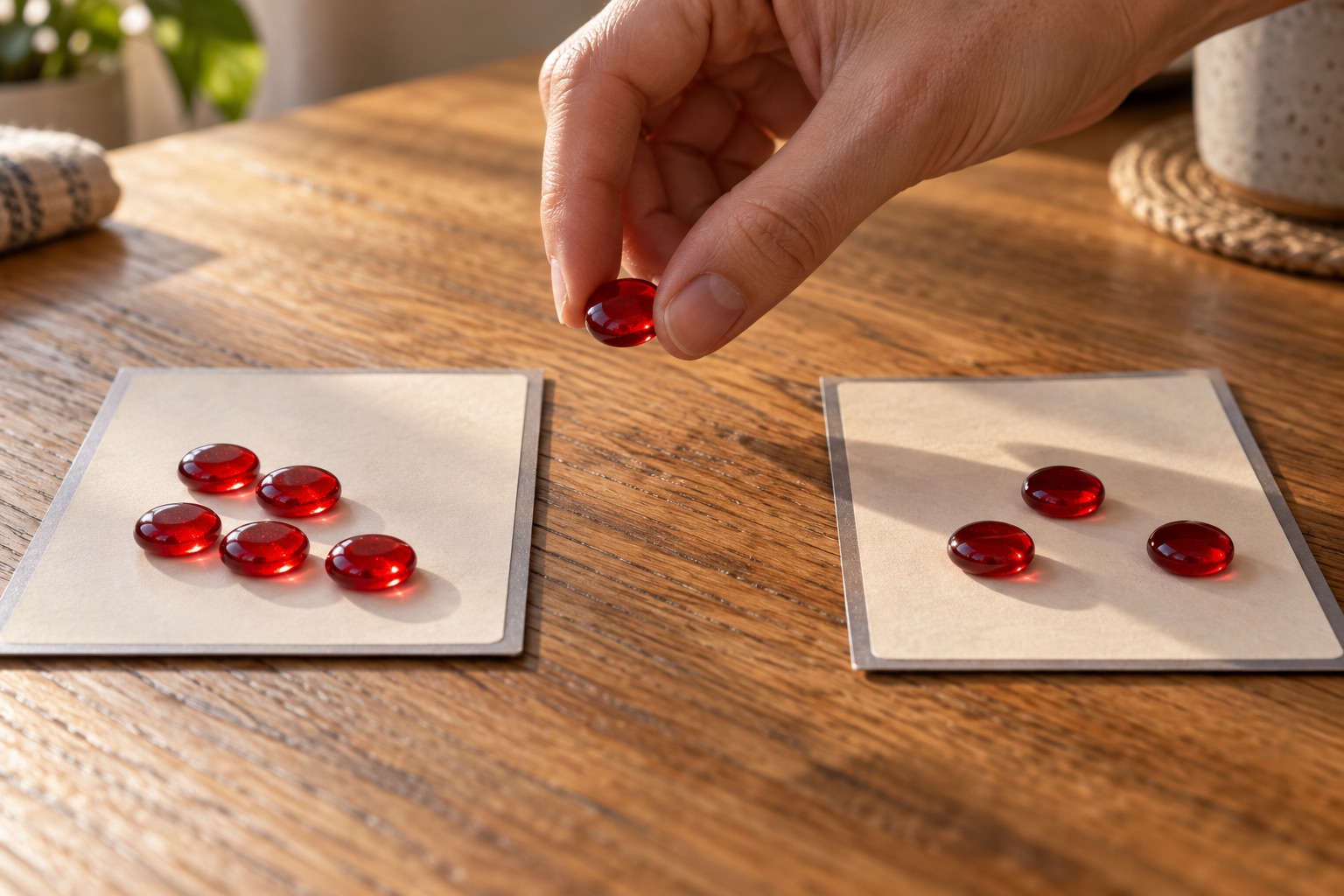
There is another distinction hiding behind a familiar physical action: picking up counters and putting them on an opposing Pokémon does not necessarily come from an attack.
Munkidori’s Adrena-Brain is an Ability. Once during your turn, if that Munkidori has Darkness Energy attached, it can move up to three counters from one of your Pokémon to one opposing Pokémon. The source need not be Munkidori itself, and the destination is not restricted to the Bench.
The protections above are worded around attacks. They do not, by themselves, prevent this Ability’s movement. That does not mean Abilities ignore all protection; it means the stated source is outside these particular promises.
Here is an original example with the condition satisfied. Your Pokémon A has 50 damage recorded on it, your Pokémon B has 20, and the opposing Pokémon C has 40. Choose to move three units from A to C. A’s record becomes 20 and C’s becomes 70; B stays at 20. Across those three Pokémon, the recorded total remains 110: you moved existing units rather than adding three new ones.
Compare that with a superficially similar proposed action: taking two counters from A and one from B, then putting three on C. The numerical change on C would look the same, but that is not the one-source selection described by this Ability. Matching the destination’s final number is not enough to show that the route was permitted.
Likewise, taking three counters from A and dividing them between C and another opponent’s Pokémon would introduce a second destination. If you are checking a proposed play, draw a single arrow from the chosen source to the chosen recipient. The arrow is a learning aid for this effect, not a rule for every card that moves counters.
The phrase “up to” also matters in the arithmetic. If your chosen source has only two counters, you do not manufacture a third to reach the maximum. In a two-unit version of the example, 20 leaves the source and 20 arrives at the recipient. The unused part of a maximum is not a reserve of counters waiting elsewhere.
This is why “it ends up with more damage on it” is too broad a description to settle an interaction. It tells you what the board looks like afterwards, but leaves out the instruction that got you there.
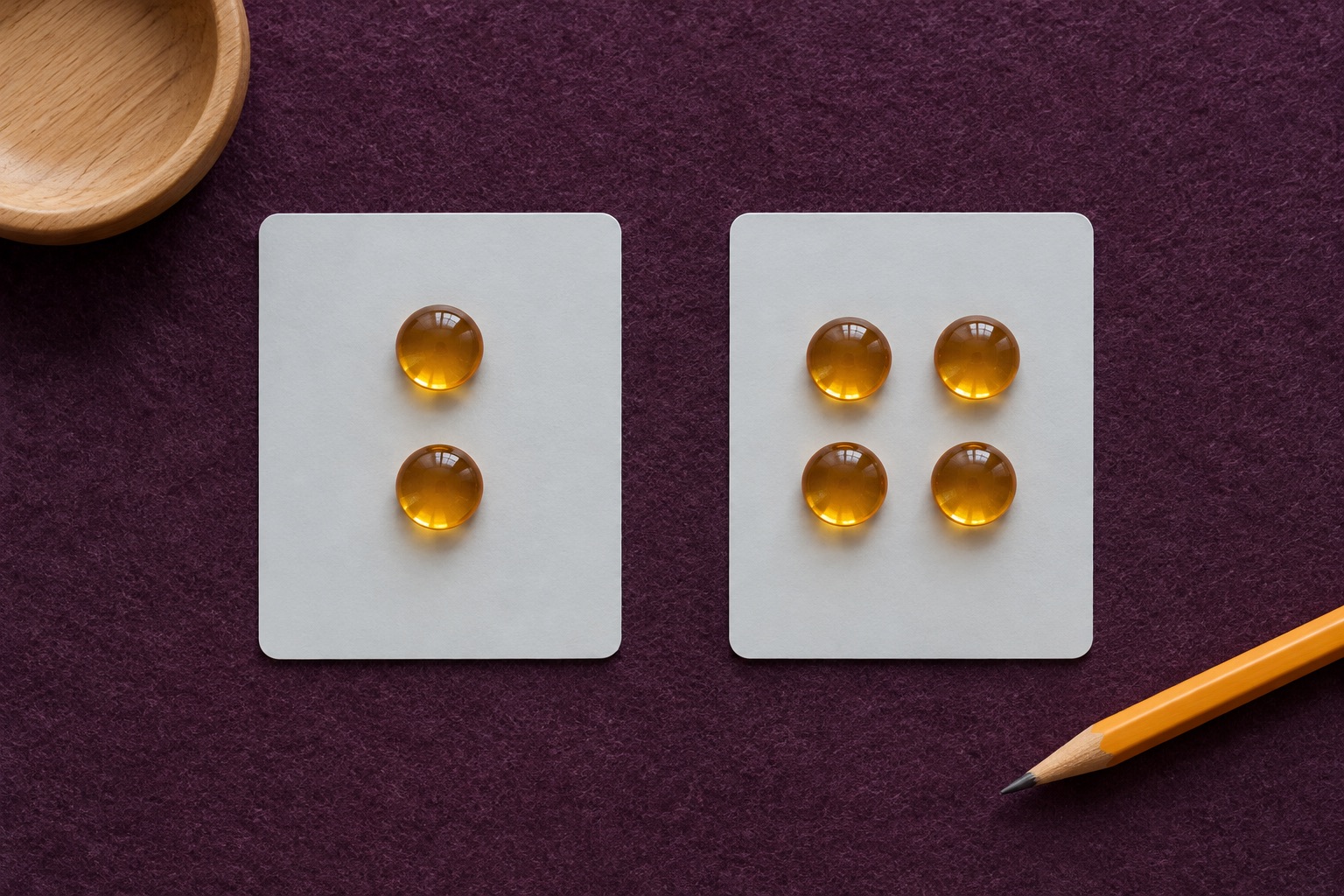
Return to Phantom Dive and isolate its Bench instruction. This is an invented board for arithmetic practice, not a named deck matchup. The opponent has two eligible, unprotected Benched Pokémon. Their HP and existing damage are:
Two plus four uses the actual six-unit budget. Allocate two to A and four to B: their records reach 60 and 70 respectively. Under our no-other-effects assumptions, both reach their Knock Out thresholds.
For timing, the official attack-resolution chart places counter-placement effects after damage calculation and before the Knock Out check. Do not turn the example into an instruction to interrupt the attack halfway through to resolve a separate Knock Out for each token you put down.
Putting all six on A would take its record from 40 to 100 and leave B at 30. That reaches one threshold in this particular board, while the two-plus-four allocation reaches both. The comparison is about the stated immediate outcome; it is not a universal claim that splitting is always strategically better.
Putting three on each would produce 70 on A and 60 on B. A reaches its HP, but B remains ten short. Equal distribution looks tidy and spends the right total, yet it misses the second threshold. The amount already on each Pokémon is more useful here than a preference for symmetrical placement.
Putting six on each would require twelve units. That is not another available allocation of the same effect. Nor can you solve a shortfall on the Active Pokémon by shifting part of this Bench budget across to it.
One practical way to do this calculation is to start with the gap, not the full HP: HP minus damage already recorded. Convert the two gaps to ten-damage units and add them. In this example, the gaps are 20 and 40, so the required units are two and four. Working backwards from the thresholds makes it harder to lose track of counters already present.
Now change just one assumption: B has functioning Mist Energy protection. Keep its HP, existing damage and the available budget unchanged. The earlier two-plus-four plan no longer produces the same result, because B’s assigned attack-effect counters are prevented. The original calculation was conditional on both recipients being unprotected.
Do not repair that plan by silently treating the prevented portion as a new pool to distribute after the event. Before declaring an allocation, inspect the recipients and decide what the permitted, effective choices can achieve. If something unexpected has already happened in an organised game, ask the judge about the actual board rather than improvising a correction from this article.
Finally, remove that Energy and give B only the Tera Bench protection discussed earlier. This changes the answer again: it is damage-only protection, not the attack-effect protection used in the previous version. The exercise has kept the arithmetic constant so that the wording, rather than a different HP total, explains the change.
The counters are visible; the distinctions that brought them there are easier to overlook. That is why the opening Tera puzzle feels surprising even when the protection is doing exactly what it says.
For your next learning game, take one of these examples and change a single condition. Move the hypothetical recipient from the Bench to the Active position. Swap damage-only protection for effect protection. Compare a placement instruction with movement from one existing source. Explain which part of your answer changes and which part stays the same.
You do not need a memorised answer for every pair of cards to make progress. You need to preserve the information on the card: the kind of action, its source, its recipient and its limits. Once those are clear, six counters are a manageable calculation—not a mysterious exception to Bench protection.
Rules and linked card text checked on 13 October 2026. Examples illustrate wording and arithmetic, not confirmation that every teaching card belongs in the same currently legal deck. For an event, use its applicable rules and current card text.

AUTHOR OF THIS ARTICLE
SoJapan
SoJapan India Pvt. Ltd. is a Japanese-founded company based in Gurugram. We bring Japanese food, anime goods and apparel materials to Indian businesses, with a sister company in Kyoto that works directly with makers in Japan.