Nagomu knows which house to return to. What he will be allowed to do there is another matter.
In Deaimon, the family confectionery shop already has a daily life when its son comes home. There are people working, relationships in place and a girl whose contribution has been noticed. A return can be a fresh start for the person making it while being an interruption for someone already there.
That is the question this guide brings to the opening episodes: who has earned confidence at the counter, and who still needs care away from it? The answers need not name the same person.
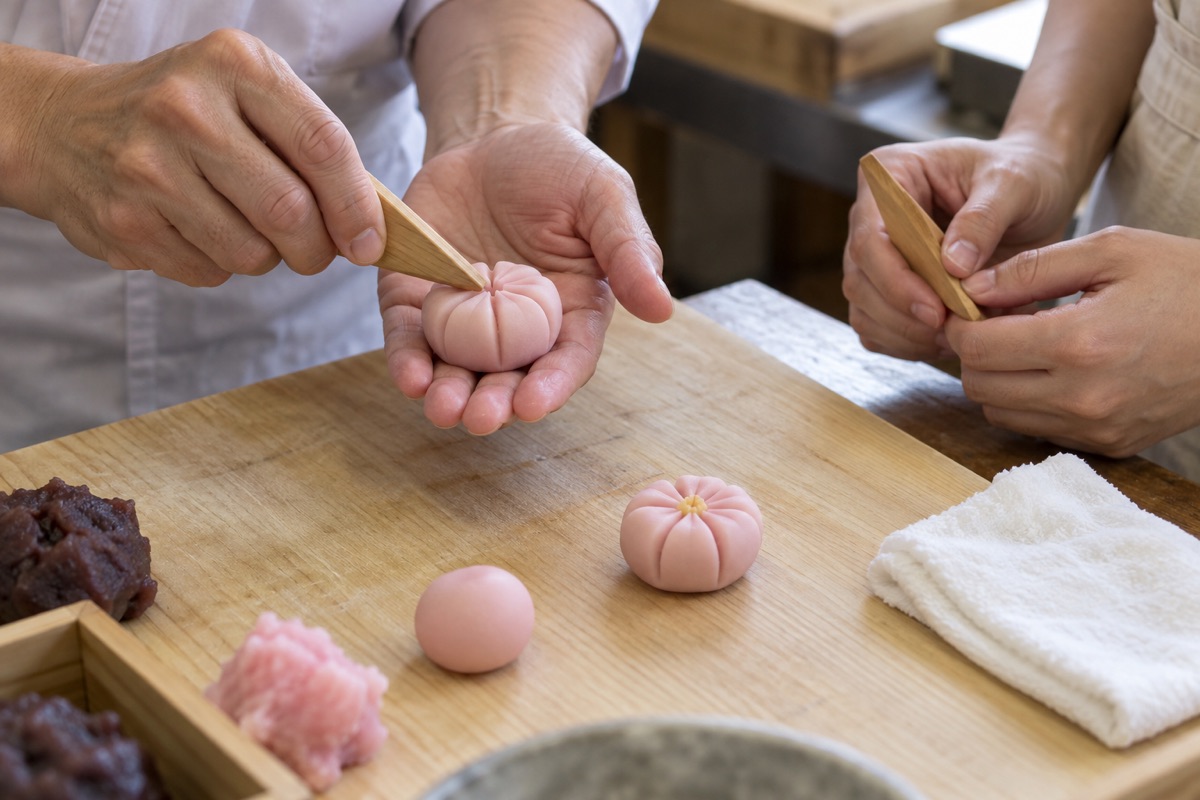
The official introduction explains that Nagomu Irino, who left for Tokyo to pursue a dream, hears about his father’s hospitalisation and decides to take over the family’s wagashi shop, Ryokusho. There he finds Itsuka Yukihira living with the family and working at the shop, already a prospective successor. He is given a parent-like responsibility towards her. Official introduction
The mismatch makes a useful starting point. Nagomu arrives with a plan for his place in the family; another person’s needs become part of the job he actually receives. Our reading is that this makes a simple succession contest an inadequate description. Even if you knew who would eventually run the shop, you would still have to ask how the two people can live and work together now.
His character profile adds an important qualification: he works as an apprentice. His enthusiasm for sweets and his musical ambition are part of his description too. Returning to his family’s business has not made him a fully trained confectioner. Official Nagomu profile
For a first-time viewer, keep that apprentice status in view whenever his family connection seems to promise easy authority. Someone can recognise the rooms and love the product while still having things to learn. Watch who explains a task, whose judgement others accept and whether an offer of help actually fits what is needed.
These are more useful observations than deciding at the door whether Nagomu is a failure or a hero. Both verdicts would arrive before the work.
Itsuka’s official profile says that her work has earned recognition from Nagomu’s father, to the point of being accepted as a successor. She regards the suddenly returned Nagomu as a rival. That gives her position at Ryokusho a basis in what she does, not simply in being the child a story wants the audience to find adorable. Official Itsuka profile
Taking that competence seriously does not require treating her as an adult. A child’s ability to do a familiar task well is one fact about her life. It cannot answer every question about security, family or what support she needs. The useful viewing habit is to allow both truths to remain visible, rather than rewarding capable behaviour by imagining she no longer needs looking after.
The first episode introduces that vulnerability through a mistake: outside Kyoto Station, Itsuka takes Nagomu for her missing father. The official synopsis then brings them together at the shop. Official episode 1
There is a sharp change in what his arrival means. For a moment, she thinks she recognises someone she has been looking for. He instead belongs to the household where she is staying, with a claim on its future. Her first response therefore has a context beyond the comic mismatch between a serious girl and a buoyant man.
Episode 3 returns to the search when she sees someone who resembles her father and follows him onto a bus on the way to school. This guide leaves the resulting journey and meeting for you to watch. Official episode 3
Our reading of these opening situations is deliberately modest: being established at a shop has not settled every uncertainty in Itsuka’s life. Notice the difference between knowing what to do behind a counter and knowing whether the person you hope to find is really in front of you. A familiar routine can coexist with a very unsettled question.
Nagomu’s caring role should be watched against that distinction. The question is not merely whether he can make the stern girl smile. It is whether his attention leaves room for the things that matter to her, including things he cannot immediately resolve.
The rivalry makes it tempting to watch every exchange as a point for one side: the capable child puts the newcomer in his place; the friendly newcomer gets past her defences. That can be funny, but as a complete reading it makes Itsuka’s trust look like something Nagomu is entitled to collect.
Try a less competitive question during their conversations: whose concern is being answered? Wanting to be liked and noticing what another person needs may lead to different actions. A kind intention is worth noticing; so is whether its recipient feels able to speak.
Watch the response to a small request, a correction or a refusal. Those exchanges can tell you more than deciding in advance that two people ought to get along.
Episode 2 places Itsuka beside another worker, the high-school student Mitsuru Horikawa. They are enjoying each other’s company at the washing area, and Nagomu is envious. Mitsuru’s part-time earnings help support her large family; she also pursues music. The official synopsis sets up a complication around that musical activity. Official episode 2
The washing-area detail is a useful place to pause. There is already an easy relationship in a setting Nagomu considers home. Itsuka is not simply waiting for his arrival to have somebody to talk to. His wish to join in has to meet a social world that was functioning without him.
Mitsuru also complicates the contrast between leaving for a dream and working at a shop. She has responsibilities and an interest beyond her paid work at the same time. For this early episode, watch whether the conversation gives her room to define what music means to her. Nagomu’s own history may help him listen, but it should not make her situation a duplicate of his.
Viewers can make the same shortcut as characters. Once two people have music in common, we may assume they want the same kind of future or need the same advice. Yet knowing the subject someone loves gives us very little information about the arrangements around it: who depends on them, what they can make time for, or what they are ready to tell other people.
Use that distinction as a viewing prompt rather than a prediction of the episode’s outcome. Listen for the difference between offering experience and deciding for another person. Advice can be well meant while arriving before a question has been fully understood.
This is also a reason to resist sorting the cast too quickly into the responsible workers and the unrealistic dreamers. Such labels make the shop easy to summarise but can make its conversations harder to hear. A person at work can have ambitions that are not visible in the job they are doing in that moment.
For a contrasting story centred on making music with others, our Bocchi the Rock guide follows the gap between playing alone and participating in a band. Here the question is smaller and more domestic: what does knowing someone’s interest help you understand, and what have you still not asked?
The early shop stories give adults room to make mistakes too. In episode 4, a regular customer cancels an order. Nagomu’s father, Heigo, angrily assumes his son has caused trouble again. The official synopsis makes clear that another employee, Saki Seto, is involved in the underlying situation. We will leave the reason and its resolution out of this guide. Official episode 4
What matters for this reading is the order of judgement. Heigo has a ready explanation before the situation has been properly understood. Knowing somebody’s past makes that explanation available; it does not make it sufficient.
Earlier, Nagomu’s family connection did not establish professional skill. Here, familiarity can work against him: a settled impression of his behaviour can become a substitute for finding out what happened. Both examples ask the viewer to separate a person’s position in a family from the evidence of a particular moment.
In a misunderstanding, the loudest reaction is often the easiest thing to follow. Another way to watch is to notice who gets a chance to supply missing information. Does a question invite an answer, or merely announce what the questioner has already decided?
You need not keep a moral score for every character. The point is to remain interested when an explanation complicates your first impression. A comedy can let someone be ridiculous without requiring that every accusation against them be true.
The shop setting makes the question concrete: an order has been cancelled, people have reacted, and somebody has to find out why. You do not need a lesson in running a confectionery business to recognise the gap between a practical problem and a personal assumption.
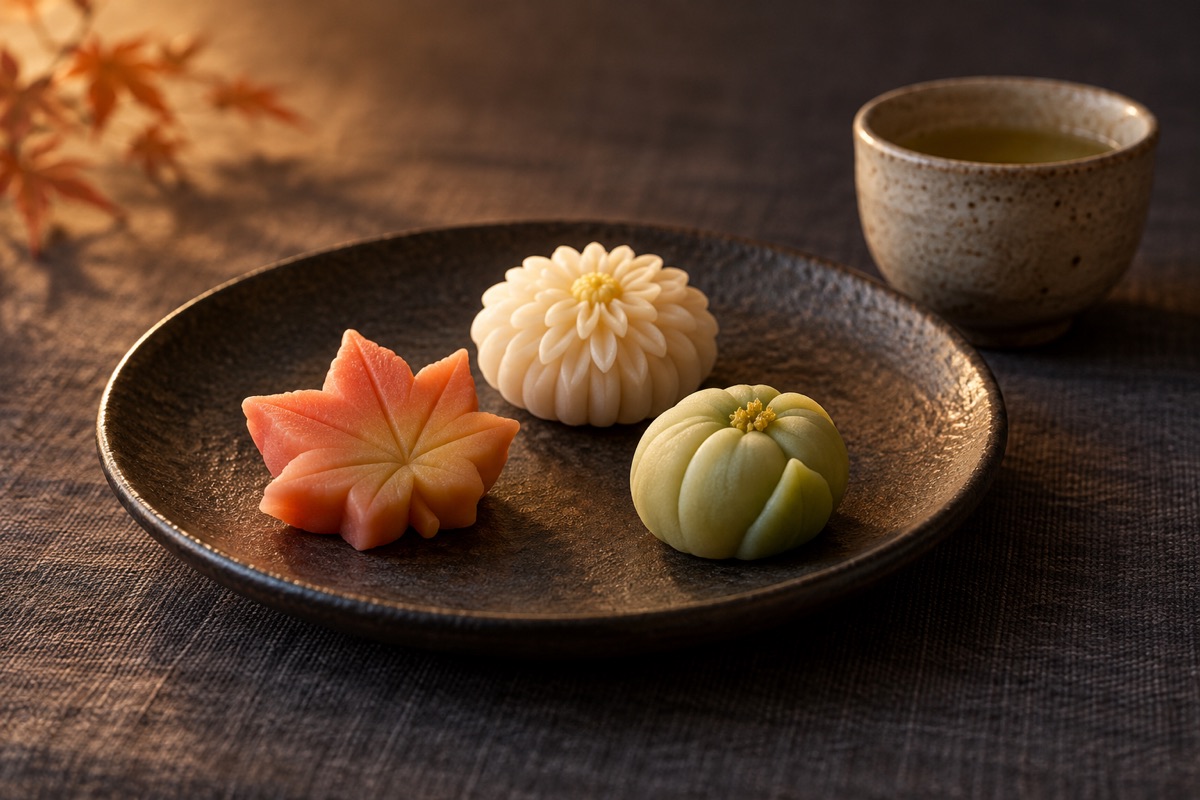
You can enjoy this cast without knowing the names of every confection in the display. Indeed, original author Rin Asano described beginning the project partly from her own unfamiliarity with the subject. In a 2022 interview, she explained that researching a sweet’s background and season could help move a story about two characters forward. Her account places confectionery within the development of the narrative, rather than treating it only as decoration. Asano’s interview with Kotokare
That offers a useful first-viewing question: why is this sweet part of this occasion? You may not yet recognise its ingredients, but you can still notice who presents it, who explains it and whom the explanation is meant to reach. Start with that exchange before reaching for a glossary.
The anime’s official credits include a specific responsibility for props and wagashi animation, assigned to Fumiaki Sato. In the staff’s pre-broadcast comments, Sato credits colour design and special effects with transforming the drawings into appetising images. Art director Yumiko Kuga also describes research into Kyoto’s streets and confectionery shops. Official staff comments
Director Fumitoshi Oizaki makes a related point in an interview: depicting food attractively is not simply a matter of drawing it realistically. Adjustments to colour and other choices can make the result feel more convincing. He describes working through those choices with the staff. Oizaki’s interview with Futaman+
For viewers interested in animation, this makes the food worth a second look beyond identifying it. Notice the contrast between the confection and what surrounds it. Which colour attracts attention? How clearly can you read the shape? Does the image give you an impression of delicacy, firmness or softness? Those are observations you can make without claiming to know the recipe or the exact process used to create a shot.
The production comments also suggest why a real sweet need not look exactly like its animated counterpart. A screen image has been composed to communicate an impression. It is not a colour-calibrated product photograph, and no screenshot can establish how a particular item tastes.
If unfamiliar names distract you, our Japanese sweets guide offers a separate introduction to textures and fillings. Use it when a food genuinely catches your interest. You do not need to memorise a confectionery catalogue before starting Deaimon.
One practical approach is to finish the scene before looking up the name. First understand the occasion and the conversation; then investigate the food. That keeps a new term from interrupting the relationship it helps express. It also lets you distinguish two kinds of curiosity: wanting to understand the scene and wanting to try something yourself.
For the second, an anime image is only a starting point. A real product needs its own ingredient and handling information, particularly if you follow vegetarian, egg-free or other dietary requirements. This article does not establish Indian stock, a local price or a recipe to reproduce a sweet seen on screen.
Nor is buying a Japanese snack a condition of appreciating the series. The useful attention is available without a shopping list: see what is offered, how it is received and what the people around the food have learned about each other.
The 2022 television adaptation is based on Rin Asano’s manga; the official Japanese Blu-ray listing identifies the television run as 12 episodes. These are identification details, not a promise that a particular service currently carries them in India. Check a licensed provider’s current local listing before planning a watch. Publisher’s series record · Official episode-count record
Our recommendation is to start with episode 1 and let the early workplace situations introduce the cast. You do not need background reading on Kyoto family businesses or advance knowledge of the manga. If your main interest is the food, give the people around it equal attention; if you came for the relationships, allow the making and presentation of sweets to set some of their pace.
The emotional premise does include an absent parent and a child looking for him. Calling the setting warm should not be taken to mean that everything within it is carefree. If that subject is difficult for you, the gentle-looking shop is not a reliable guide to every feeling the story may touch.
These prompts are alternatives, not homework. Choose the one that interests you and let the episode supply the details:
There is no need to stop at each conversation and classify it. The questions are useful when you find yourself reducing a character to a first impression: the irresponsible son, the stern child, the angry father. Go back to the situation rather than searching for a label that will cover every appearance.
If the confectionery-shop setting reminds you of Tamako Market, our Tamako series-and-film guide takes a different route through familiar places: neighbours discovering that their futures may separate. Deaimon gives this article a different point of entry, a return to a household whose existing relationships cannot be reset by the returning person’s intentions.
Nagomu’s homecoming is therefore a beginning, not a restoration of a place that has been held empty for him. Itsuka’s work deserves recognition; her capability does not remove her need for care. The people around them have relationships, responsibilities and interests of their own.
Keep watching for the moment when somebody asks a better question, listens to an answer or makes room for another person’s concern. Those small changes give you something more immediate to follow than the eventual name above the shop. Nagomu has come home. Learning how to be useful there is the work still in front of him.

AUTHOR OF THIS ARTICLE
SoJapan
SoJapan India Pvt. Ltd. is a Japanese-founded company based in Gurugram. We bring Japanese food, anime goods and apparel materials to Indian businesses, with a sister company in Kyoto that works directly with makers in Japan.