← JOURNAL29 Sep 2026
Gundam Card Game in India: How Pilots, Links and Bases Change a Battle
 By SoJapan
You recognise the mobile suit, you recognise the pilot, and putting the two together seems obvious. Then someone tells you that Char can sit underneath a Unit asking for Amuro Ray—and that this still does not make it a Link Unit.
That distinction is a good introduction to Gundam Card Game. The anime gives you reasons to care about a combination. The cards tell you what that combination can actually do. Learning the game means keeping both pleasures without letting one replace the other.
For an Indian fan starting with a friend, this guide follows the decisions that make an early game interesting: paying for a mobile suit, choosing its Pilot, opening an attack, and getting through a Base. It uses named official cards rather than an imaginary “best deck”, and does not assume that buying an imported deck gives you access to a sanctioned local tournament.
Keep these four distinctions beside your first game:
Rules and card information were checked on 29 September 2026 against the official rules hub, including the September 2026 comprehensive rules. Examples below explicitly leave out other effects where necessary. For the characters’ stories rather than their card interactions, start with our separate Gundam anime viewing guide.
Your main deck contains exactly 50 cards, alongside a separate ten-card Resource deck. The main deck uses Unit, Pilot, Command and Base cards. Units occupy the battle area; Pilots pair with them; Commands provide effects; a Base sits in front of your shields. The ordinary construction rules allow one or two colours and up to four copies of a card number, subject to restrictions. Official preparation FAQ.
Card number matters more than the name shouted in the anime. Two different cards called Gundam are not automatically the same deck-building entry. Bandai’s FAQ specifically distinguishes ST01-001 from GD01-013. That is also why an online deck list should identify numbers, not just say “four Gundams”.
You begin with six face-down shields and an EX Base. The ordinary EX Base has 3 HP. Your opening hand is five cards; the optional redraw replaces the whole opening hand, not just the cards you dislike. The second player also receives an EX Resource. Use the publisher’s illustrated play guide to lay out these areas before trying to memorise every keyword.
The important victory distinction is that removing the last shield does not itself win the game. You normally need battle damage to reach the opposing player when their shield area is empty. A Base still occupying that area matters even if there are no face-down shields left. Emptying the opponent’s deck is a separate route to victory; it is not the focus of the examples here.
At the start of your turn, you ready your cards, draw, and place a Resource from the Resource deck before the main phase. During the main phase, playing cards and attacking are decisions you can interleave. You are not forced to finish every purchase before the first attack. That freedom becomes useful once a Pilot can change which enemy Unit is vulnerable.
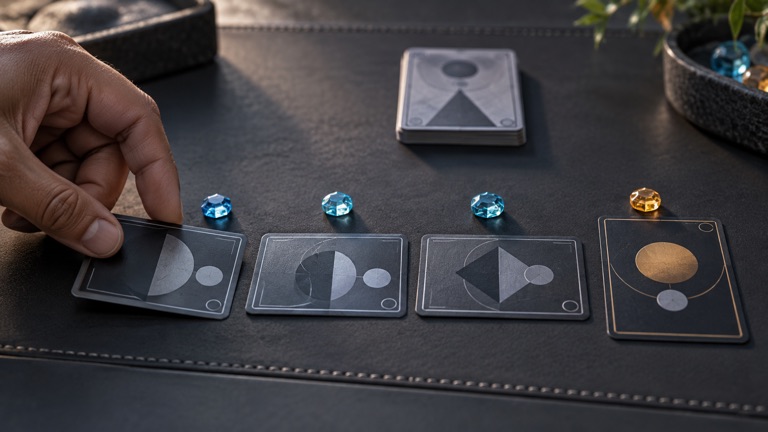
Look at ST01-001 Gundam. Its level is 4 and its cost is 3. Those are two different tests, not competing ways to describe the same price. The official card database identifies the exact printing used throughout this article.
To meet a level requirement, count Resources in your Resource area, including rested ones. To pay a cost, rest the required number of active Resources. Active cards are upright; resting turns them sideways. A Resource that you have already rested still contributes to your level, but is not available to pay again unless an effect makes it active.
Here is an illustrative turn with four ordinary, active Resources, Gundam and ST01-010 Amuro Ray in hand, space in the battle area, and no interfering effects:
| Decision | Resources still in the area | Active Resources left |
|---|---|---|
| Begin this example | 4 | 4 |
| Play level-4, cost-3 Gundam | 4 | 1 |
| Pair level-4, cost-1 Amuro Ray | 4 | 0 |
The second play is possible because resting three Resources did not reduce your Resource count to one. You still meet Amuro’s level-4 requirement. It is a useful four-cost sequence, but it spends your whole available budget. Whether you want to leave resources for a response is a separate tactical question.
The EX Resource creates a less obvious trap. It contributes to your level while it is present, but is removed when used to pay a cost. Suppose the same four-Resource position consists of three ordinary Resources and one EX Resource. If you spend the EX Resource on Gundam, you will have only three Resources afterwards. You cannot then play level-4 Amuro by pointing to the level you had a moment ago.
Spend the three ordinary Resources first, however, and the EX Resource remains for Amuro’s level check and one-cost payment. This is an example of payment order changing a legal sequence—not a claim that preserving the EX Resource is always best. Bandai addresses both EX Resource level checks and its disappearance in the playing-cards FAQ.
Before announcing a two-card plan, count your Resources twice: once for the first play and once for the board you will have after paying for it. A hand can contain all the right pieces and still fail on the second step.
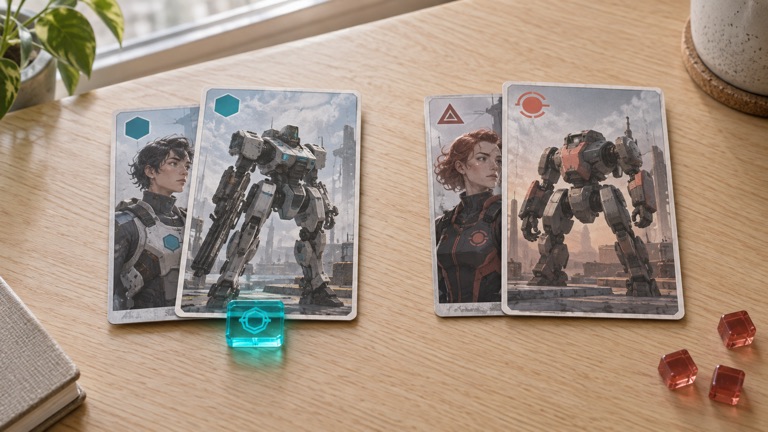
A Pilot is placed with a Unit; it is not an independent fighter you deploy to an empty battle area. Pairing adds the Pilot’s AP, HP and relevant effects to that Unit. A Link exists when the pairing also satisfies the Unit’s printed Link requirement.
The official example is wonderfully counterintuitive for anime fans: ST03-011 Char Aznable can pair with a Unit whose Link requirement is Amuro Ray. The Unit still receives Char’s stat additions and his relevant effect. What you do not get merely from this pairing is permission to attack on the Unit’s deployment turn through the Link rule. Official Pilot FAQ, Q89.
So “wrong Pilot” is an imprecise description. There are really two questions:
If the Unit has just entered play and you need an immediate attack, the second question is decisive. If it has been in play since an earlier turn, you may care more about a particular effect or the extra durability. That is a conditional evaluation, not a recommendation to abandon matching pilots.
Pairing is also a commitment. Under the normal rules you cannot freely move a Pilot between Units or place a new Pilot over one already paired. Do not imagine a cockpit-selection screen that can be rearranged whenever a better character arrives in your hand. Think about the Unit you want that Pilot to support before placing it.
The shorthand worth remembering is pairing gives the combination; Link can change its timing. A matching pair does not grant unlimited attacks, and a Pilot’s familiarity from the anime does not override the requirement printed on the Unit.
The specific Gundam here, ST01-001, begins at 3 AP and 4 HP. AP is attack power; HP is its capacity to withstand damage. It has Repair 2, and while paired it gives your Units an AP increase during your turn. Its Link names Amuro Ray. This is not a description of every card depicting the RX-78-2: another card number can have different numbers and effects.
ST01-010 Amuro Ray is level 4, costs 1, and adds 2 AP and 1 HP. His pairing effect can rest an enemy Unit with 5 or less HP. Check the official Amuro entry, especially if you are comparing alternative artwork or a different Amuro card.
For an undamaged pair with no other modifiers, the calculation during your turn is:
3 base AP + 2 from Amuro + 1 from Gundam’s own pairing effect = 6 AP.
4 base HP + 1 from Amuro = 5 HP.
Gundam benefits from its own team-wide AP increase; Bandai explicitly confirms this in the ST01 card FAQ. On the opponent’s turn, that own-turn increase is gone: the same undamaged pair is 5 AP and 5 HP, assuming nothing else changes. Keeping a permanent “6” beside it would misrepresent the next battle.
Notice a second detail: Gundam’s effect is conditioned on being paired, not specifically on being a Link Unit. “During Pair” and “Link” should not be silently substituted for each other while reading the card. The matching Amuro combination supplies both, but for different reasons.
That separation makes the artwork more enjoyable, not less. You can appreciate the iconic pairing while also seeing three mechanical jobs: extra stats, an opportunity to rest an enemy, and permission for the newly deployed Gundam to attack through Link. Those jobs need not have equal value in every position.
To declare an attack, rest your eligible active Unit. An ordinary Unit attack can target the opposing player or a rested enemy Unit; an active enemy Unit is not simply available because you would like to remove it. Amuro’s pairing effect therefore does more than turn a card sideways. It can create a target that was unavailable before.
Consider this hypothetical position, with no Blocker, Commands, other abilities or damage modifiers involved. Your new Gundam is paired with Amuro, active and able to attack through Link. The opponent has an active Unit with 4 AP and 5 current HP.
Amuro’s pairing effect rests that enemy. You can then attack it with the 6-AP Gundam. In ordinary Unit-versus-Unit combat, damage is simultaneous: Gundam deals 6 while receiving 4. The enemy is destroyed; your 5-HP pair survives with 4 damage marked. This is not “my larger number wins without getting hit”. The attack FAQ explains simultaneous damage and the First Strike exception.
Would you always choose that attack? No. Removing a dangerous Unit might protect your next turn, but attacking the player might advance the end of the game. The example establishes what the pair makes possible; it does not pretend to know the rest of your opponent’s hand.
Amuro’s HP threshold also checks the enemy’s current HP, not just the printed number. A hypothetical Unit with 7 maximum HP and 2 damage has 5 current HP and can fall within the effect’s threshold, provided no other effect changes that calculation. Bandai’s HP FAQ confirms how HP references work.
That creates a reason to pay attention to earlier small hits. A Unit that looked out of reach when it arrived may become a legal target later. Before declaring that an effect cannot touch a large mobile suit, account for the damage already sitting on it.
In the example above, the surviving Gundam is badly damaged. Ending the battle does not erase those four damage counters, and ending a turn does not automatically clear them either. Persistent damage is confirmed in the official damage FAQ.
This changes how you assess a board. Three enemy Units with similar printed HP can represent very different threats if one is untouched and the others are carrying damage. Read the counters as part of the card, not as a temporary reminder you can tidy away between turns.
ST01-001’s Repair 2 is valuable precisely because healing is not automatic. At the end of your turn, it can recover two damage. If the pair survives from the preceding example without further changes, its four damage becomes two, leaving 3 current HP out of its five-HP total. Repair does not return it to full health simply because the word sounds reassuring.
It also does not rescue a Unit already destroyed during combat. In a variation where the enemy deals 5 damage to the undamaged five-HP pair, there is no surviving Gundam waiting for end-of-turn repair. When teaching the game, resolve destruction before imagining a later recovery effect.
The Repair FAQ also clarifies that Repair values can combine and that there is nothing to recover on an undamaged Unit. For this first pairing, the useful habit is simpler: calculate incoming damage before attacking, then ask what Repair can do if the Unit survives.
An attack against the player does not let you freely pick any card in their shield area. If a Base is present, it receives the battle damage. Without a Base, the first shield is next. Only when the shield area is empty does battle damage reach the player. You cannot choose to bypass a troublesome Base. Official attack FAQ.
Ordinary shields have 1 HP. Excess damage to a Base or shield does not spill through to the next card. These baseline rules, including the need for damage to reach the player, are set out in the comprehensive rules. Specific effects can change what an attack accomplishes; the example here excludes them.
Suppose your opponent has an undamaged 3-HP EX Base and two shields. You have three eligible attackers with 3, 2 and 1 AP. There are no responses, defensive abilities, Burst effects or other modifiers.
| Attack order | What happens under these assumptions |
|---|---|
| 3 AP, then 2 AP, then 1 AP | First attack destroys the Base. The next two each destroy one shield. |
| 2 AP, then 1 AP, then 3 AP | First two attacks are needed to destroy the Base. The final attack destroys one shield; one remains. |
Both sequences deliver six total AP, but they leave different positions. In the second order, your largest attack spends much of its damage on a one-HP shield. In the first order, it removes the Base in one action, preserving two attacks for the shields.
Neither sequence wins immediately: even the first only empties the shield area. Under these assumptions you would still need another eligible attacker to deal battle damage to the player. “Six AP available” is therefore a poor summary of how close you are to winning. Count attacks and obstacles as well as damage.
This is why a large linked Gundam and several modest Units do different jobs. The Gundam may remove a durable obstacle efficiently, while a small Unit can be enough for the next shield. In an actual game, though, revealing a shield effect can change your plan between attacks. The table is arithmetic for a fixed position, not a universal attack-order rule.
A declared attack is not a private calculation that your opponent must watch passively. Battles include a block step and an action step before damage. An available Blocker can redirect the attack, and the action window can matter even after you have chosen a promising target.
A rested Unit cannot use Blocker to block. That makes the choice to attack with a defensive Unit meaningful: turning it sideways can remove a defensive option you hoped to keep. The Blocker FAQ confirms the active-versus-rested distinction.
Commands require equally careful reading. A card’s timing labels decide when its effect is available; not every card in hand is an unrestricted response. A Command that also has Pilot information presents an additional choice, but you cannot use the battle’s action window to pair it as a Pilot. The playing-cards FAQ and attack FAQ distinguish these uses.
Shields can also contain Burst effects. When an eligible shield is destroyed, its Burst may be revealed and used before the card goes to the trash; activation is optional. Unless an effect changes the destination, it still goes to the trash afterwards. Simply adding a shield to your hand is not the same trigger. Official Burst FAQ.
For a learning game, pause after declaring an attack and again after a shield breaks. Ask whether anything can or should happen, rather than sweeping several shields away as if the opponent had already agreed to the whole sequence. Those pauses are part of playing correctly, not evidence that you are learning too slowly.
Heroic Beginnings [ST01] is a useful teaching reference for this article because it connects Gundam and Amuro with cards from The Witch from Mercury. It is an older starter, released on 11 July 2025—not a claim about the newest product or the strongest current deck.
Bandai lists a ready-to-play 50-card deck, ten Resource cards, eight token cards, paper damage counters and a rules/play sheet. The separate ST01A Gundam Assemble version includes miniature figures; the regular ST01 does not. You do not need to buy miniatures to make the card-game mechanisms in this article function. Check the official product description against the exact edition a seller offers.
The publisher’s Earth Federation/Academy deck example shows how these combinations can connect: Gundam and Amuro support one part of the plan, while Aerial and Suletta provide another. Treat that published deck list as a construction example, not an assertion that every listed quantity comes in one starter box.
Mixing series is part of the appeal, but current restrictions still apply. As checked for this article, the restriction notice effective 24 July 2026 prohibits using ST01-010 Amuro Ray together with ST05-010 Mikazuki Augus in the same deck. This is a banned pairing in deck construction, not a statement that Amuro is individually banned. Check the official restriction notice before copying an older list.
For Indian buyers, language and organised play need a separate check. The publisher’s regional card-language rules list permitted languages for named territories; India is not listed there. That does not establish a ban on casual play in India, but it does mean this guide cannot promise official local-event eligibility or assume that all imported language versions are interchangeable.
Before buying for a particular gathering, ask the organiser which version, language and rules they use, and whether the gathering is casual or an officially supported event. No current Indian shop inventory, local price or event date is asserted here. If you are still choosing between games rather than between Gundam decks, our TCG guide for Indian beginners handles that wider decision.
You do not need an expensive deck upgrade to learn something from the next game. Keep the same decks and watch one decision more carefully: whether to save the EX Resource, where to commit a Pilot, or which attacker should remove the Base.
Try explaining your Gundam-and-Amuro play aloud before executing it. Can you meet both level requirements after the first payment? What becomes a legal target when Amuro pairs? What is Gundam’s AP on this turn, and how much incoming damage would it survive? If you instead attack the player, which card actually receives that damage?
When those answers become comfortable, a card stops being only a familiar face with a large number. You can see what it opens up, what it commits you to, and what it leaves for the opponent. That is where the Gundam theme and the pleasure of a good card-game decision begin to reinforce each other.
AUTHOR OF THIS ARTICLE
SoJapan
SoJapan India Pvt. Ltd. is a Japanese-founded company based in Gurugram. We bring Japanese food, anime goods and apparel materials to Indian businesses, with a sister company in Kyoto that works directly with makers in Japan.