Anime and manga are not two names for the same medium. Anime controls time through motion, performance, music and editing. Manga asks the reader to create time while moving between still images. One can adapt the other, but neither is automatically the “complete” or “superior” version.
That distinction becomes important as soon as a viewer loves an anime and hears: “Read the manga.” Does the manga continue the story? Does it begin differently? Is an anime-original ending non-canon? Should a beginner start at chapter one or where the season stopped?
This guide explains 18 practical differences for Indian beginners. It also covers reading direction, adaptation language, filler, light novels and how to decide which version fits your time and taste. Examples are spoiler-light.
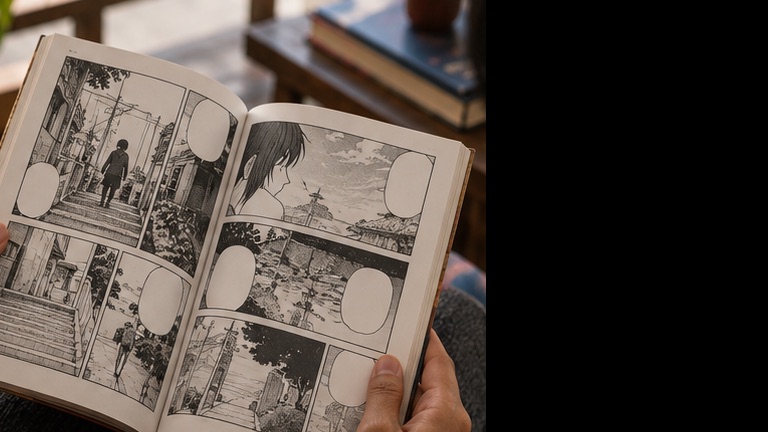
Choose anime first if voice acting, music, colour and movement help you connect with unfamiliar stories. Choose manga first if you want control over pace, appreciate line art or want to continue beyond an incomplete adaptation.
For a specific title, use this decision:
| Your priority | Better first choice | Why |
|---|---|---|
| Emotional performance and soundtrack | Anime | Actors, sound and editing shape the scene |
| Faster progress through a long story | Manga | You control reading speed and skip recaps naturally |
| Original composition and author’s drawing | Manga | You see the published page before adaptation choices |
| Action in continuous motion | Anime | Choreography and timing can clarify movement |
| Story beyond the latest season | Often manga | Print publication may be further ahead |
| Shared family or friend viewing | Anime | A screen creates a common pace |
| Quiet reading on your own schedule | Manga | No headphones, episode length or autoplay needed |
There is no rule that you must consume both. A strong adaptation can be a complete experience even when it changes details.
In Japanese, manga broadly refers to comics, and anime is used for animation. Internationally, manga usually means comics associated with Japan, while anime means animation associated with Japan. The boundaries become complicated with international co-productions and creators influenced by Japanese forms, but the medium distinction remains simple: manga is read; anime is watched.
Television anime is not adapted from manga alone. Sources also include light novels, visual novels, games, web novels, original screenplays and older literature. Calling every source “the manga” can therefore send a beginner to the wrong version.
Manga arranges selected moments on a page. A punch may occupy one explosive panel, while speed lines, framing and the reader’s imagination connect what happened before and after. Anime creates a continuous sequence with animated poses, camera movement and a fixed duration.
Neither is inherently more dynamic. A great manga artist can make a still impact feel faster than weak animation. A great anime production can expand a few panels into expressive choreography without losing clarity.
Ask what the scene needs. Complex physical geography may benefit from motion. A shocking reveal may become more powerful on a page because the reader turns into it and can stop instantly.
An anime episode runs at its chosen speed. You can pause or change playback speed, but the performance is designed around a shared timeline. Silence lasts a measured number of seconds; music reaches a cue; a joke lands after an edit.
Manga timing is collaborative. Panel size, empty space and page turns guide the eye, yet the reader can rush, linger or reread. A dense political explanation may take five minutes for one person and twenty for another.
This is why “the manga is faster” usually means faster to consume, not that the story necessarily has faster narrative pacing.
On a manga page, typography, dialect spelling, word choice and facial expression suggest a voice. Anime adds pitch, breath, hesitation, volume and casting. A polite sentence can sound terrified, sarcastic or emotionally empty depending on delivery.
Japanese voice performance also makes honorifics and speech registers audible even when subtitles simplify them. A switch from family name plus -san to a bare given name may reveal a relationship change.
The trade-off is imagination. A manga reader creates an internal voice; an anime fixes one interpretation. Neither is wrong, but readers sometimes feel surprised when a long-imagined character finally receives a voice adaptation.
For those relationship clues, see Japanese Honorifics in Anime Explained: 20 Words Indian Viewers Should Know.
Anime has score, opening and ending songs, environmental sound and deliberate silence. Music can turn a training sequence into triumph, make a quiet meal feel nostalgic or warn the audience before a character understands danger.
Manga cannot play music, but it can avoid being emotionally prescriptive. The reader supplies rhythm and may notice ambiguity that a dramatic score resolves in one direction.
When fans praise an anime for “elevating” the source, they often mean direction, music, performance and editing created an effect that cannot be reduced to accurate panel copying.
Most Japanese manga chapters are published primarily in black and white, sometimes with colour opening pages or special editions. Artists use ink weight, screentone, hatching and negative space to separate materials and moods.
Anime must decide colours for hair, clothing, lighting and environments. Those choices may follow author illustrations but still add a new visual system. A night scene that is ambiguous in monochrome becomes blue, green or orange through art direction.
Do not treat black-and-white manga as an unfinished anime storyboard. Page composition and monochrome drawing are the finished language of the medium.
When an anime adapts manga, episodes combine, reorder, compress or omit chapters. Minor conversations may disappear to reach a strong seasonal ending. Two separate encounters may become one. An internal thought may become a glance.
That does not automatically make the adaptation dishonest. Television has episode lengths, production limits and a different rhythm. Faithfulness should mean preserving what matters, not reproducing every panel at equal speed.
Read the manga when omitted character logic interests you. Watch the anime when compression improves momentum. The better version can change by arc.
Adaptation is not a one-way process of loss. A manga may devote three panels to a fight that animators develop into a full sequence. Background characters can receive new reactions. A song only described in text can finally be heard.
Expansion works when it reveals character or space. It becomes padding when repeated flashbacks, long reaction shots or slow recaps exist mainly to avoid catching up with the source.
Compare purpose, not minutes. A longer anime scene is valuable if the added time creates a new understanding.
Fans commonly call an episode filler when it was not adapted from the manga and does not advance the central source plot. Long-running weekly anime used original arcs partly to give ongoing manga more time to stay ahead.
But “not in the manga” does not automatically mean worthless. Anime-original stories can develop supporting characters, deliver comedy or become beloved. Conversely, a slow episode adapted from canon material is not filler in the strict production sense.
Use episode guides cautiously. They reflect fan classification and can encourage viewers to skip setup that an adaptation later references.
Canon means material accepted as part of a story’s official continuity, but franchises can contain several continuities. A manga, television anime, film and game may each establish compatible or conflicting events. A creator can supervise an anime-original character without placing every event into the manga timeline.
Instead of asking only “Is it canon?”, ask “Canon to which version?” A self-contained film can be official, enjoyable and narratively incompatible with the weekly series at the same time.
Canon status is useful for continuity questions; it is not a quality score.
An adaptation may reach broadcast while its source is unfinished, receive no further season, or deliberately choose a different conclusion. Older series often created original endings rather than stopping without resolution.
The manga ending is original to the manga continuity; the anime ending belongs to the anime continuity. Calling one “fake” prevents useful comparison. Ask what theme each ending completes and whether earlier adaptation choices prepared it.
If you move from such an anime to the manga, starting at chapter one is usually safer because divergence may begin long before the final episode.
Adaptation rate changes by genre and production. An action manga with many large panels can cover chapters quickly. A dialogue-heavy mystery may need more screen time per page. A four-panel comedy can be reorganised into thematic episodes.
That is why “twelve episodes equals four volumes” is not a reliable universal formula. Even within one series, a climactic arc may receive more minutes than a transitional chapter.
Use a title-specific chapter guide, ideally one that explains omissions, rather than estimating from episode count alone.
Japanese manga volumes are commonly read from right to left. Begin at what an English-language book would normally call the back, read the right-hand page before the left-hand page, and move through panels from the upper right toward the lower left while following the actual layout.
Speech bubbles within a panel also generally follow right-to-left order. Good lettering and balloon placement guide the eye, so do not force a mechanical grid when a large panel spans the page.
Modern English editions usually preserve the original direction. Older localisations sometimes mirrored artwork, which could reverse handedness, signs and composition. A printed “You are reading the wrong way” page is a normal beginner aid, not an error.
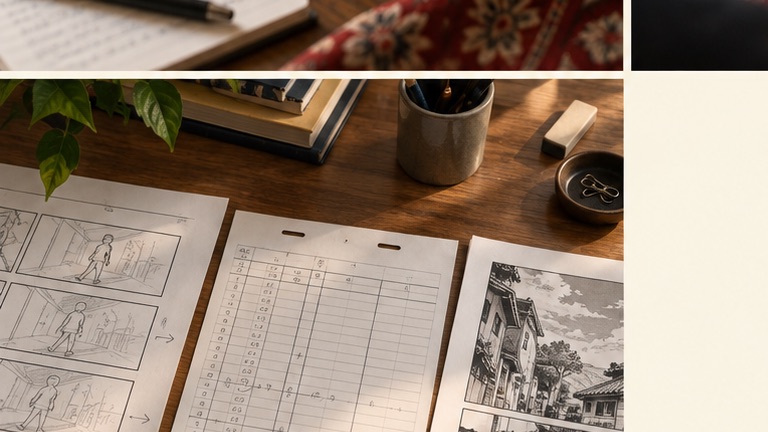
A manga chapter may end on a page-turn reveal after 15 to 25 pages, though length varies widely. A television episode usually needs an opening, internal movement and a closing beat within its broadcast slot.
Adaptations therefore relocate cliff-hangers. One episode may combine the end of one chapter with half of the next; another may stop early to preserve a reveal. Recaps and previews further change the amount of new story.
This difference affects bingeing. “One more chapter” can be a smaller commitment than “one more episode,” yet cliff-hangers make both dangerous to sleep schedules.
A manga has a credited creator or creative team and may rely on assistants and editors. The central authorial hand is usually visible in page layouts and drawing decisions.
Anime requires direction, scripts, storyboards, character design, animation direction, key animation, backgrounds, compositing, sound, performance, editing and production management. Episodes can vary because staff, schedule and outsourcing conditions change.
Saying “the studio made it good” can erase individual artists, while blaming one animator for an entire weak episode misunderstands the pipeline. Credits matter.
A weekly manga artist works under intense deadlines, and drawing can evolve substantially over years. Collected volumes may correct publication art. The change is gradual and tied to one main creative practice.
Anime aims for model consistency, but movement requires many drawings by many people. A character may look simplified during fast motion or vary between episodes. A still screenshot can make purposeful animation look bad because it was designed to be seen between frames.
Judge manga through page sequences and anime through motion, not isolated social-media images.
Many anime seasons function as adaptations of only part of a continuing source. A series can be popular with viewers yet never receive another season because committees, schedules, rights, staffing and commercial priorities are complicated.
If you want continuation, first identify the real source. It may be manga, light novel or game. Then check whether the anime changed or skipped material. Fans often recommend restarting because the reading experience and information order differ.
“Read from chapter 47” is convenient; “start from chapter one” is safer when you care about every detail.
Television broadcast standards, time slots, platform rules and film certification can affect what an anime shows. Violence may be obscured with darkness, camera framing or altered colour. Sexual material can be cropped or covered. Home-video versions sometimes revise images.
Manga can show material differently, but print also has editorial and retail constraints. It is inaccurate to assume manga is always uncensored or intended for adults.
Demographic labels such as shōnen and seinen are publishing categories, not age ratings. Check the specific edition and adaptation rather than using medium or demographic as a safety guarantee.
Anime is commonly licensed by season and platform, with subtitle and dub languages varying by territory. Manga is sold by volume or chapter through print shops and digital services. An anime subscription may provide hundreds of titles while buying a long print series one volume at a time can cost much more.
Manga has advantages: a purchased volume does not disappear because a streaming licence ends, and reading uses far less data once downloaded. Anime has advantages for shared viewing and can be cheaper when one legal subscription covers the desired catalogue.
For Indian readers, imported print availability and price can vary. Digital editions may be faster to obtain, but confirm territorial rights and supported payment methods on the official service. Avoid piracy sites that imitate legal readers.
For current anime options, use Where to Watch Anime in India Legally.
If an anime contains long internal monologues, game-like systems or dense fantasy world-building, its source may be a light novel rather than manga. The manga version could itself be another adaptation.
| Source | Usual form | What an anime may change |
|---|---|---|
| Manga | Sequential art and dialogue in panels | Page rhythm, internal text, chapter order |
| Light novel | Prose with occasional illustrations | Narration, thoughts, descriptive world-building |
| Visual novel | Interactive text with routes and choices | Route structure, alternative outcomes |
| Game | Play systems plus narrative | Player agency, repeatable battles, branching quests |
| Original anime | Created primarily for animation | No earlier source required |
Reading a manga adaptation of a light novel may not reveal everything omitted by the anime. Check the credit line and official description before buying.
Comparison videos and fan wikis can answer the chapter question, but thumbnails and section titles often reveal later characters or outcomes. A safer process is to work from the edition itself:
This method protects the discovery experience while answering the practical question. It also prevents a common mistake: buying a later volume and discovering that the season ended halfway through it. Digital previews and tables of contents can help confirm the correct edition before payment.
Start from chapter one when:
Continue from the adaptation point when the anime is close to the source and your only goal is finding what happens next. Even then, read a summary of skipped chapters and verify the correct volume for that specific adaptation.
Do not assume season numbers correspond neatly to manga volumes. Search by exact episode and title, not by a generic conversion chart.
Anime can clarify choreography, impact and team movement, especially when production is strong. Manga offers bold composition and lets you study tactics at your own speed. Haikyu!! is rewarding in both because animation makes rallies continuous while manga pages make positioning easy to revisit.
Voice acting and music add emotional immediacy. Manga can preserve private thought and small expressions without forcing a tempo. Choose based on whether performance or interior reading matters more.
Manga makes it easy to return to a clue, but careless page flipping can expose a reveal. Anime controls exactly when information appears and can use sound to misdirect. Avoid comments and thumbnails in both cases.
Anime owns vocal timing and pauses; manga owns panel timing and the surprise of a page turn. A joke can be rewritten substantially rather than translated word for word.
Not in general. Manga offers authorial page composition and reader-controlled time. Anime offers motion, performance, colour, music and controlled editing. Compare individual works.
No. The anime may be original, adapted from a completed source, or released while the manga adaptation follows another novel. For a manga-based ongoing series, the manga is often further ahead.
It commonly means anime-original material not advancing the main source plot, especially in long-running adaptations. Fans also use the term loosely for any slow episode, which is less precise.
Canon is the material accepted within a particular continuity. A franchise can have separate manga, anime and film continuities.
Most modern editions that preserve Japanese page layout are read right to left. Follow the publisher’s printed guidance because rare mirrored or differently formatted editions exist.
Yes if you want omitted detail or the adaptation diverged. Continue from the corresponding chapter only when convenience matters more and reliable title-specific guidance confirms the handoff.
Anime gives a story a public clock: everybody hears the same pause, performance and musical entrance. Manga gives the reader a private clock: a second can occupy a spread, and a chapter can be read quickly or examined line by line.
Choose the clock that fits you. Watch when movement, voices and shared experience matter. Read when you want control, original pages or material beyond the adaptation. If a story becomes important, trying the other medium is not repetition—it is a new set of decisions about the same fictional world.
If you need a first title before comparing versions, start with 21 Best Anime for Beginners in India. To understand labels such as shōnen, seinen and isekai, read Anime Genres Explained: 18 Types Every Indian Viewer Should Know.

AUTHOR OF THIS ARTICLE
SoJapan
SoJapan India Pvt. Ltd. is a Japanese-founded company based in Gurugram. We bring Japanese food, anime goods and apparel materials to Indian businesses, with a sister company in Kyoto that works directly with makers in Japan.