Look at the corner of a fastened packet. Is there a metal staple, a cut in the paper, or a small pressed pattern? That corner tells you more than the phrase “staple-free” on its own.
Two tools can both avoid metal staples while doing quite different things to the sheet. One joins paper using a cut-and-thread mechanism. Another presses sheets together without making a hole. A conventional stapler adds a separate fastener, and a flat-clinch model changes how its legs sit underneath the packet. Those differences affect what you can put near the binding, how you might separate the sheets, and which materials you should put into the tool.
For readers in India exploring Japanese stationery, this is a guide to choosing a fastening method for ordinary notes and printed handouts. It uses exact KOKUYO and MAX models as examples, not as a ranked shopping list. The manufacturers supply the product facts; the paper-project examples are editorial suggestions, not hands-on test results. Overseas product listings do not confirm Indian stock, prices or delivery.
The short answer is this: choose staple-free fastening when its particular alteration to the paper is acceptable and the packet fits the tool’s stated limits. Choose neither kind if the original must remain untouched. A higher sheet rating does not settle that decision for you.
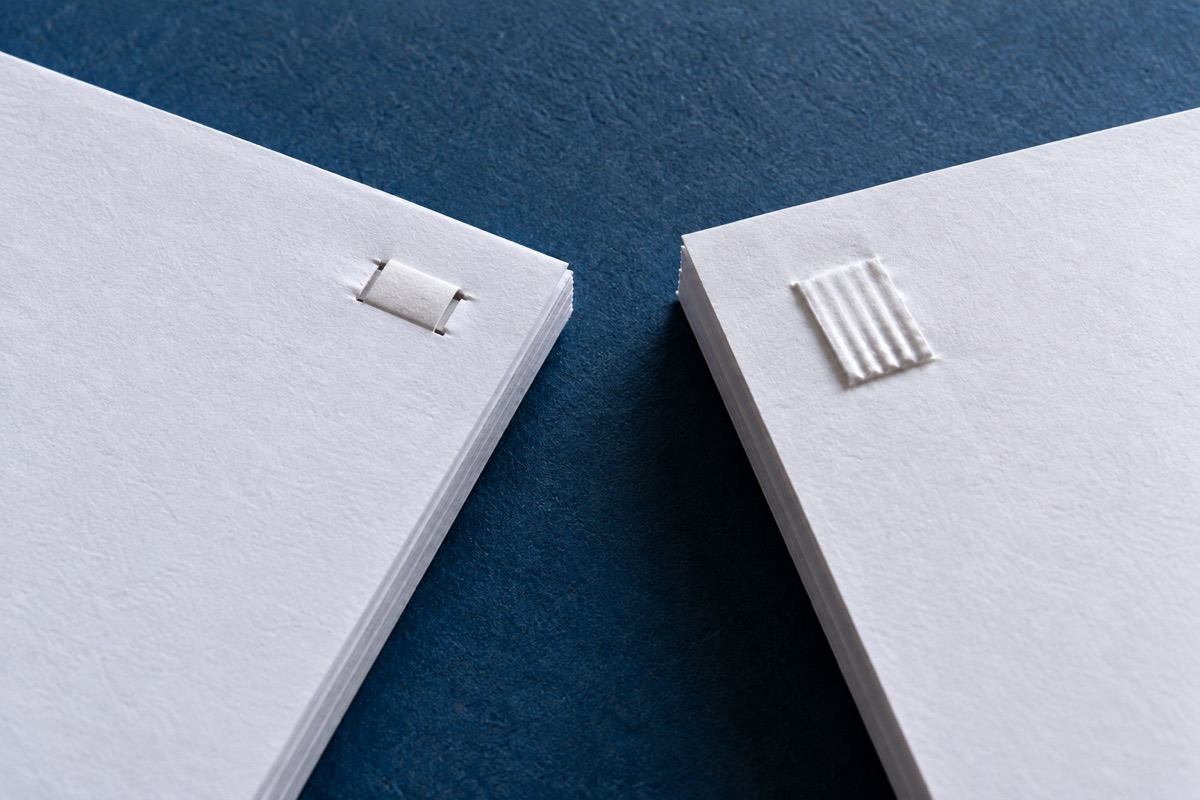
The most useful distinction is between a fastening method and the name of a product family. KOKUYO’s Harinacs range includes more than one mechanism. You cannot assume that a video demonstrating one Harinacs tool shows what every model will do.
In KOKUYO’s explanation of its hole-making Harinacs design, a cut paper tongue passes through a slit. The development team describes adjusting the blade and tongue shape to make the connection harder to pull apart. The paper itself provides the connection; there is no separate staple to load. The same manufacturer interview contrasts this with the Press design, which uses pressure and a wave-shaped pattern to interlock paper fibres.
That is an important difference for a printed sheet. A cut is part of the intended result, not a defect you should try to avoid by pressing less firmly. If a name, diagram or small annotation occupies that corner, the layout and the fastening method are in conflict before you start.
For a replaceable set of your own notes, reserving a blank area may be easy. For a sheet someone else has designed, you may not control the margins. This is one reason to choose the method after looking at the actual pages, rather than buying a tool and assuming every handout will suit it.
Harinacs Press avoids the cut. KOKUYO describes releasing its connection by rubbing the binding area with a hard object such as a pen cap. That is the manufacturer’s release guidance for this mechanism, not a promise to return every sheet to its original appearance. Its current model warnings explicitly allow for remaining marks.
Think of “can be separated” and “will look untouched” as two different requirements. A packet of draft notes may only need the first. An illustration you want to display, a collectable insert or a document whose condition matters may need the second. A removable connection is not evidence of conservation suitability.
Nor should you assume that pressing the sheets together makes a permanent booklet. The maker distinguishes its holding strength from metal-stapled binding. The attraction is a specific way of joining a small paper packet without an added staple—not an all-purpose replacement for every bound document.
A conventional stapler drives a separate staple through the packet. In a flat-clinch model, the bent legs sit flatter against the back. MAX identifies the HD-10FL3K as a flat-clinch stapler on its exact product page.
This still punctures the sheets. “Flat” describes the clinching result; it does not mean the connection disappears, the paper remains unmarked, or the packet can be treated as a loose-leaf notebook. Likewise, a built-in staple remover is a useful removal feature, not proof that every removal will leave pristine paper.
If your priority is avoiding an added metal staple, this is a different option, not a better version of staple-free fastening. If your priority is keeping a larger packet together with an appropriate staple, the small staple-free tools below may not be the right comparison in the first place.
These three examples make the mechanisms easier to identify. Ratings are the manufacturers’ figures for PPC copy paper at 64 g/m², not promises for every sheet described as paper. The Harinacs figures are approximate, and MAX also qualifies its capacity by paper and fastening conditions.
| Exact model | What joins the paper | Stated sheet capacity | Detail worth checking |
|---|---|---|---|
| KOKUYO Harinacs Press SLN-MPH105GB | Pressed connection without a hole | About 5 sheets | Marks can remain; not equivalent to metal-stapled holding strength |
| KOKUYO Harinacs Handy SLN-MSH110GB | Hole-making paper connection | About 10 sheets | The confirmation window helps you see the binding position |
| MAX HD-10FL3K | No. 10 metal staple, flat clinch | About 32 sheets with the specified ordinary staples | The limit is 10 sheets when using the specified coloured staples |
Sources: current Press model, current Handy model and the MAX product page linked above.
The coloured-staple exception is particularly easy to miss. The tool has not changed, but the applicable combination has. Buying a compatible-looking coloured refill and continuing to rely on the headline capacity would lose an important condition from the specification.
“Five-sheet Harinacs” is also an incomplete description. KOKUYO’s Handy range page includes a five-sheet Compact Alpha as well as the ten-sheet Handy. A matching sheet count does not make Compact Alpha the same mechanism as Press. Look for the exact model and the illustrated binding result, not just the number five.
The table compares capacity under a named paper condition, not tested durability. It cannot tell you how the connections compare after repeated page turns or a journey in your bag.
Printed pages and physical sheets are not interchangeable units. In a simple example, four sheets printed on both sides provide eight printed sides, but you are still putting four sheets into the fastener. Four single-sided sheets plus a separate cover make five sheets, even if the cover has no text.
That arithmetic is useful only as a count. It does not certify the material. A card cover does not become ordinary copy paper because it is one sheet, and a sticky label attached near the corner adds something the paper rating did not describe.
The 64 g/m² figure is a paper basis weight: mass per unit area. It is not a direct measurement of this packet’s thickness. Do not turn a five-sheet rating into a new capacity by multiplying five by 64 and dividing by the weight printed on another paper packet. That calculation would treat paper construction, finish and fastening behaviour as if they were one variable. The manufacturers do not authorise that conversion in the specifications cited here.
The current Press warning names paper quality and thickness, thermal paper, duplicate forms, toner and extremely dry conditions as possible limitations. Both current Harinacs listings restrict unsuitable materials and adhesive-bearing items. A handful of mixed scraps therefore deserves more caution than the same number of suitable copy-paper sheets.
For a useful pre-use check, assemble the actual kind of packet you intend to make—not your only original—and check the tool’s instructions against it. Look at the binding position and the connection before relying on the result. Stay within the stated material and sheet restrictions; an unsatisfactory result is not a reason to exceed them or try a different material that the maker excludes.
There is no need to begin with a large project. A small, replaceable sample can answer practical questions that a product photograph cannot: is the mark acceptable, is the text clear of the connection, and can you turn the pages in the way you intended? That is a suitability check for your own use, not a laboratory test or evidence that the product will behave identically with other papers.
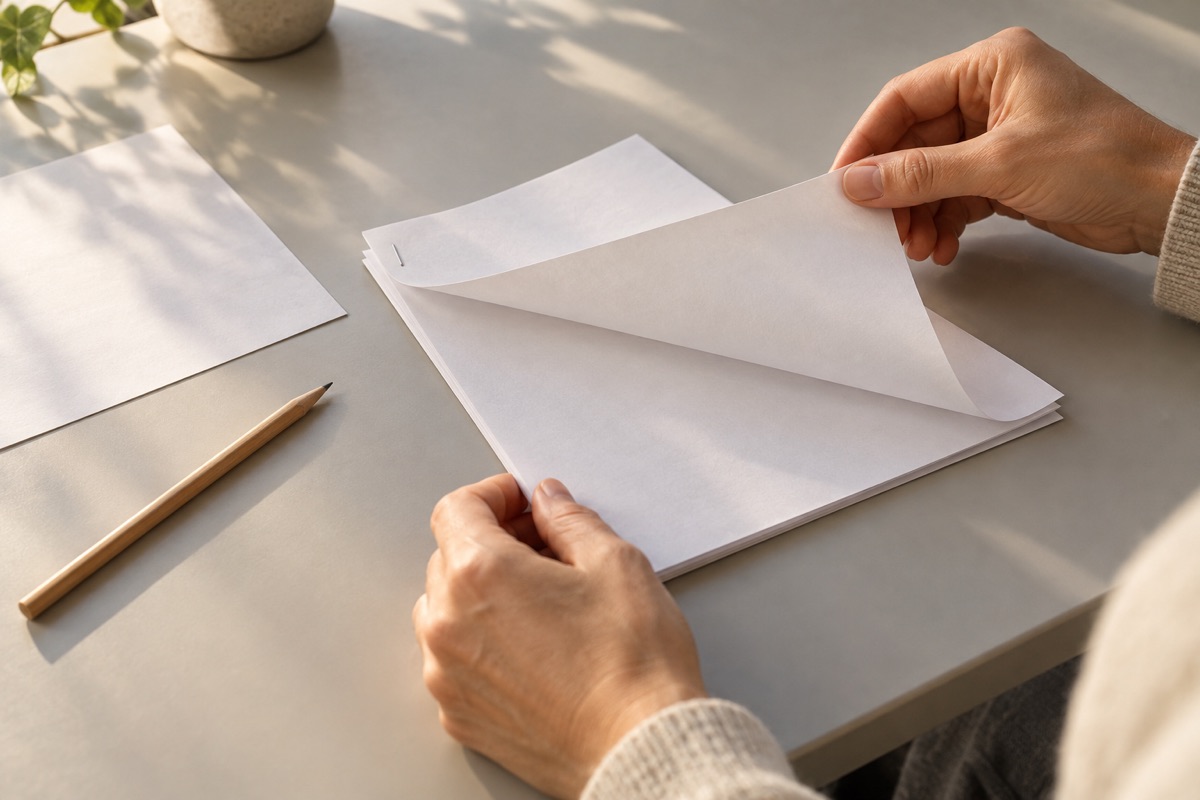
A blank corner has to do more than conceal the fastener. It also gives the reader room to move the sheet without pulling directly on nearby printed content.
Before fastening, put the pages in their intended order and orientation. If a landscape diagram appears among portrait notes, turn it the way a reader would. Check whether the proposed connection would cover a label or make the diagram awkward to read. An empty corner on page one is not enough if the same position contains important content on page three.
For your own print layout, you can reserve an area on every sheet. For an existing handout, choose a different location only if the tool’s instructions and reach allow it. A corner guide is a positioning aid; it does not establish that the surrounding print is safely outside the binding area.
Consider the difference between a packet read one page at a time and a reference sheet you want lying beside another sheet. In the first case, a fixed order may help. In the second, joining the pages may obstruct the activity you are trying to support. Removing the fastener every time is a sign that the document format, rather than the fastening strength, deserves another look.
If rearranging individual pages is the main requirement, our Japanese loose-leaf binder guide explains the separate questions of paper size, hole patterns and refill compatibility. That system introduces its own constraints, but it addresses repeated rearrangement more directly than choosing a stapler by capacity alone.
For a valuable original, start with a copy if the task permits one. A loose folder or an appropriate non-puncturing holder may also fit the job without a new stapler. That is not a claim that every clip or folder is archival: pressure, surface contact and storage suitability remain separate matters. The point is to avoid altering the original merely because a small tool happens to be available.
With staple-free tools, there is no staple refill to match. With a metal stapler, compatibility is a continuing part of ownership. Save the model number and the specified refill code rather than relying on the appearance of the box.
For the HD-10FL3K, MAX lists No. 10-1M, No. 10-2M, No. 10-5M and its specified coloured No. 10-1M staples. It also distinguishes the 100 staples in the working magazine from 100 more carried in a spare pocket. Carrying two hundred does not mean all two hundred are loaded for use.
Two different kinds of number appear in those refill names. MAX’s pack-quantity explanation says 1M denotes a nominal 1,000 staples in the small box, while 2M denotes 2,000 and 5M denotes 5,000. The M suffix is about quantity, not staple-leg length. Choosing the larger box does not upgrade the stapler’s sheet capacity.
The staple type itself cannot be dismissed as a pack-size variation. MAX explicitly states that its No. 11-1M staples cannot be used in No. 10 staplers. “It is another MAX refill” is therefore not enough information. Neither is a seller’s photograph that makes two staple strips look similar.
When comparing a local listing or an imported item, separate three questions: is this the exact stapler model, does the supplied refill match its specification, and can you obtain the appropriate refill when needed? Check the seller and package for all three; a model name alone does not answer them.
These are hypothetical uses, not product tests. They show how to make the decision before choosing a colour or placing an order.
A four-sheet anime discussion handout. Suppose you have written short discussion prompts for friends, with ordinary copy paper and a blank corner on every sheet. The copies are replaceable and the order is settled. This is a plausible task to check against a small paper fastener’s instructions. If the pressed pattern is acceptable, Press is a candidate; if a visible cut is acceptable, a hole-making model is another. Neither is justified merely by being staple-free. The decision turns on the actual paper and the result you are willing to leave on it.
A set of drawing references you keep comparing side by side. Suppose your own sketches and notes need to spread across the desk, and you expect to add or remove sheets. Here, holding everything in a fixed packet may solve the wrong problem. Keep the references individually accessible, or choose a compatible removable-page arrangement. There is little benefit in choosing a stronger fastener if you immediately need to take the packet apart.
A larger, finished club handout. Suppose the packet is beyond the small Harinacs models’ stated limits but within the relevant metal-stapler specification, using suitable paper and a matching refill. A metal-stapled packet is then worth considering. Check the full material and staple conditions, not just whether the sheet count is below 32. The coloured-staple restriction in the comparison is precisely the sort of exception that can change this choice.
What about putting one of those sheets into a notebook? Fastening a packet and attaching an insert to a page are different jobs. Our Japanese paper-glue guide covers tape, stick and liquid formats when an adhesive attachment is actually wanted. A stapler is not a substitute for deciding where an insert should sit and whether it must move later.
Keep these experiments to suitable, replaceable paper. Trading cards, collectable packaging, original drawings and important documents should not become fastening samples. An interest in Japanese stationery does not require trying every mechanism on the things you collect.
No disposable staple does not mean no working metal or no moving hazard. The current Harinacs models contain metal components; the Handy model includes a cutting blade. KOKUYO warns users to keep fingers away from blades and moving gaps, remove existing clips or staples before binding, and avoid adhesive-bearing sheets and excluded non-paper materials. Its Handy instructions also say not to operate with the confirmation window open. Follow the exact model’s instructions; do not dismantle or modify a tool to clear a problem.
These cautions matter more than a broad “safe for children” label. A tool that avoids loose staples has changed one aspect of the task. It has not removed the need for appropriate supervision, storage and use. If operation seems wrong, stop and consult the instructions or the manufacturer instead of treating extra pressure as the solution.
The environmental conclusion needs similar restraint. Not consuming staples during fastening is a specific feature. It does not, by itself, establish the lowest overall environmental impact of a purchase: this guide has not compared manufacturing, transport, service life or end-of-life treatment. If a fastening method you already own does the job appropriately, trying a new mechanism is optional.
The useful purchase question is smaller and more answerable: what connection does this exact tool make, and is that connection right for these sheets? Start with the paper and its next use. The model number, the sheet rating and the refill then become checks on your choice, rather than substitutes for it.

AUTHOR OF THIS ARTICLE
SoJapan
SoJapan India Pvt. Ltd. is a Japanese-founded company based in Gurugram. We bring Japanese food, anime goods and apparel materials to Indian businesses, with a sister company in Kyoto that works directly with makers in Japan.