← JOURNAL6 Oct 2026
Crayon Shin-chan Explained: Why Ordinary Family Life Becomes So Funny
 By SoJapan
A parent wants fewer toys in the house. A child wants to keep every toy. His friends propose packing the box more efficiently. Nobody has stopped working on the problem, yet they are no longer solving the same problem.
That disagreement is a good doorway into Crayon Shin-chan. The famous five-year-old does not always need an elaborate prank to upset the adult world. Sometimes it is enough to accept an instruction on his own terms.
For fans in India, the familiar face can make the series seem simpler than it is: naughty boy, exasperated mother, another scolding. Look more closely at what each person wants, however, and shopping, tidying and helping become little contests over whose version of the day will happen.
Shin-Ei Animation credits Yoshito Usui as the original creator and dates the television anime’s start to 1992. Its series introduction specifically identifies India among the countries with enthusiastic fans. That documents an Indian connection; it does not establish a national audience ranking or imply that every reader watched the same dub. Official studio introduction.
This guide uses selected official Japanese television story summaries to explore the comedy. It reveals their starting situations, not their endings. Dates identify the broadcaster’s archive entries, not Indian air dates; English descriptions below are our explanations, not official translated episode titles. The interpretation is ours, rather than a claim about Usui’s private intentions.
Watch three things: who sets the task, who changes its meaning, and who has to deal with the consequences. Those questions reveal more than simply counting how often Shin-chan misbehaves.
Shinnosuke Nohara, usually called Shin-chan, is five. His parents are Misae and Hiroshi; Himawari is his baby sister, and Shiro is the family’s dog. Misae handles the demands of raising the children, while Hiroshi is a salaried worker. The official profiles describe both parents with affection as well as comic flaws.
The main friends are worth distinguishing. Kazama is knowledgeable and ambitious; Nene enjoys elaborate make-believe households; Masao is timid and wants to become a manga artist; Bo-chan is quiet, dependable when needed, and interested in unusual stones. Action Kamen is the television hero Shin-chan admires, not another child in the group. TV Asahi’s official character guide.
That is enough biography to begin. A long inventory of birthdays, favourite things and relatives would not tell you why a particular scene is funny. The more useful question is what happens when these people share a task.
Try temporarily setting aside the categories “good child” and “bad child”. They can describe behaviour, but they are poor explanations of a scene. A child can make a sincere effort towards an inconvenient goal; an adult can have a reasonable rule and an unreasonable expectation about how easily it will be followed.
Likewise, being the person who complains does not make a character irrelevant. In a scene organised around an errand, the complaint can tell us what was supposed to happen. Without that expectation, a detour is merely another activity. With it, every delay gains a little pressure.
When revisiting the series, pay attention to the person who did not choose the adventure. What have they already prepared? What will need doing again? This is particularly useful when a clip isolates a mischievous moment and removes the ordinary work surrounding it. The wider situation can change whom you sympathise with, without requiring you to stop finding the disruption funny.
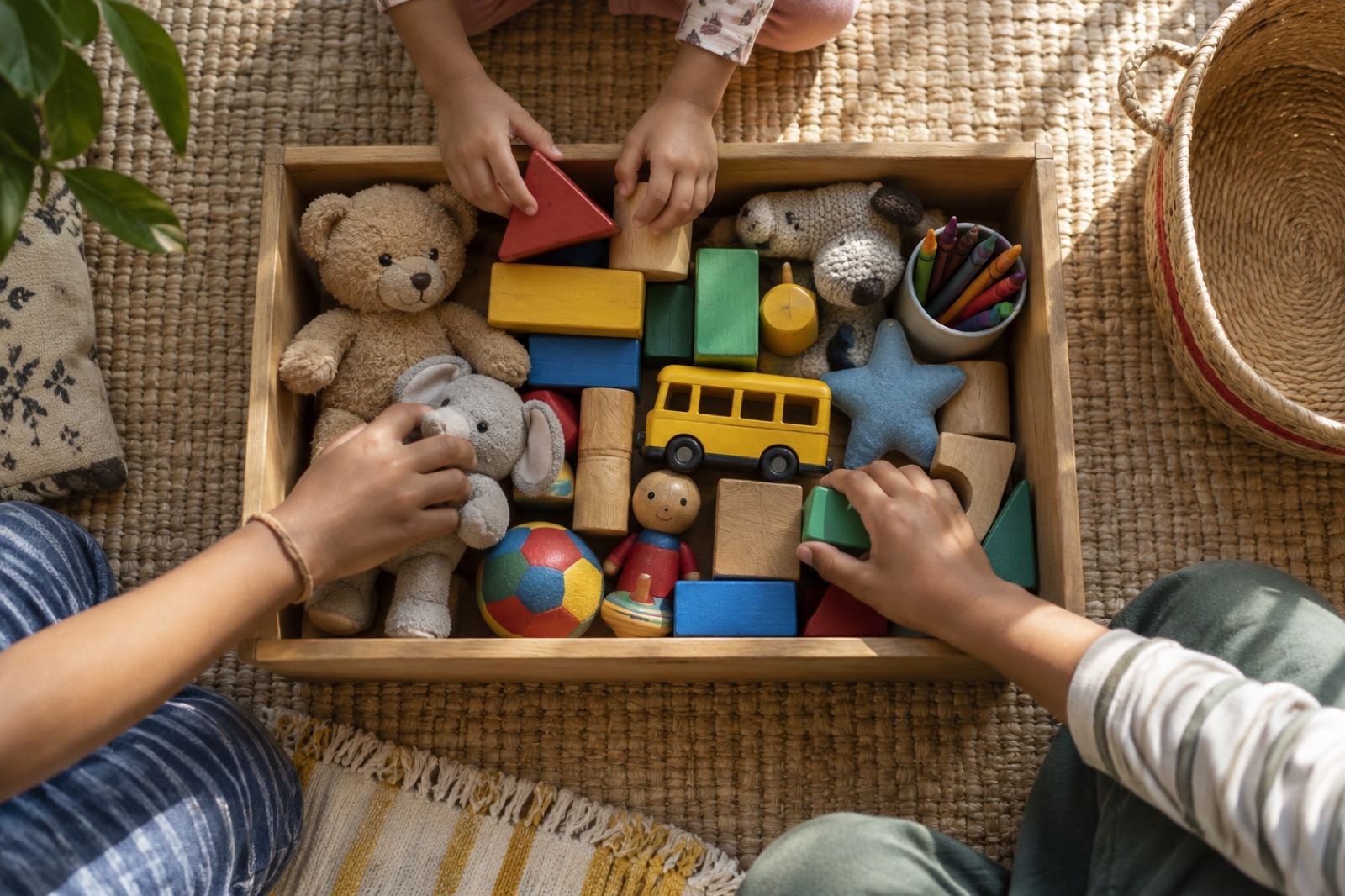
TV Asahi’s 3 June 2023 listing provides the opening example. Misae tells Shin-chan to discard old toys. He cannot choose; Kazama and Masao join him in trying to fit the toys into the box differently. The synopsis stops before the outcome. Official toy-box story summary.
Notice the substitution. Reducing possessions and fitting possessions into a container are related activities, but they are not identical. One involves giving something up. The other invites ingenuity. As an editorial reading, that shift is the joke’s most promising feature: effort can become a way of avoiding the decision that the effort was meant to serve.
This is more interesting than random disobedience because the children’s response has a recognisable logic. If the visible evidence of the problem disappears, perhaps the demand will disappear too. You can understand that reasoning while also understanding why a parent might remain unconvinced.
For a useful contrast, imagine two hypothetical instructions, not lines from the show: “Make this box close” and “Choose what you no longer need.” They may be spoken beside exactly the same pile of objects, but success means something different in each case. Comedy has room to develop between those definitions.
The example also offers a better way to discuss favourite characters. Instead of asking only who causes the most trouble, ask who supplies the alternative solution. Who makes it sound reasonable? Who joins because the activity itself looks appealing? Friends can give a bad idea momentum without one of them delivering a villainous master plan.
You do not need to treat the scene as a lesson on decluttering. Its attraction is the uncomfortable recognition that a technically clever answer may sidestep the real request. Adults can recognise that temptation too. Reorganising a difficult job is often more pleasant than completing the difficult part.
On a rewatch, find the moment when the task changes definition. It may arrive well before the loudest joke. Spotting it lets you enjoy the build-up instead of waiting only for a crash, an angry reaction or a punchline.
The verb “help” sounds unambiguous until you ask what the helper gets from it. Two separate official story premises make that question unusually productive.
In the 11 December 2021 archive, the children approach teachers clearing fallen leaves. Helping offers a way out of Nene’s elaborate pretend-family game. The synopsis gives us the motive before the task unfolds. Official teachers’ cleanup premise.
Read that setup as a choice between activities, not as proof that the children suddenly love chores. From outside, joining a cleanup might look exemplary. From inside the group, it can be a negotiated escape. The interesting question becomes whether an apparently helpful act must have an entirely selfless motive to be useful.
For viewers, that adds a second layer to a simple action. You can watch what the teachers see while remembering what the children are trying to avoid. No complicated mystery is required; knowing a motive is enough to make a polite offer sound different.
A different version of helping appears in the 8 May 2021 listing. Misae is putting winter bedding into compression bags for storage. Shin-chan becomes interested in watching the bedding shrink and offers to assist. Official bedding-storage premise.
Here, the attraction lies in the process rather than in escaping another activity. That distinction matters. Someone enjoying the moving parts of a job may be enthusiastic without caring much about the finished result. The adult’s stopping point and the child’s stopping point need not coincide.
These setups give “helpful” three possible meanings: sharing responsibility, gaining an exit, or gaining access to something entertaining. They are analytical categories, not a scoring system that the programme announces. Their value is that they keep you from flattening every interruption into the same kind of naughtiness.
Consider a viewing question that works without guessing an ending: if the enjoyable part disappeared, would this person still want the job? That question distinguishes curiosity from commitment. It also helps explain why a willing assistant can require more supervision than an unwilling one.
Nene’s pretend household adds another interesting reversal. A game can become the demanding activity from which a real chore offers relief. The ordinary division between work and play no longer settles who is having fun. Ask who controls the roles and who gets to change them; that is often more revealing than the name of the activity.
In TV Asahi’s 9 November 2024 listing, Kazama explains the value of using spare moments effectively. The Japanese expression is sukima jikan: roughly, the gaps of time between other activities. The children end up looking for physical gaps around town. Official spare-time story premise.
The expression combines sukima, a gap, with jikan, time. In advice about a daily schedule, the gap is an available interval. Remove that scheduling context and a gap becomes something you might point at. The premise turns an abstract idea into something that can be searched for physically. It is not simply a child mispronouncing a difficult word: the meaning has moved from one kind of space to another.
The resulting contrast is not just between intelligence and ignorance. Knowing an expression, explaining it successfully and persuading friends to follow the explanation are three separate achievements. A confident speaker may possess the first without controlling the other two.
It is tempting to conclude that Kazama is always the sensible one and everyone else merely misunderstands him. A more rewarding viewing approach is to ask whether “sensible” advice answers the group’s actual wish. Are they looking for efficiency, or are they looking for something to do together? An activity can be useless under one definition and absorbing under another.
That does not make the advice wrong. It makes the conversation unstable in an entertaining way. One person thinks the subject has been settled; another hears a new possibility. The audience can hold both meanings at once and anticipate trouble before anyone inside the scene admits a disagreement.
For fans comparing dubbed versions, this is also a reminder to separate a joke’s wording from its structure. The Japanese setup depends on a particular expression. Another language might need different phrasing to make a similar turn intelligible. Without comparing the actual licensed audio tracks, it would be misleading to invent the Hindi line or announce that a remembered line is a literal translation.
If you want to discuss the joke with another fan, describe the change from abstract advice to concrete activity first. Then compare the wording in the editions you actually watched. That keeps a useful conversation from turning into an argument between two unverified memories.
Shops give comedy an immediate boundary: wanting something is different from having a way to obtain it. They also put the children in contact with people who do not share the family’s routines.
The 18 April 2026 archive describes Masao receiving little extras when shopping in the local shopping street. Shin-chan and the others investigate whether copying his shopping behaviour will produce the same result. The summary does not reveal the explanation. Official shopping-street premise.
What makes this a good character setup is the change in who has something worth studying. A friend who might otherwise be overlooked becomes the person with an apparent advantage. The question is no longer simply who leads the group, but who understands this particular situation.
Our reading is that the premise invites a confusion between copying an action and reproducing its circumstances. Observing a benefit does not necessarily reveal why it was offered. You can enjoy the children’s investigation without deciding in advance what the answer must be.
There is a related distinction between evidence and expectation. A character may notice a repeated result and immediately turn it into a rule. A viewer can stay curious longer: what information is missing? That little gap creates suspense on the scale of a free extra, not a world-threatening secret.
When watching this sort of shopping story, separate three questions. What is the item worth to the child? What does the adult control? And what social relationship surrounds the exchange? The answer to one does not automatically answer the others.
This also keeps cultural interpretation proportionate. A fictional shop interaction is not evidence that Japanese retailers generally give children gifts, or that Indian shops behave differently. The useful comparison is between characters inside the scene. There is no need to turn one comic premise into a national personality test.
That is a useful reason to follow Masao in this setup, even if another character is your favourite. His apparent advantage changes the group’s priorities. Supporting characters need not become louder or more forceful to become central; a situation can make their ordinary behaviour newly interesting to everyone else.
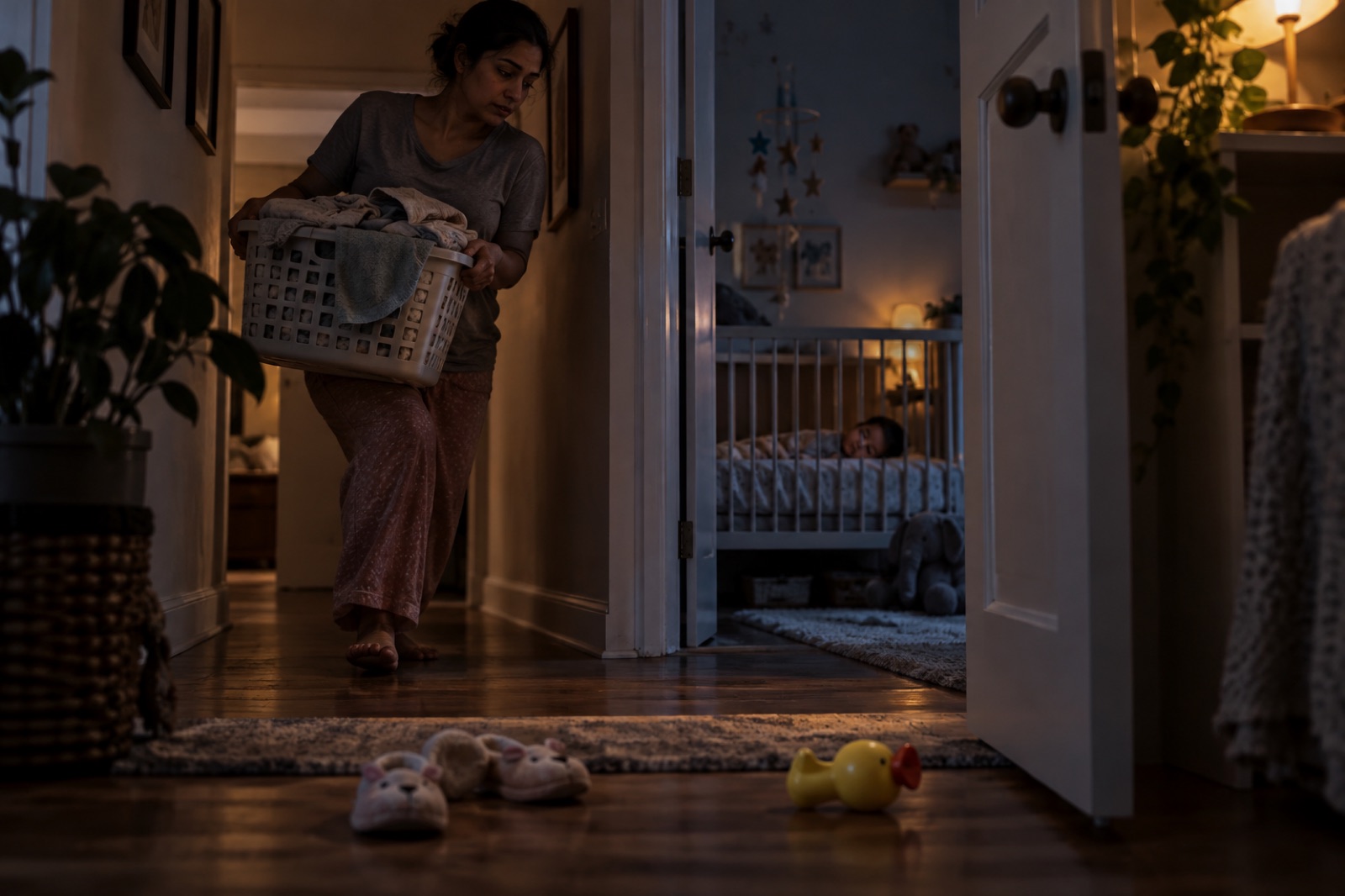
The 27 April 2024 listing includes a simple domestic predicament: Misae and Hiroshi have finally got Himawari to sleep, and even small sounds threaten to disturb her. They ask Shin-chan to be quiet. Official sleeping-baby premise.
There is no need to invent an extravagant disaster to explain the tension. The adults have already completed something difficult. The next scene begins with a result that must be protected, rather than a goal that has yet to be reached.
That changes how a viewer reads movement and sound. Under an ordinary household routine, a small interruption may hardly matter. Once quiet becomes essential, the same kind of interruption carries a possible cost. The situation supplies the pressure before anyone says anything particularly witty.
It also shifts attention away from the person making noise. A silent reaction can matter as much as a loud action once the audience understands what is at risk. This is a possibility built into the premise, not a description of a particular shot or sound effect we have verified. The official summary establishes the situation; the finished animation supplies its timing.
This is one reason domestic stakes deserve more credit. For an exhausted parent, preserving a sleeping child’s rest is not a trivial objective merely because it lacks spectacle. Small tasks can matter intensely to the people responsible for them.
That reading does not demand that you take the adults’ side in every joke. It asks you to remember that their reactions have a context. The same scene can offer the child’s frustration at a restriction and the parents’ relief at a hard-won pause.
Compare this setup with the toy box. There, the dispute concerns what finishing a task means. Here, the task is finished, but its success can be undone. The difference gives you two distinct things to watch: negotiation over a goal, and protection of a result. A long-running domestic comedy does not need to change the family completely to find a fresh source of friction.
A particularly limiting reading of the series is that the adults exist only to restore order. It misses how much comedy can come from the adults’ own wishes, uncertainty and unfinished responsibilities.
One premise in the 3 June 2023 listing has Shin-chan asking Hiroshi repeated questions about the world. Hiroshi encounters questions he cannot answer and tries to manage the situation, including searching on his phone. The appeal of the setup is not an assertion that fathers are foolish. It is the gap between occupying an authoritative role and knowing every answer. Official questioning-Hiroshi premise.
For a returning viewer, a useful question is whether admitting uncertainty would remove the problem. Sometimes embarrassment comes less from not knowing than from wanting not to be seen not knowing. That is an adult vulnerability a child can expose without fully understanding it.
Misae’s ordinary responsibilities have a different kind of vulnerability. In the 23 August 2025 archive, she wants to send a thank-you gift after receiving vegetables from Hiroshi’s brother. Forgotten contents and interruptions complicate the packing. Official parcel-sending premise.
The important word here is “finished”. Packing a parcel is not one action: it involves deciding what belongs inside, checking it, closing it and getting it ready to leave. A late discovery can force earlier work to be repeated. The synopsis gives a small practical task enough structure to support frustration.
You can use that observation when rewatching other domestic comedy, too. Identify the invisible preparation before laughing at the visible reaction. A disproportionate response may still be a joke, but recognising the preparation makes the person responding more understandable.
Neither example requires an ideal parent. In fact, perfection would remove much of the room for comedy. A parent can care, want to appear competent, become distracted and still be doing necessary work. Those qualities can coexist.
This is a more generous way to revisit a familiar programme without pretending every gag has a profound moral. Some jokes are simply broad or silly. The surrounding people nevertheless have reasons to want the day to go differently, and noticing those reasons can make a familiar setup feel less repetitive.
Start with the kind of interaction you enjoy, rather than searching for an allegedly definitive “best episode”. The examples above suggest several routes. This is a viewing preference map, not a quality ranking or an official watch order.
| If you enjoy… | Look for a premise involving… | The question to keep in mind |
|---|---|---|
| Verbal misunderstandings | Advice, unfamiliar expressions or questions | Which meaning does each person hear? |
| Friendship comedy | Shared games, small schemes or errands | Who controls the activity this time? |
| Family comedy | Tidying, packing or keeping things quiet | Whose earlier work is at risk? |
| A change in character status | Someone unexpectedly getting attention or an advantage | What does the group suddenly need from this person? |
Use the dates and Japanese source links in this article to identify the premises, not to assume an episode number on an Indian service. A broadcaster’s archive entry can contain several separately titled stories. Check the title, description and language options in the edition actually offered to you.
The distinction also matters when sharing a clip. A short extract may preserve a punchline while losing the instruction, motive or effort that made it work. If two people disagree about a character’s behaviour, first check whether they saw the same surrounding scene. More context is often more useful than a louder verdict.
For younger viewers, check the rating and content information attached to the particular programme or film available on your service. A child protagonist is not, by itself, an age recommendation. Preview the actual edition when deciding whether its humour suits your household; this article does not assign a single rating to the whole franchise.
We have not verified a current India-wide streaming home for all the stories discussed here. The Japanese studio’s streaming links are not proof of Indian availability. Use official local catalogues and broadcaster listings; our guide to finding legal anime in India explains the checks to make without treating every catalogue as interchangeable.
If this kind of small-scale comedy appeals to you, the Ninja Hattori character and India-connection guide offers a contrasting setup: extraordinary ninja abilities meet ordinary problems. With Shin-chan, you can start much closer to the floor—with a toy box, a half-finished job, or a child who has found a different meaning in an adult’s instruction.
The next time a familiar household scene begins, resist reducing it immediately to “Shin-chan causes trouble again”. Find the original plan. Notice who quietly replaces it with another one. Then watch the family and friends try to carry on. That is where an ordinary day begins to acquire its comic shape.
AUTHOR OF THIS ARTICLE
SoJapan
SoJapan India Pvt. Ltd. is a Japanese-founded company based in Gurugram. We bring Japanese food, anime goods and apparel materials to Indian businesses, with a sister company in Kyoto that works directly with makers in Japan.