← JOURNAL29 Sep 2026
Weiss Schwarz in India: Anime Decks, Climax Cards and Damage Explained
 By SoJapan
An anime card collection invites you to put all your favourites together. A trading card game asks whether those favourites actually belong in the same deck. Weiss Schwarz sits directly between those two impulses: its appeal is recognising the characters, but enjoying a match means understanding the rules behind the reunion.
The second surprise comes during combat. Your character can be stronger than the character opposite it and still deal no damage to the opponent. That is not necessarily a mistake or a special defensive ability. Character battles and player damage are different parts of an attack, and a climax card can interrupt the result you expected.
For an Indian fan investigating Weiss Schwarz, officially styled Weiß Schwarz, those are the two questions worth answering before expanding a collection. This guide explains how to choose a playable title group, why a named climax can define a deck, and how to read an attack without confusing power with damage. You do not need anime spoilers or a tournament-winning list to follow it.
Official English-edition pages and the linked Comprehensive Rules version 2.10 were checked on 29 September 2026. Product examples identify published products, not verified Indian stock or local event availability.
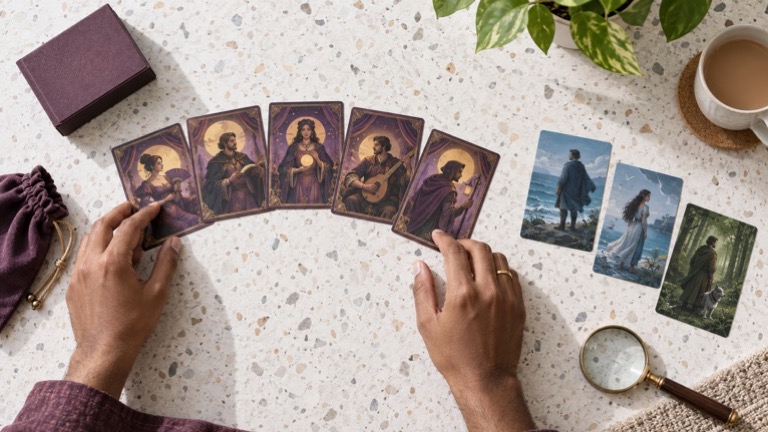
In Neo Standard, the basic restriction is to build within one recognised title grouping. The publisher also describes Standard and Side Constructed formats, which have different boundaries. A Neo Standard deck is therefore not an unrestricted crossover simply because all its cards carry the Weiss Schwarz logo. Specific permissions and restrictions still apply. Official deck construction rules.
The useful word is grouping. Do not substitute your own definition of an anime franchise. Bushiroad’s list groups Date A Live and Date A Bullet together, while it lists Fate, Fate/Apocrypha, Fate/Grand Order and Fate/kaleid liner PRISMA ILLYA separately. Related branding is a reason to investigate compatibility, not proof of it.
Think about what would happen if you shopped by character name alone. You might obtain attractive cards connected to the same fictional world but still lack the legal, functional connections you intended. The disappointment would not be that the art was wrong; it would be that your purchase answered a collector’s question when you were asking a player’s question.
Before choosing individual cards, decide which of those questions you mean:
None is the more legitimate way to be a fan. They simply lead to different buying decisions. A mixed display binder can be exactly what you wanted even when the same mix would not be a legal Neo Standard deck.
Use the official card search to select a Neo Standard classification and inspect the exact cards. The current construction page contains multi-code groups and special permissions, so “every prefix must be identical” is too crude a universal rule.
A practical example is DANDADAN. Its official Trial Deck page identifies the DDD/ family for compatibility, and the card search has a dedicated DANDADAN classification. That gives you a traceable starting point for a deck project instead of guessing from a seller’s assortment title. DANDADAN Trial Deck.
If a newer release is visible in the card database but difficult to find in a summary table, check the product’s own compatibility statement as well. Do not resolve a discrepancy by inventing a rule. Keep the exact card numbers and ask the event organiser when tournament use matters.
A character who is overwhelmingly powerful in a story does not necessarily solve every problem in a card game. The card version has a role, a time when it is useful and conditions that may need other cards to work. A deck made only from impressive late-game characters can miss the turns that are supposed to get you there.
Weiss Schwarz has character, event and climax cards. Its player level, clock and stock are separate resources: level determines access to higher-level cards, clock tracks accumulated damage, and stock pays costs. Players begin at level zero; reaching level four is a losing condition. Official beginner introduction.
For a newcomer, the helpful question is not “Which card is strongest?” but “What is this card doing for the rest of the deck?” It might help you establish a board, find a missing piece, support another character or turn saved resources into a closing attack. Those jobs are not interchangeable.
Imagine you have a favourite finishing character but repeatedly reach its intended turn without the resources or partner cards it needs. Buying another flashy finisher does not diagnose the problem. You should first look at the earlier decisions: what did you spend, what did you keep, and what information was available when you made those choices?
This is where an anime-themed deck can become more interesting than a collection of portraits. Supporting characters can matter because of the work they do for the plan. Your favourite may remain the reason you chose the deck, while an initially unremarkable card becomes the reason the deck functions.
When the clock reaches seven cards, level-up processing selects a card from the bottom seven for the level zone and sends the other six to the waiting room. Any additional clock cards remain. Higher level can open options, but reaching level four loses the game. Comprehensive Rules, section 9.3.
That tension explains why the game should not be read as a simple race to keep one number as low as possible at every moment. You want access to your plan, yet you also need enough time to carry it out. “Damage unlocks cards” is not permission to take every risk without counting the consequences.
During practice, ask what your next level changes. If the answer is only “I am closer to losing,” look again at the cards you hope to use. If the answer is “now I can do everything,” check whether you actually have the necessary cards and resources. Level is access, not a complete payment plan.
The word climax sounds like a final special move. In the card game, the same card type participates in several different processes. Keeping them separate makes a match much easier to watch.
| Where a climax appears | What you should examine | What not to assume |
|---|---|---|
| Played into your climax area | Its effect and any relevant named combo | Every climax works with every character |
| Revealed for your attack’s trigger check | Its trigger icon and the trigger rules | Its whole printed climax-area effect automatically happens |
| Revealed during incoming damage processing | Damage cancellation | The opponent’s whole turn or every attack is cancelled |
Bushiroad’s beginner page distinguishes card text from trigger icons; the damage and trigger procedures are separate in the comprehensive rules. The distinction is about the event that revealed or used the card, not whether its illustration looks dramatic. Card anatomy, Comprehensive Rules, sections 4.10 and 7.3.
Consider a climax sitting in your hand. It may be exactly what you need for your next turn, but it is not currently inside your deck waiting to appear during damage. That is a trade-off, not a reason to discard it automatically. You need to consider both the turn you are building and the attacks you may have to survive.
Likewise, seeing a climax in stock should prompt you to track a resource decision, not secretly pick up the stock and rearrange it. Stock is face down and ordered; the official introduction says players cannot inspect or reorder it unless an effect permits that. Publicly observed information and permission to look through a hidden zone are different things. Official playmat explanation.
For a teaching game, slow down whenever a climax changes zones. Say what happened: played from hand, revealed as a trigger, revealed for damage, or moved by a specific effect. That habit prevents a large family of beginner misunderstandings without requiring you to memorise every climax design.
Occultic Daily Life, Okarun — DDD/S118-E002 gives a concrete example. Its printed baseline is level 1, cost 0 and 3,000 power. One ability increases its level and power for the turn when played from hand with another qualifying Human or Strange character present. Its separate climax combo names Occult Lurking in Everyday Life. Official Okarun card entry.
The combo occurs when Okarun attacks with that named climax in your climax area. You may discard a card from hand to pay its cost. If paid, it carries out its selection procedure twice: each time, look at up to three cards, take up to one eligible card and put the others in the waiting room. The eligible choices are the named Sacred Ball!? card or a Human or Strange character.
The important lesson is not to memorise this one deck. It is to separate four questions when reading a combo:
Do not shorten that into “Okarun draws two cards.” Selection from revealed information is different from drawing, and the effect can find fewer than two eligible cards. Nor should you add a requirement that Okarun must win its battle: the trigger described here is the attack, not reversing the opposing character.
It also matters that the procedure is performed twice. Looking at two successive groups of up to three is not the same instruction as looking at six together and freely choosing two. Read the sequence that the card actually provides.
This is a good example of the link between theme and function. A character card and a named scene form a plan together. Your interest in the anime can help you remember the pairing, but the exact wording tells you how to execute it.
The example is from the published card pool, not a claim that this booster card is included in the Trial Deck or that an Okarun list is the best purchase in India. Check a product’s contents rather than assuming all cards associated with its title are inside the box.
For an ordinary frontal attack, the broad order is declaration → trigger → counter → damage → battle. The attacking character rests. A trigger check can modify the attack, and the defender has a counter opportunity before damage. The power comparison comes later. Comprehensive Rules, section 7.
That order is the key to the apparent contradiction at the beginning of this article. Damage does not wait to see which character wins the power comparison. A high-power character is not a guarantee of damage, and an attacker that will lose the battle can still threaten the player.
Here is a hypothetical teaching example, not the text of a real card. Assume your attacker has 6,000 power and two soul at the damage step; the opposing character has 5,000 power. Assume no other effects or counters change anything, neither deck needs to refresh, and neither player reaches a losing condition during the example.
If the defender reveals two non-climax cards for that damage, those two cards become clock damage. If the defender instead reveals a non-climax followed by a climax, that damage instance is cancelled: the revealed cards go to the waiting room rather than becoming clock damage. The first revealed non-climax is not a point of damage already locked in. Official quick manual, damage explanation.
In either branch, if the ordinary battle then occurs unchanged, your 6,000-power character beats the 5,000-power character. You have won the character battle in both branches but damaged the player in only one. That is the distinction a viewer misses when they look only at the largest printed number.
Reverse is also not a synonym for “immediately remove the card from the table.” The encore step and applicable abilities can matter afterward. For your first match, let the teacher explain the full consequence before reaching across to tidy away a character. Comprehensive Rules, sections 7.6–7.7 and 10.2.
The quick manual distinguishes frontal, side and direct attacks. A side attack avoids the character battle but reduces soul by the opposing character’s level. An open opposing position instead gives a direct attack and its soul bonus. Specific card abilities can modify ordinary behaviour. Official attack-type guide.
So an opposing character is not merely a wall labelled with power. Its level, position and abilities can affect your options. You may be deciding whether the potential damage is worth risking a useful character, or whether keeping that character for another turn matters more.
Avoid turning this into “always attack frontally” or “always protect your board.” Explain the purpose of the attack. Are you trying to remove a threat, produce pressure now, or preserve a particular piece? Once you can name the purpose, the trade-off is easier to discuss.
It is tempting to reason that four soul is simply twice as good as two. Cancellation changes the reliability of that statement. A larger damage instance gives a climax more opportunities to appear before that instance finishes.
To put a number on the idea, assume a defender has 20 cards left in a randomly ordered deck, including four climaxes. No cards move beforehand, no special effects apply, and the compared damage instances are either two or four. This is a constructed probability example, not a measured Indian tournament statistic or a model of an entire turn.
| One damage instance | Chance at least one climax cancels it | Chance the full amount lands | Average damage in this simplified model |
|---|---|---|---|
| 2 damage | 36.84% | 63.16% | 1.26 |
| 4 damage | 62.44% | 37.56% | 1.50 |
For two damage, the probability of avoiding all climaxes is 16/20 × 15/19: choose a non-climax first, then another from the smaller remaining deck. For four damage, continue with 14/18 × 13/17. Subtract either no-climax probability from one to get the cancellation probability. Multiply the full damage by its chance of landing to get the displayed average.
The result is more useful than the slogan. Four is less likely to land, yet it has a higher average in this particular simplified comparison. It is not correct to conclude that fewer soul is always better. Reliability, average output and the exact amount needed to end a game are different objectives.
Nor can you simply multiply the cancellation percentage across a whole series of attacks. Once an instance resolves, cards have left the deck and you have new information. The next attack faces a changed state. A trigger effect or refresh may change it further.
This is the sort of counting that can make watching Weiss Schwarz engaging. You are not supposed to know the hidden order. You are asking what the visible information supports, where uncertainty remains, and whether a decision still makes sense without assuming a lucky reveal.
When the deck empties, current refresh rules rebuild it from the waiting room, shuffle it and put the new top card into clock. That clock placement is not ordinary damage that a climax cancels. Cards still in your hand, stock or other zones do not all magically join the rebuilt deck. Comprehensive Rules, sections 9.2 and 4.10.2.
This makes “how many climaxes have I seen?” an incomplete question. You also need to consider where they are. A climax held for a combo and a climax in the waiting room can have different implications for what goes into the next deck. Cards temporarily involved in resolving damage are another reason not to scoop every visible card into a refresh.
You will sometimes hear players discuss compression: roughly, arranging the rebuilt deck so climaxes make up a larger share of it. Treat that as a description of a game state, not a magic shield. A favourable ratio still does not reveal the shuffled order or guarantee the next cancellation.
For learning, keep refresh separate from your first damage arithmetic exercise. First understand a fixed deck state like the example above. Then practise a refresh with an experienced player, using the current rules. Older teaching material can describe different timing; the current comprehensive manual linked by the official rules hub is the reference used here.
An English-edition product existing, a seller being able to supply it, and an event accepting your deck are three separate facts. None automatically proves the others.
For a concrete starting example, Bushiroad lists the TV Anime DANDADAN Trial Deck with a release date of 30 January 2026, a 50-card deck, rules sheet, playmat and deck manual. Its standard contents are fixed apart from parallel-card variations, and the listed sales territory is worldwide. These details describe that product; they do not confirm stock, delivery terms or a price at an Indian shop. Official product specifications.
A single Trial Deck supplies one player’s deck, not two opponents’ decks. Before ordering, ask who you will learn with and what the other player will use. A sensible first session needs understandable interactions and time to explain them, not just enough cards on both sides of the table.
If you already have a trusted local TCG group, ask whether anyone specifically plays Weiss Schwarz English edition. “We play anime card games” is too broad: it might refer to a completely different game or an informal collecting meetup. Our TCG guide for Indian fans explains those broader distinctions.
If your starting point is an anime community, the India events and communities guide offers places to investigate. It is not a verified directory of Weiss Schwarz players. Ask a focused question about an actual learning session instead of assuming that a large fandom group runs the game.
For an advertised tournament, obtain the edition, format, restrictions and organiser’s current event details before buying cards specifically for it. Do not infer English/Japanese mixing permission from matching illustrations. Likewise, a product’s worldwide sales statement is not a promise of official tournaments in every city.
Start with the exact deck or card list. If a character’s plan depends on a named climax, confirm that the intended pairing is present. If a seller calls a deck “upgraded,” ask what changed and what those changes do. The word itself does not tell you whether the result is easier to learn, compatible with your format or even complete.
Separate artwork preference from mechanical function. It is reasonable to value a special finish as a collectible. It is not necessary to explain that preference as improved gameplay when the relevant card text is unchanged. Compare the actual entries, including names and applicable restrictions, before paying for a version.
The current construction page includes both copy limits and choice restrictions. A choice restriction limits which listed options can coexist; it is not simply a blanket one-copy rule. Check your intended combination against the current list rather than copying an old deck photo. Official restriction list.
This is also why a first purchase should not be driven by an unverified claim of a “guaranteed investment” or a promised rare-card result. A deck can be worthwhile because you enjoy playing it. That is enough; it does not need a speculative resale story attached.
In your first learning session, ask to explain one attack back to the other player. Identify the attack type, separate the trigger from the damage reveal, and state whether you are discussing the opponent’s clock or the character battle. If a combo activates, point to its timing, requirement and cost.
Then look at your deck as a plan: which title group makes it legal, which early cards help it function, and which pairing you are working towards. You do not need to understand every licensed title to answer those questions about one deck.
That is the appeal worth testing. Weiss Schwarz lets recognition bring you to the table, then gives you decisions that recognition alone cannot solve. You can enjoy the character who wins the battle, understand why the damage disappeared, and still see how that attack helped—or failed to help—the turn you were trying to build.
Indian card shops and event organisers seeking a business conversation with SOJPN can use the company contact form. The fan guidance above does not imply local stock, event commitments or official brand affiliation.
AUTHOR OF THIS ARTICLE
SoJapan
SoJapan India Pvt. Ltd. is a Japanese-founded company based in Gurugram. We bring Japanese food, anime goods and apparel materials to Indian businesses, with a sister company in Kyoto that works directly with makers in Japan.