← JOURNAL29 Sep 2026
ONE PIECE Card Game in India: Build Your First Crew and Learn to Play
 By SoJapan
ONE PIECE is built around crews, loyalties and the question of what a captain can inspire other people to do. Its card game offers a satisfying way to explore that feeling: choose a Leader, assemble a deck around that identity and decide how your available resources should support the crew.
You do not need to know every manga arc to enjoy your first match. You do need to recognise that the card game has its own logic. A favourite character may appear as several different cards, a Leader’s colour limits the deck you can build, and the biggest attack is not always the best use of a turn.
For fans in India, this guide explains those decisions without assuming you already belong to a competitive group. It covers the ordinary game, how to choose a learning product, what collecting adds and the format checks that matter before buying an older list. Major story outcomes are avoided, although official card artwork can contain spoilers beyond your current viewing point.
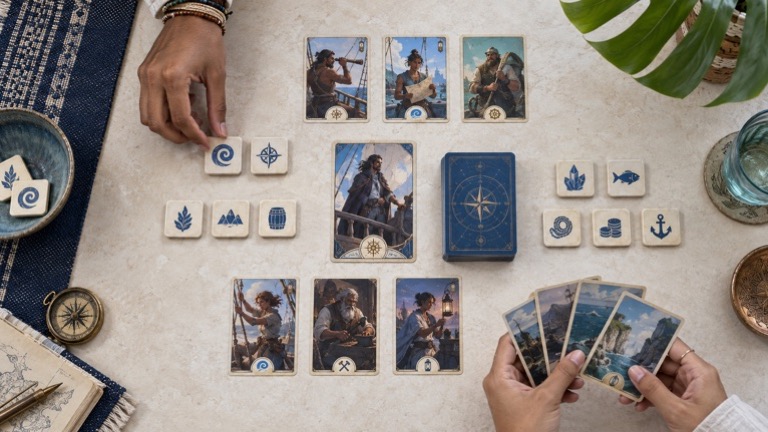
Collecting lets you enjoy the world through images: an expression, a familiar outfit, a group of allies or a scene associated with a favourite part of the story. Playing asks a different question: what do these cards accomplish together?
The Leader gives that question a centre. You begin with it available rather than hoping to draw it, so its ability can shape how you evaluate the rest of your hand. A card that seems modest in isolation may become useful because it supports that particular Leader’s plan.
The result is not a simulation of who would win a manga argument. Card effects, resources and timing determine the match. You can enjoy the thematic connection while accepting that a deck is a game system rather than a literal ranking of fictional strength.
If you like Luffy, Zoro or another character, begin there. Then identify the exact Leader card and watch a normal turn with that deck. Different versions of a character can produce substantially different experiences.
Ask whether you enjoy the repeated decisions, not only the card’s most spectacular possible effect. A deck is something you will operate through average hands and awkward situations. A character connection is valuable motivation, but the play pattern determines whether you want a second and third game.
The normal constructed setup consists of one Leader, a 50-card main deck and a separate deck of ten DON!! cards. The main deck contains Characters, Events and Stages. Its colours must be permitted by the Leader, and the normal copy limit is four of the same card number, subject to restrictions and special rules.
Bandai’s official play guide explains this structure. Notice that the copy limit concerns card number, not simply character name. Several cards depicting the same person can be distinct game pieces, while alternate illustrations of the same numbered card do not create extra allowed copies.
| Card category | Basic role | What a beginner should ask |
|---|---|---|
| Leader | Central identity, ability and attacker | What does this Leader encourage the deck to do? |
| Character | Units that build your field and apply pressure or provide effects | Is this more useful in play now or retained for another purpose? |
| Event | An effect used at the timing allowed by its text | What resources and timing does this effect require? |
| Stage | A supporting card in the Stage area | Will its ongoing contribution matter enough for this plan? |
| DON!! | Resources for costs and power increases | Which use creates the best whole turn? |
The table is a way to read the cards, not a requirement to include equal quantities of every main-deck category. A legal deck does not need a decorative balance of Characters, Events and Stages. It needs a coherent plan within the construction rules.
Colour is a useful first clue, but it does not replace reading the Leader. Two decks sharing a colour can behave differently. A multicolour Leader can permit a wider selection, but more options do not automatically mean a simpler or stronger beginner experience.
Bandai’s introduction for TCG players illustrates several approaches with its ST-31 to ST-36 starter range: pressure with red Luffy, field development with green Zoro, hand and board control with blue Kuzan, DON!! management with purple Katakuri, cost manipulation with red/black Sabo, and Life-related decisions with yellow Kid.
These are product-specific orientation examples, not universal rules for every card of a colour. They also do not establish stock or prices in India. Use the exact product code when comparing a listing, because character names are reused across releases.
If you like committing to attacks and making the opponent respond, ask for a pressure-oriented demonstration. If you prefer shaping the field before a decisive turn, ask to see a slower setup. If you like resource puzzles, pay close attention to how the deck changes or spends DON!!.
Do not confuse “aggressive” with “thoughtless” or “control” with “automatically difficult.” Each plan creates its own mistakes to learn from. The useful beginner deck is one whose normal intention you can explain after a few guided turns.
The separate DON!! deck makes resources arrive through the turn structure rather than as ordinary cards drawn from the main deck. Normally you add two DON!! during the DON!! phase, until the available ten have entered play. The first player receives only one on their first turn.
DON!! has more than one job. You can rest active DON!! in the cost area to pay appropriate costs, or give active DON!! to your Leader or Characters to increase their power. Each given DON!! normally adds 1,000 power during your turn. Follow individual card effects for exceptions.
The official rule manual explains these actions. The strategic implication is the part to practise: the same resource cannot normally be committed to every attractive option at once.
Imagine you have six active DON!! and a Character in hand costing four. Playing it normally leaves two active DON!! available in the cost area. You might use those for pressure or preserve them for a suitable response, depending on your hand and effects.
If you first give three DON!! to an attacker, only three remain available for normal cost payment, so you cannot then pay that four-cost Character in the same way. This simplified example assumes no resource-changing effects. It demonstrates why you should plan the whole turn before distributing DON!!.
You cannot normally move a DON!! already given to one Character onto another just because you changed your mind. Bandai’s general rules FAQ explicitly addresses this. Effects can create particular exceptions, but casual rearrangement is not the default procedure.
Announce the intended total before placing the cards, keep given DON!! visible, and agree on a clear table layout during a teaching game. A small amount of physical clarity prevents a large amount of confusion later.
The normal sequence is Refresh, Draw, DON!!, Main and End. Refresh readies the appropriate cards and returns given DON!! to the cost area. The first player skips the draw on their first turn. During Main, legal plays, effects and attacks can be arranged according to the rules rather than requiring one fixed script for every deck.
Unlike games where attacking necessarily ends the turn, ONE PIECE allows a Main Phase to continue after a battle. That makes sequencing important. You may learn something from an attack’s result before deciding what to play next, although particular costs and abilities can change which order is best.
Some turns contain an action that enables the rest of the plan: establishing a Character, changing a resource or meeting an ability’s condition. Identify that dependency before moving cards. Then distinguish it from actions whose order is genuinely flexible.
For a beginner, this is more useful than memorising a long “perfect turn” from a video. You want to understand why the order works so that you can adapt when your hand is different.
Normally, neither player attacks on their first turn. A newly played Character normally cannot attack that turn unless an effect such as Rush permits it. An attack can normally target the opponent’s Leader or a rested opposing Character, not any active Character you happen to dislike.
Power determines the battle comparison. Under the normal rule, the attacker succeeds at equal or greater power. A Leader taking damage is different from a Character being K.O.’d; do not treat every successful attack as removing the target from play.
The rules hub links the manual, comprehensive rules and updates. Use it when a specific effect changes targeting or timing. Beginner summaries are starting points, not substitutes for card text.
An attack at the Leader advances one kind of pressure. Attacking a rested Character may reduce the opponent’s future options. The right choice depends on the position, not a universal instruction to “always attack face” or “always clear the board.”
Ask what the opposing Character is likely to do next turn. Is removing it worth delaying pressure on the Leader? Can the opponent easily replace it? Would attacking it demand a resource commitment that leaves your own plan weak? These are questions to discuss, not calculations a new player must solve instantly.
Attacking usually rests the unit. That change matters because rested Characters become normal attack targets. A Character that contributes little through an attack may be worth leaving active, depending on its role and the opponent’s options.
This gives the game a satisfying push-and-pull quality. The board is not simply a collection of units that should all attack automatically. Each attack exchanges an opportunity now for a different position afterwards.
A Character card with a Counter value can be used from hand during the appropriate Counter Step to increase defensive power for that battle. This is not the same as playing that Character onto the field. Counter Events have their own costs and timing requirements, so keeping one in hand is not sufficient if you cannot pay for it.
A Blocker can redirect an eligible attack by using its ability at the correct step. It is a separate decision from adding Counter power. Bandai’s general FAQ clarifies, among other things, that a rested Character cannot normally activate Blocker and that Character Counters are used from hand.
Suppose a 5,000-power Leader is attacked by a 6,000-power unit, with no other effects. Adding 1,000 makes the defender 6,000, which still ties the attacker. Adding 2,000 makes the defender 7,000 and stops that attack under the ordinary comparison.
The important number is therefore the threshold required to exceed the attacker, not merely the gap between the initial values. Practise this with clearly labelled totals. It is much easier to learn the tactical decision once both players agree on the arithmetic.
The Character you use as a Counter is no longer waiting in hand to be played later. A Counter Event can require DON!! you deliberately left available. A Blocker used now may not be available in the same way for the next attack.
Think about the remaining sequence rather than treating each attack as an isolated emergency. Which attack is most important to stop? What resources will you have afterwards? Sometimes accepting a hit preserves a stronger overall position; sometimes it is a risk you cannot afford. The board and hand decide, not a slogan.
The Leader’s printed Life value determines the normal initial number of Life cards. When the Leader takes ordinary damage while Life remains, a Life card normally enters the player’s hand, unless an applicable effect changes the result. That creates a distinctive tension: damage reduces safety but can provide another card to use.
At zero Life, you have not automatically lost just because the final Life card disappeared. Another damaging attack against the Leader can finish the game under the normal rules. Having no cards left in the main deck is also a loss condition.
An extra card is useful only if you survive long enough and have a way to use it. Evaluate the opponent’s remaining attacks, your defensive resources and the next turn. Treating Life as an unlimited source of hand advantage ignores the condition that ends the game.
For a teaching game, pause before an important defence and explain both choices. What might you gain by accepting the hit? What could the opponent still do? The explanation is more instructive than judging the choice only after seeing the Life card.
Some cards have a Trigger that can be activated when revealed from Life through damage under the appropriate rules. You may have a choice between using that Trigger and adding the card to your hand. Read the Trigger text separately from the card’s normal play effect.
The official comprehensive rules distinguish these procedures. A card leaving Life through some other effect does not automatically allow its Trigger. Do not apply “it came from Life” as the only test.
For playing, investigate a complete Starter Deck or a Learn Together Deck Set. Bandai’s beginner page presents these as starting products and links teaching resources. Read the exact contents because a single-player deck and a set intended for learning together solve different problems.
A booster is a randomized addition to a collection, not a reliable way to assemble one particular deck. If you want a specific card for a known list, compare the exact card with the cost and uncertainty of opening packs. This is about matching the purchase to the purpose, not forbidding the pleasure of opening a pack.
You need the correct cards, a way to learn and someone using compatible rules. Suitable sleeves and a deck box help with handling. An expensive playmat or alternate-art collection is optional rather than evidence that you are ready to participate.
If you are learning with a friend, compare the total needed for both people. Ask whether teaching decks can be borrowed before ordering. A modest first session often tells you more about your preferences than a large purchase based only on a favourite character.
Bandai introduced its block-number system from 1 April 2026, with Standard and Extra Regulation. For the April 2026–March 2027 period, the announced Standard framework uses blocks 2–5, while Extra covers the broader pool beginning with block 1. Restrictions and particular eligibility rules still apply.
Crucially, updated block assignments and specified exceptions mean a printed block 1 is not by itself a complete legality decision. The official block-system announcement explains reprints, updated card numbers and the X treatment for designated cards. Consult the block-update list, not only an old video or the printed corner of a card.
A card being within a format’s general pool does not guarantee that it is unrestricted. The current banned and restricted notice is a separate check. Similarly, corrected text can matter even when you own an earlier printing.
This guide was reviewed on 29 September 2026. Before entering an event, confirm the applicable regulation, card-language rules and latest notices with the organiser. Do not assume that a product sold in India is automatically eligible under every English-language regional programme.
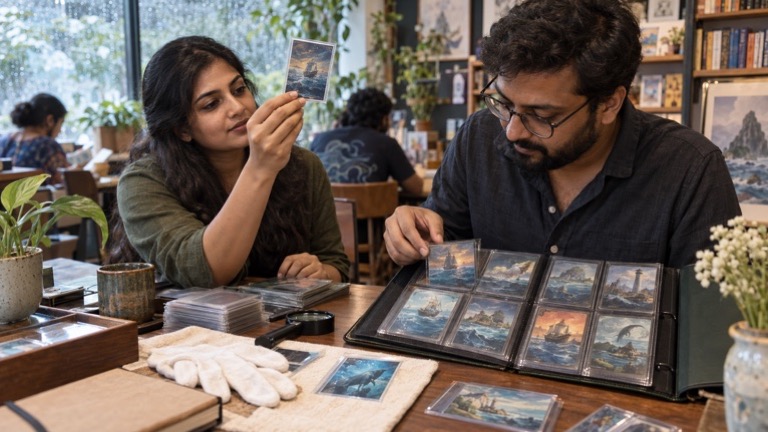
ONE PIECE artwork offers several possible collecting projects: a favourite crew, one character across different scenes, a selected story period or an illustration style you enjoy. A bounded theme makes browsing purposeful without turning every new release into an obligation.
Use the official card database to identify the card number and version. An alternate illustration may be desirable for its appearance while sharing its gameplay identity with a less elaborate printing. Rarity is not a substitute for understanding an effect.
When buying, ask for the actual edition, language, card number, condition and clear photographs. A promotional image does not establish which version a seller will send. Neither a high price nor a shiny finish is proof of authenticity, and a low price alone is not proof of a counterfeit.
If you are early in the anime, mention your viewing point when asking a friend to help choose a product. Card names and illustrations may introduce people, transformations or affiliations you have not encountered yet. Avoiding major plot summaries in a guide cannot remove every visual spoiler from the hobby itself.
You can also choose a collection around an earlier part of the story. There is no requirement to make the newest release the centre of your enjoyment. Just separate that collecting choice from current format legality if you later decide to compete.
Ask a local anime or tabletop community a specific question: “Do you currently play the physical ONE PIECE Card Game, which language and regulation do you use, and can a beginner join a teaching session?” Recent activity matters more than a large but inactive member count.
Bandai links TCG+ for supported event discovery and registration. A listing’s region and event conditions still need checking; this guide does not claim official programmes exist in every Indian city. Community-run games can be worthwhile without being described as sanctioned tournaments.
Our India anime-community guide covers broader meetup discovery. If you are comparing games, the TCG beginner guide explains the different starting experiences, and our Vanguard guide offers another form of avatar-led card battle.
Your first goal is not to build the most talked-about deck. It is to finish a match understanding why you assigned DON!!, why you defended an attack and what your Leader wanted the crew to achieve. That is when the cards stop being a pile of familiar faces and start becoming your own game.
Indian card shops and event organisers interested in Japanese card or anime-product sourcing can contact So Japan with their city, game, edition and language requirements. Availability and intended use should be confirmed for each enquiry.
AUTHOR OF THIS ARTICLE
SoJapan
SoJapan India Pvt. Ltd. is a Japanese-founded company based in Gurugram. We bring Japanese food, anime goods and apparel materials to Indian businesses, with a sister company in Kyoto that works directly with makers in Japan.