← JOURNAL29 Sep 2026
Cardfight!! Vanguard in India: The Anime Fan’s Guide to Your First Fight
 By SoJapan
Cardfight!! Vanguard makes an unusually direct promise to an anime fan: the dramatic card battles on screen are connected to a real game you can learn. Your central unit becomes an avatar, your allies form the field around it, and the opponent’s attack is a question you must answer with the cards in your hand.
The most enjoyable part is not memorising enormous power numbers. It is deciding when to commit, when to protect yourself and when to accept a risk. An apparently simple attack can become tense because the defender must act before knowing everything that will happen next.
For beginners in India, the first challenge is often finding an entry point among years of anime, product names and different formats. This guide concentrates on modern Standard play, explains the vocabulary that matters at the table and helps you choose a first learning setup. It does not assume a particular Indian shop has stock or that a local meetup is publisher-sanctioned.
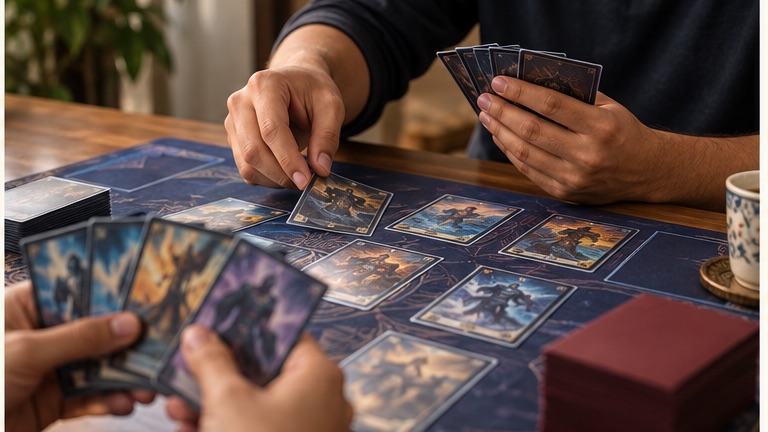
In an anime, a dramatic reversal arrives at the moment the story needs it. At a card table, you must choose without knowing whether the reversal will arrive. That gap creates Vanguard’s appeal: you can feel the possibility of a spectacular turn while still being responsible for ordinary practical decisions.
Your hand is not merely a queue of cards waiting to be played. A card may represent a future attacker, defensive shield or a cost for another action. Using it now changes what you can do later. A beginner who only asks “What is my strongest card?” misses this quieter contest over options.
The fictional setting is Planet Cray. Bushiroad’s official introduction describes the franchise as a trading card game supported by anime and other media. You can enjoy the setting without treating every anime scene as a rules demonstration. Different series and eras show different card pools and mechanics.
If the anime brought you here, let it help you identify an aesthetic or character you like. Then identify the exact deck and format. A remembered ace from an older story may have several later versions, and a familiar illustration does not tell you which rules apply.
If the game brought you here, you can reverse the route: learn a simple deck, then explore its appearance in the anime or the official lore. Neither order is compulsory. The anime supplies emotional context; a current rulebook supplies the procedure when a dispute arises.
Vanguard has several official construction formats. They are not difficulty levels in which everyone must graduate from one to the next. Each has its own card pool and expectations, and a local group may favour one over another.
| Format | Beginner-level distinction | Why it matters before buying |
|---|---|---|
| Standard | Uses the D-icon card pool and nation-based construction, including the ride deck | A modern learning deck must match current Standard requirements |
| V Premium | Uses the V-icon card pool and clan-based construction, without a ride deck | A V-era deck does not become a Standard deck because the character looks familiar |
| Premium | Draws from the broader historical card pool, subject to construction and restrictions | Older interactions require format-specific guidance rather than assumptions from a Standard tutorial |
These are orientation notes, not the complete tournament rules. The official Fighter’s Rules and deck construction page govern eligibility and special cases. This article was checked on 29 September 2026.
For two completely new players, Standard is a practical starting recommendation because you can learn around a defined ride line. That is an editorial preference, not a claim that Premium is inferior. If your only available teacher plays another format, a supported learning experience can be more valuable than an abstract recommendation.
For ordinary Standard construction, prepare a 50-card main deck and a separate five-card ride deck. The latter consists of a unit for each grade from 0 to 3 and a ride deck crest. Certain named cards and collaborations have special construction rules, so this is the normal framework rather than a universal count without exceptions.
Exactly 16 triggers are required across the main and ride decks. The current limits include up to four heal triggers and one over trigger, with up to eight each of critical, draw and front triggers. These are construction requirements; they do not tell you the best mix for every deck. Check restrictions before changing an introductory list.
The ride deck gives your central progression a planned structure. Instead of thinking only about whether you will draw the right sequence, you can begin learning what to do around that progression: which supporting cards to keep, which costs to pay and when to extend your board.
The benefit is educational as well as mechanical. You can repeat the same early structure across several games and notice how different hands change the surrounding decisions. Repetition makes it easier to separate a rules error from a tactical choice.
Older overDress explanations show a 46-card main deck with four ride cards. That historical setup should not be copied into a new deck using the current ordinary Standard construction described above. This is a real reason to consult the current rules rather than trusting an undated tutorial image.
It also explains why merely counting the cards in an old product is insufficient. Before taking an older deck to an event, check its construction, crest requirements, allowed card pool and applicable restrictions with the organiser. Learning casually with an old product and registering a current tournament deck are separate tasks.
Vanguard’s nations offer an inviting way into its fantasy. They are broad settings, not promises that every deck inside them behaves identically. A visual theme can narrow your search, but a short demonstration should decide whether you actually enjoy the deck.
| Nation | A first impression of its setting | A question to ask when viewing a deck |
|---|---|---|
| Dragon Empire | Dragons and a powerful military tradition | Does this particular deck create the kind of commanding attack turn I enjoy? |
| Dark States | A magical realm with dark supernatural influences | Which resources does this ride line build and spend? |
| Brandt Gate | Advanced technology and defence against outside threats | What setup does this strategy require before its main turn? |
| Keter Sanctuary | A divided realm with an elevated ruling society | How does the chosen avatar turn supporting units into pressure? |
| Stoicheia | Nature and maritime traditions within a combined nation | How does this deck use its board and recurring resources? |
| Lyrical Monasterio | A travelling school city on a gigantic flying whale | Which character group and interactions make this deck distinctive? |
The setting descriptions follow Bushiroad’s nation overview; the questions are our suggested way of evaluating decks. They deliberately avoid labels such as “the easy nation” or “the strongest nation,” which would conceal differences between ride lines.
In beginner conversation, a ride line usually refers to the progression built around a particular vanguard identity. When asking for recommendations, the name of that central strategy is more useful than saying only “I want a Dragon Empire deck.”
Ask the person demonstrating it to show the ordinary plan, not just a perfect combination. What does the deck do with an average hand? Which piece is essential? What happens when the opponent removes an important rear-guard? The answers reveal whether the deck offers a satisfying learning experience.
Begin with grade, power, shield and the relevant skill icons. Grade relates to progression and normal calling restrictions. Power is used in battle. Shield contributes when a card is used to guard. The printed effect text then explains what the particular card can do and under which conditions.
A large power number is not a ranking of the card’s total usefulness. A lower-grade unit may provide a necessary boost or defensive contribution. Likewise, a card with useful shield may be valuable to keep even when you could legally call it to the field.
For exact text, consult the official card list and any relevant errata. Search by card identity rather than relying on a compressed photograph in a shop listing. A teacher should explain abbreviations in context instead of expecting you to memorise a glossary before your first turn.
Boost adds the supporting unit’s power to an attack from the unit in front, following the relevant rules. Intercept lets an eligible front-row rear-guard move into the guardian circle to defend. Drive checks occur with the appropriate attacking vanguard; Twin Drive means two checks unless an effect changes that number.
Bushiroad’s beginner guide hub introduces these icons. The important beginner lesson is functional: a card can help without being your main attacker, and moving a unit to defend changes the board you will have next turn.
Riding changes your central vanguard. In the ordinary ride-deck procedure, you discard a card from hand to ride the next grade from that deck during the ride phase. The exact conditions matter; the ride deck is not a menu from which you may freely choose any grade whenever convenient.
The supporting units you call are rear-guards. Their placement matters because rows and columns influence attacks, boosting and some effects. Before making a crowded board, ask what each position is supposed to achieve. More cards in play does not automatically mean a better position.
Consider a teaching situation where one additional rear-guard would add little pressure, while keeping that card would improve your defence. Calling it might look active, but the visible board is only part of your position. The hand you retain also matters.
This does not establish a rule to hoard cards. Sometimes committing another unit creates an important attack threshold or enables your strategy. The useful habit is to explain the exchange: what do you gain on the field, and what option disappears from your hand?
An attack asks the defender whether to spend resources now. Guarding adds shield to the defending unit for the battle. Under the normal power comparison, an attack hits when the attacker’s power is at least the defender’s power; merely reaching a tie is not sufficient defence.
That last detail is worth practising with counters before introducing complicated abilities. It prevents the frustrating situation where both players think they have understood the arithmetic but disagree about who wins a tie. Consult the official rules hub for the complete battle sequence and exceptions.
Suppose an attack currently has 23,000 power and your defending unit has 13,000. Adding 10,000 shield brings the defender to 23,000: still a tie. Adding 15,000 brings it to 28,000, above the attack’s current power.
This is a deliberately simplified example with no other effects. If further power changes occur, the answer can change. The calculation teaches the comparison; it does not promise that a particular guard amount always stops a real attack.
A beginner often tries to stop every attack, then discovers that the hand has disappeared. Another beginner refuses to guard until the situation is desperate. Both habits ignore the same question: what resources and options will remain after this decision?
Think about the whole attack sequence. Which attacks are still coming? What do you know about their possible strength? Which cards would be costly to lose from your hand? You do not need a perfect calculation immediately, but asking these questions makes defence feel like play rather than bookkeeping.
Triggers are one reason a Vanguard battle can change while it is being resolved. A drive check and a damage check are different procedures, even though both may reveal a trigger. Follow the guide’s instructions for where the revealed card goes; do not treat every checked card as a normal draw.
Critical, draw, front and heal triggers create different effects. Over triggers have their own exceptional effect and handling. Learn one trigger type at a time with the actual cards in your introductory deck, then read the full effect rather than applying a remembered shortcut to every situation.
A dramatic trigger can decide a close game. That does not mean the preceding choices were irrelevant. Attack order, remaining hand, known cards and defensive commitments influence the position in which the random event occurs.
After a loss, separate “the opponent revealed a helpful trigger” from “I left myself only one fragile line.” The first describes an outcome. The second identifies a decision you may be able to improve. Equally, do not criticise every failed risk after seeing information that was hidden at the time.
Vanguard’s normal loss condition includes reaching six cards in the damage zone; running out of cards in the main deck is another loss condition. This is separate from the large power numbers used to resolve battles. Do not subtract a 23,000-power attack from an imagined health pool.
Effects and checks can affect how damage resolves, so follow the full sequence before declaring the result. The practical learning goal is to keep power, critical and accumulated damage conceptually separate. They answer different questions.
Persona Ride is associated with riding a unit with the relevant icon onto a same-named vanguard during the ride phase under the applicable conditions. It draws a card and grants the front row a 10,000-power increase for the turn. The official Persona Ride explanation illustrates the effect; use current Fighter’s Rules for deck construction rather than that page’s historical deck counts.
This creates an important distinction between a unit’s printed power and temporary effects. When explaining an attack, state both the total and where the additions came from. Your opponent should not need to reconstruct your arithmetic from memory.
Counter-Blast uses face-up cards in the damage zone by turning them face down; Soul-Blast moves cards from the soul to the drop. These actions use different resources. A face-down damage card is still damage, and paying a cost is not the same thing as healing.
Energy is another resource used by suitable cards and crests. With Energy Generator, Energy-charge increases it and Energy-blast spends it; the current cap is ten. Use a clear, rules-appropriate tracking method. Do not combine all resources into an informal counter called “mana.”
When starting, announce costs before resolving effects. Physically distinguishing the zones makes it easier to notice an unavailable cost and avoids arguments about what a player intended after the game has advanced.
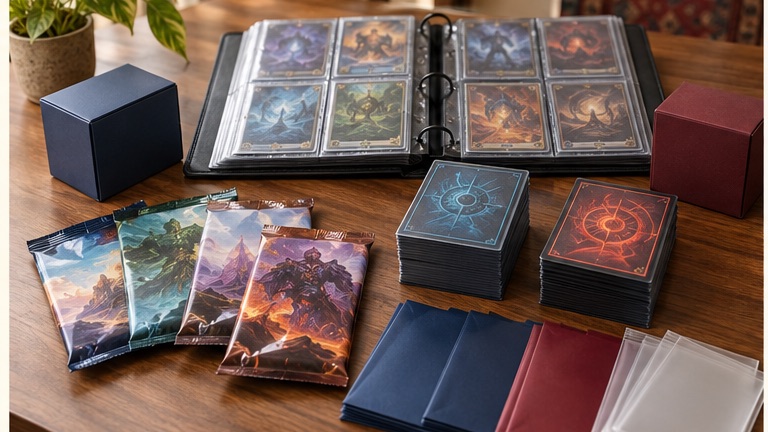
Start with a complete learning product in the language and format your partner uses. Bushiroad’s 2024 Start Up Trial Deck range offers six nation choices and lists 55 cards, learning materials and accessories. It is an example of a teaching-focused product, not a claim about current Indian stock or the best competitive purchase.
The key distinction is purpose. A simplified trial deck helps you learn the structure. A more elaborate preconstructed deck may offer richer interactions but require more explanation. A booster box provides randomized cards and is not equivalent to either.
If a seller or experienced player recommends an upgrade, ask which recurring problem it solves. Does it support the main plan, improve an awkward turn or create an answer you were missing? “Everyone uses it” is less useful than an explanation you can test in games.
Keep a copy of your original list. Change a few cards at a time, preserve construction requirements and compare your experience over several games. One fortunate match is not proof that an upgrade worked; one unlucky match is not proof it failed.
When contacting an Indian anime or tabletop group, name the game and format explicitly: “I want to learn English-edition Vanguard Standard. Is anyone able to teach with two introductory decks?” This gives the group something concrete to respond to.
Check recent activity, venue details and whether a deck can be borrowed before ordering a large collection. Our India anime-community guide offers broader advice for finding fan spaces. A community meetup and an official sanctioned tournament should not be presented as the same thing.
For a first session, practise the setup, complete a game, switch decks if both players agree, and discuss one interesting guard decision. Switching can reveal what the opposing deck needs, which makes your next game more understandable even if you keep your original favourite.
Your first success does not have to be winning. It can be explaining why you kept a card, identifying a legal ride, or defending without confusing shield and power. Those small pieces of understanding are what turn the anime’s dramatic promise into a game you can enjoy repeatedly.
Still deciding between card games? Read our TCG beginner guide for India. Card shops and event organisers exploring Japanese card or anime-product sourcing can contact So Japan, specifying the title, edition and city rather than assuming availability.
AUTHOR OF THIS ARTICLE
SoJapan
SoJapan India Pvt. Ltd. is a Japanese-founded company based in Gurugram. We bring Japanese food, anime goods and apparel materials to Indian businesses, with a sister company in Kyoto that works directly with makers in Japan.